
Before Memmo my notes were scattered across PDFs. Now a workspace pulls everything into one place — I see exactly what's still left to study.
Characterized by its multi-level interdisciplinary character, communication has become a variable field -- one in which the level of analysis varies. This has had important ramifications for the study of communication because, to some extent, the questions one asks are determined by the methods one has available to answer them. As a result, communication research is characterized by the plethora of both qualitative and quantitative approaches used by its practitioners. These include survey and experimental methods, and content, historical, and rhetorical analyses.
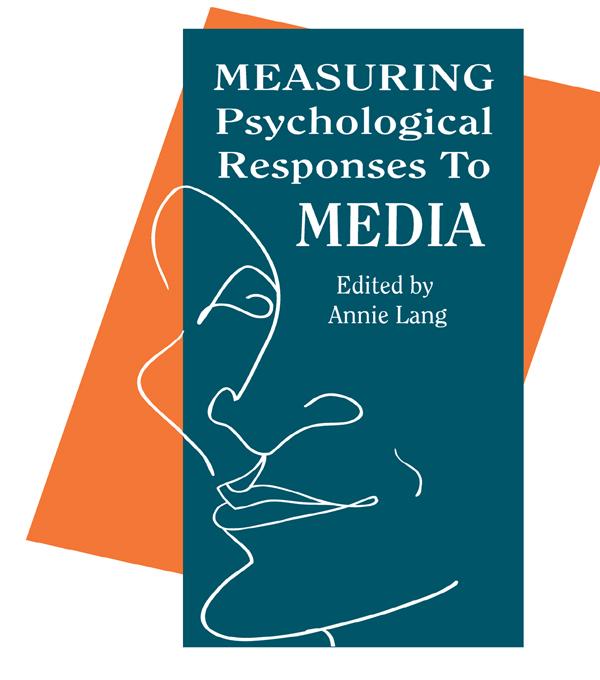
A variety of tools has been developed in cognitive psychology and psychophysiology which attempts to measure "thinking" without asking people how they do it. This book is devoted to exploring how these methods might be used to further knowledge about the process of communication. The methods chosen have all been used extensively in cognitive and experimental psychology. Each chapter in this book is designed to describe the history of the method being introduced, the theory behind it, how to go about using it, and how it has already been used to study some area of communication. The methods introduced here vary widely in terms of the amount of equipment and training needed to use them. Some require only theoretical knowledge and a paper and pencil; others require more elaborate hardware and software for implementation. These methods also vary widely in terms of what sorts of variables they can be used to measure. Some of them adapt quite readily to traditional communication variables like persuasion, attitude change, and knowledge; others are more applicable to process type variables such as attention, arousal, involvement, encoding, and retrieval.
Before Memmo my notes were scattered across PDFs. Now a workspace pulls everything into one place — I see exactly what's still left to study.
Memmo's summaries are gold before exams. I don't have to re-read 800 pages two weeks before — just the important parts.
The AI chat has saved me the night before an exam more than once. I just keep asking until I get it — no waiting on a study group to reply.
The quizzes hit exactly what I need to know. Memmo tracks what I get stuck on — so I only practice what's worth it.
Flashcards with spaced repetition are magic. Memmo knows when I'm about to forget something and brings it back.
The AI podcasts are my favorite. I listen on my way to school and get a recap without sitting at a computer.

Handbok i kvalitativa metoder
281 kr

Hållbar utveckling: en introduktion för ingenjörer och andra problemlösare
334 kr

Brymans Samhällsvetenskapliga metoder
390 kr

Projektledning
491 kr

Den orättvisa hälsan: om socioekonomiska skillnader i hälsa och livslängd
326 kr

Vetenskapsteori för nybörjare
196 kr

Organizational Leadership
429 kr

På väg mot läraryrket
172 kr

Det sociala livet i skolan: Socialpsykologiska perspektiv
253 kr

Betygsättningens didaktik
151 kr

Personality
402 kr

Studying Leadership
404 kr

Managing Innovation
477 kr

Introduktion till samhällsvetenskaplig metod
347 kr

The Psychology of Sex and Gender
698 kr

Evidens och kunskap för socialt arbete
207 kr

Introduction to Leadership
605 kr