
Before Memmo my notes were scattered across PDFs. Now a workspace pulls everything into one place — I see exactly what's still left to study.
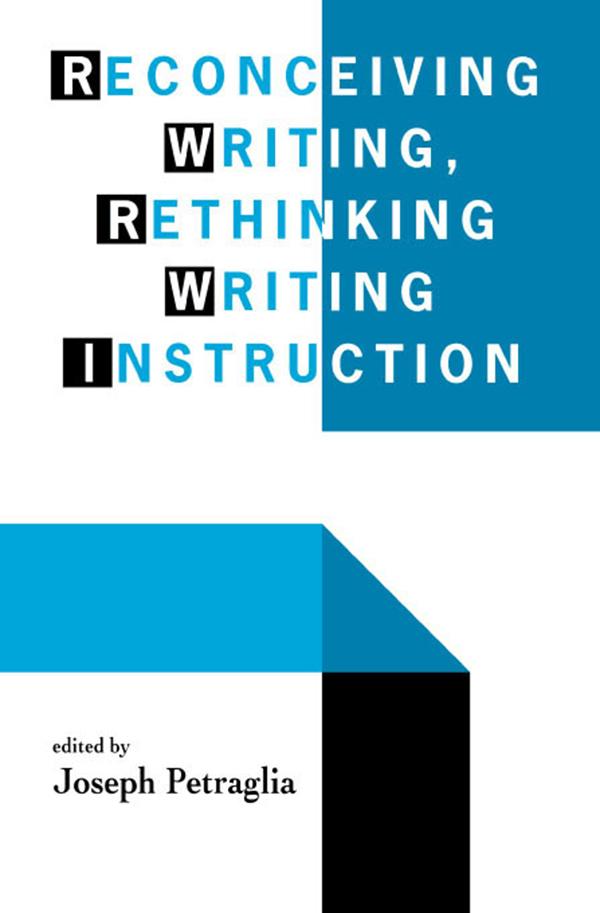
To a degree unknown in practically any other discipline, the pedagogical space afforded composition is the institutional engine that makes possible all other theoretical and research efforts in the field of rhetoric and writing. But composition has recently come under attack from many within the field as fundamentally misguided. Some of these critics have been labelled "New Abolitionists" for their insistence that compulsory first-year writing should be abandoned. Not limiting itself to first-year writing courses, this book extends and modifies calls for abolition by taking a closer look at current theoretical and empirical understandings of what contributors call "general writing skills instruction" (GWSI): the curriculum which an overwhelming majority of writing instructors is paid to teach, that practically every composition textbook is written to support, and the instruction for which English departments are given resources to deliver.
The vulnerability of GWSI is hardly a secret among writing professionals and its intellectual fragility has been felt for years and manifested in several ways:
* in persistently low status of composition as a study both within and outside of English departments;
* in professional journal articles and conference presentations that are growing both in theoretical sophistication and irrelevance to the composition classroom; and
* in the rhetoric and writing field's ever-increasing attention to nontraditional sites of writing behavior.
But, to date, there has been relatively little concerted discussion within the writing field that focuses specifically on the fundamentally awkward relationship of writing theory and writing instruction.
This volume is the first to explicitly focus on the gap in the theory and practice that has emerged as a result of the field's growing professionalization. The essays anthologized offer critiques of GWSI in light of the discipline's growing understanding of the contexts for writing and their rhetorical nature. Writing from a wide range of cognitivist, critical-theoretical, historical, linguistic and philosophical perspectives, contributors call into serious question basic tenets of contemporary writing instruction and provide a forum for articulating a sort of zeitgeist that seems to permeate many writing conferences, but which has, until recently, not found a voice or a name.
Before Memmo my notes were scattered across PDFs. Now a workspace pulls everything into one place — I see exactly what's still left to study.
Memmo's summaries are gold before exams. I don't have to re-read 800 pages two weeks before — just the important parts.
The AI chat has saved me the night before an exam more than once. I just keep asking until I get it — no waiting on a study group to reply.
The quizzes hit exactly what I need to know. Memmo tracks what I get stuck on — so I only practice what's worth it.
Flashcards with spaced repetition are magic. Memmo knows when I'm about to forget something and brings it back.
The AI podcasts are my favorite. I listen on my way to school and get a recap without sitting at a computer.

Handbok i kvalitativa metoder
281 kr

Hållbar utveckling: en introduktion för ingenjörer och andra problemlösare
334 kr

Brymans Samhällsvetenskapliga metoder
390 kr

Projektledning
491 kr

Den orättvisa hälsan: om socioekonomiska skillnader i hälsa och livslängd
326 kr

Vetenskapsteori för nybörjare
196 kr

Organizational Leadership
429 kr

På väg mot läraryrket
172 kr

Det sociala livet i skolan: Socialpsykologiska perspektiv
253 kr

Betygsättningens didaktik
151 kr

Personality
402 kr

Studying Leadership
404 kr

Managing Innovation
477 kr

Introduktion till samhällsvetenskaplig metod
347 kr

The Psychology of Sex and Gender
698 kr

Evidens och kunskap för socialt arbete
207 kr

Introduction to Leadership
605 kr