
Before Memmo my notes were scattered across PDFs. Now a workspace pulls everything into one place — I see exactly what's still left to study.
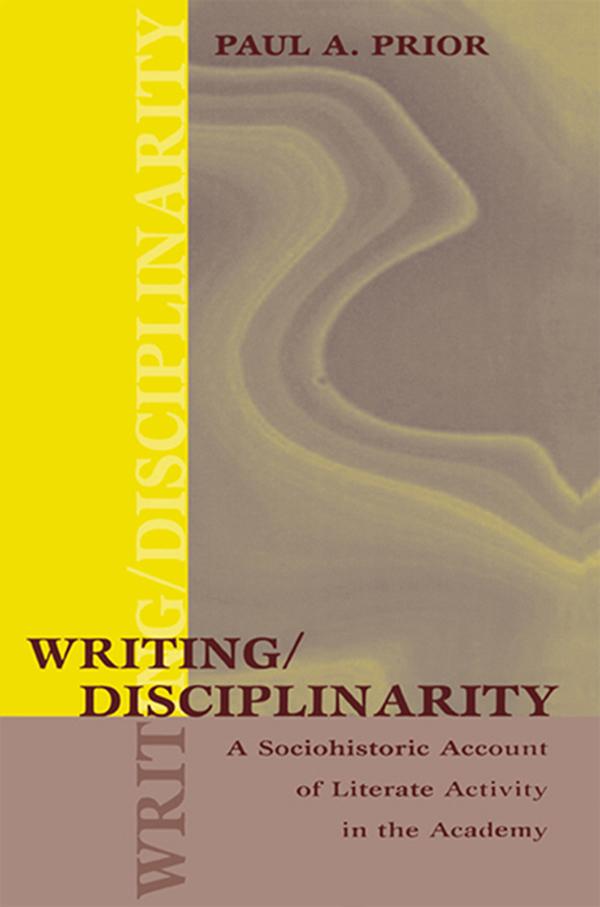
Over the past century, the explosive growth of scientific, technical, and cultural disciplines has profoundly affected our daily lives. However, processes of enculturation in sites such as graduate education that have helped to form these disciplines have received very limited research attention. In those sites, graduate students write diverse documents, including course papers, departmental examinations, theses and dissertations, grant and fellowship applications, and disciplinary publications. Thus, writing is one of the central domains of enculturation--an activity through which graduate students and professors display and negotiate disciplinary knowledge, genres, identities, and institutional contexts. This volume explores this intersection of writing and disciplinary enculturation through a series of ethnographic case studies. These case studies provide the most thorough descriptions available today of the lived experience of graduate seminars, combining analysis of classroom talk, students' texts and professor's written responses, institutional contexts, students' representations of their writing and its contexts, and professors' representations of their tasks and their students.
Given the complexities that the ethnographic data displayed, the author found that conventional notions of writing as a process of transcription and of disciplines as unified discourse communities were inadequate. As such, this book also offers an in-depth exploration of sociohistoric theory in relation to writing and disciplinary enculturation. Specific case studies introduce, apply, and further elaborate notions of:
* writing as literate activity,
* authorship as mediated by other people and artifacts,
* classroom tasks as speech genres,
* enculturation as the interplay of authoritative and internally persuasive discourses, and
* disciplinarity as a deeply heterogeneous, laminated, and dialogic process.
This blend of research and theory should be of interest to scholars and students in such fields as writing studies, rhetoric, writing across the curriculum, applied linguistics, English for academic purposes, science and technology studies, higher education, and the ethnography of communication.
Before Memmo my notes were scattered across PDFs. Now a workspace pulls everything into one place — I see exactly what's still left to study.
Memmo's summaries are gold before exams. I don't have to re-read 800 pages two weeks before — just the important parts.
The AI chat has saved me the night before an exam more than once. I just keep asking until I get it — no waiting on a study group to reply.
The quizzes hit exactly what I need to know. Memmo tracks what I get stuck on — so I only practice what's worth it.
Flashcards with spaced repetition are magic. Memmo knows when I'm about to forget something and brings it back.
The AI podcasts are my favorite. I listen on my way to school and get a recap without sitting at a computer.

Handbok i kvalitativa metoder
281 kr

Hållbar utveckling: en introduktion för ingenjörer och andra problemlösare
334 kr

Brymans Samhällsvetenskapliga metoder
390 kr

Projektledning
491 kr

Den orättvisa hälsan: om socioekonomiska skillnader i hälsa och livslängd
326 kr

Vetenskapsteori för nybörjare
196 kr

Organizational Leadership
429 kr

På väg mot läraryrket
172 kr

Det sociala livet i skolan: Socialpsykologiska perspektiv
253 kr

Betygsättningens didaktik
151 kr

Personality
402 kr

Studying Leadership
404 kr

Managing Innovation
477 kr

Introduktion till samhällsvetenskaplig metod
347 kr

The Psychology of Sex and Gender
698 kr

Evidens och kunskap för socialt arbete
207 kr

Introduction to Leadership
605 kr