
Before Memmo my notes were scattered across PDFs. Now a workspace pulls everything into one place — I see exactly what's still left to study.
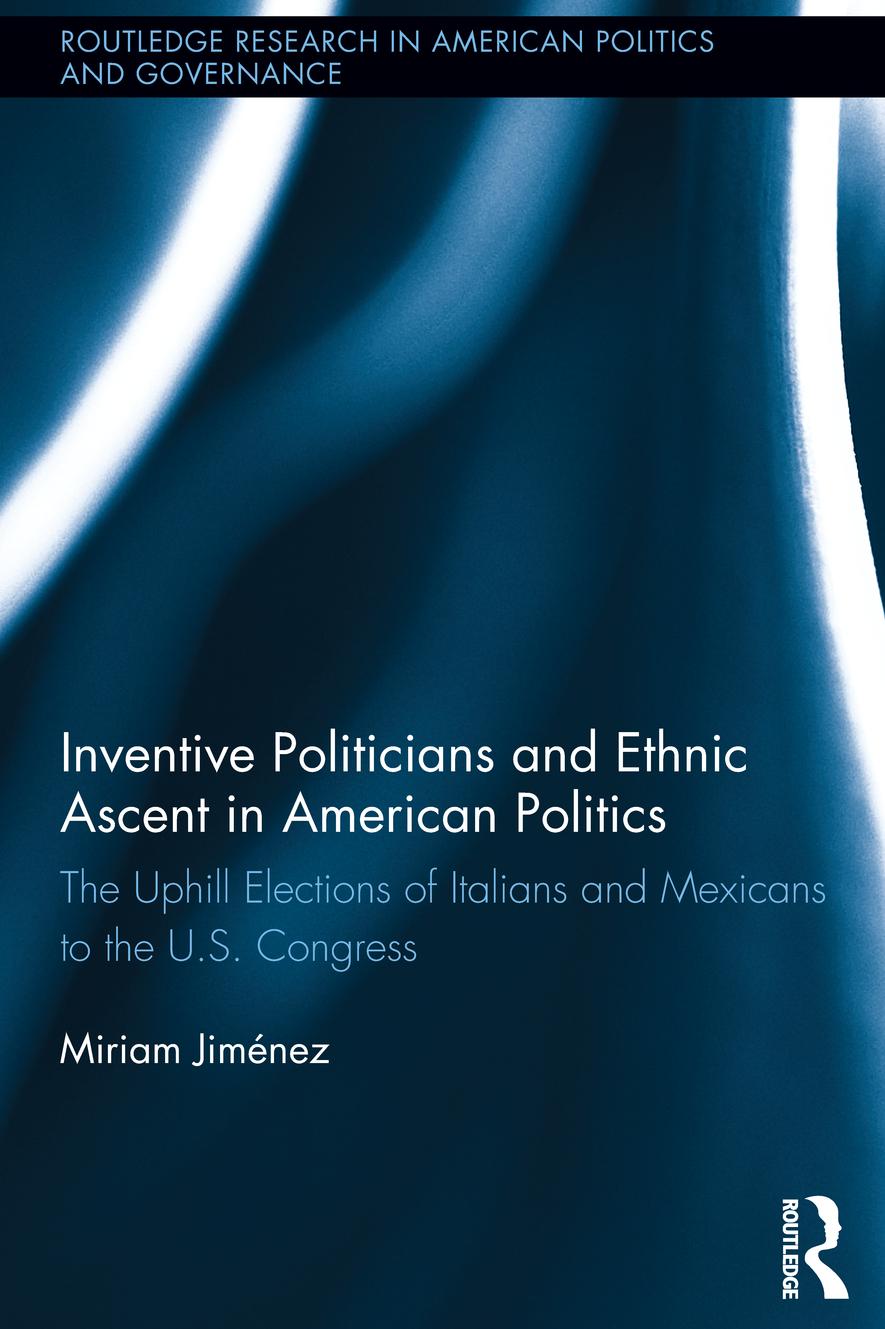
This innovative book investigates the process through which ethnic minorities penetrate into higher echelons of political power: specifically, how they succeed in getting elected to the U.S. Congress. Analysts today see ethnic politicians largely in relation to their collectivities, but by actually studying what ethnic minority politicians do and the issues they have faced, Jiménez's book offers an original perspective of analysis.
Jiménez utilizes a ground-breaking comparative dataset of elected members of Congress organized upon the basis of national origin, the first available. Using the cases of Mexican-Americans and Italian-Americans, Jimenez analyzes and compares the different ways that these ethnic politicians have been elected to the national legislature from the beginning of the 20th century until the present. Her study examines Italian and Mexican-American politicians’ actions and interactions with local political parties, identifies various layers of political power that have influenced their successes and failures, and uncovers the strategies that they have used. Jimenez argues that the politically active segment of an ethnic group matters in the process of political incorporation of a group. She also asserts that regular access of ethnic groups into upper levels of political office and the full acceptance of new ethnic players only occurs as a consequence of an institutional change.
Jiménez’s pioneering documentation and analysis of the strategies of ethnic minority politicians and the ways that political institutions have influenced these politicians is significant to scholars of political incorporation, race and ethnicity, and congressional elections. Her book demonstrates the need to reconsider several standard ideas of how minority representation occurs and deepens our understanding of the role that political institutions play in that process.
Before Memmo my notes were scattered across PDFs. Now a workspace pulls everything into one place — I see exactly what's still left to study.
Memmo's summaries are gold before exams. I don't have to re-read 800 pages two weeks before — just the important parts.
The AI chat has saved me the night before an exam more than once. I just keep asking until I get it — no waiting on a study group to reply.
The quizzes hit exactly what I need to know. Memmo tracks what I get stuck on — so I only practice what's worth it.
Flashcards with spaced repetition are magic. Memmo knows when I'm about to forget something and brings it back.
The AI podcasts are my favorite. I listen on my way to school and get a recap without sitting at a computer.

Handbok i kvalitativa metoder
281 kr

Hållbar utveckling: en introduktion för ingenjörer och andra problemlösare
334 kr

Brymans Samhällsvetenskapliga metoder
390 kr

Projektledning
491 kr

Den orättvisa hälsan: om socioekonomiska skillnader i hälsa och livslängd
326 kr

Vetenskapsteori för nybörjare
196 kr

Organizational Leadership
429 kr

På väg mot läraryrket
172 kr

Det sociala livet i skolan: Socialpsykologiska perspektiv
253 kr

Betygsättningens didaktik
151 kr

Personality
402 kr

Studying Leadership
404 kr

Managing Innovation
477 kr

Introduktion till samhällsvetenskaplig metod
347 kr

The Psychology of Sex and Gender
698 kr

Evidens och kunskap för socialt arbete
207 kr

Introduction to Leadership
605 kr