
Before Memmo my notes were scattered across PDFs. Now a workspace pulls everything into one place — I see exactly what's still left to study.
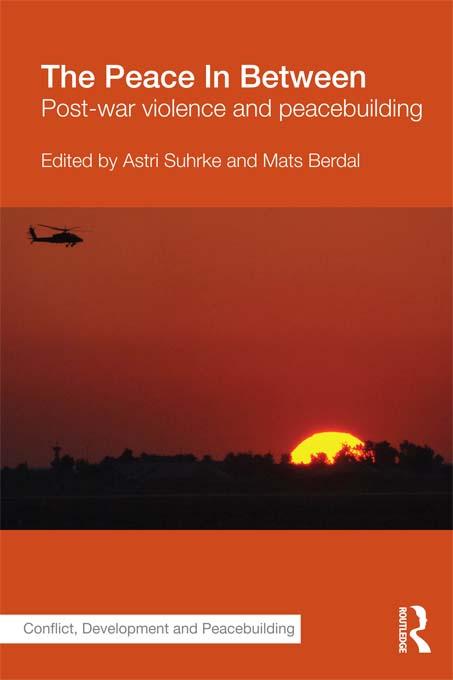
This volume examines the causes and purposes of 'post-conflict' violence.
The end of a war is generally expected to be followed by an end to collective violence, as the term ‘post-conflict’ that came into general usage in the 1990s signifies. In reality, however, various forms of deadly violence continue, and sometimes even increase after the big guns have been silenced and a peace agreement signed. Explanations for this and other kinds of violence fall roughly into two broad categories – those that stress the legacies of the war and those that focus on the conditions of the peace. There are significant gaps in the literature, most importantly arising from the common premise that there is one, predominant type of post-war situation. This ‘post-war state’ is often endowed with certain generic features that predispose it towards violence, such as a weak state, criminal elements generated by the war-time economy, demobilized but not demilitarized or reintegrated ex-combatants, impunity and rapid liberalization.
The premise of this volume differs. It argues that features which constrain or encourage violence stack up in ways to create distinct and different types of post-war environments. Critical factors that shape the post-war environment in this respect lie in the war-to-peace transition itself, above all the outcome of the war in terms of military and political power and its relationship to social hierarchies of power, normative understandings of the post-war order, and the international context.
This book will of much interest to students of war and conflict studies, peacebuilding and IR/Security Studies in general.
Before Memmo my notes were scattered across PDFs. Now a workspace pulls everything into one place — I see exactly what's still left to study.
Memmo's summaries are gold before exams. I don't have to re-read 800 pages two weeks before — just the important parts.
The AI chat has saved me the night before an exam more than once. I just keep asking until I get it — no waiting on a study group to reply.
The quizzes hit exactly what I need to know. Memmo tracks what I get stuck on — so I only practice what's worth it.
Flashcards with spaced repetition are magic. Memmo knows when I'm about to forget something and brings it back.
The AI podcasts are my favorite. I listen on my way to school and get a recap without sitting at a computer.

Handbok i kvalitativa metoder
281 kr

Hållbar utveckling: en introduktion för ingenjörer och andra problemlösare
334 kr

Brymans Samhällsvetenskapliga metoder
390 kr

Projektledning
491 kr

Den orättvisa hälsan: om socioekonomiska skillnader i hälsa och livslängd
326 kr

Vetenskapsteori för nybörjare
196 kr

Organizational Leadership
429 kr

På väg mot läraryrket
172 kr

Det sociala livet i skolan: Socialpsykologiska perspektiv
253 kr

Betygsättningens didaktik
151 kr

Personality
402 kr

Studying Leadership
404 kr

Managing Innovation
477 kr

Introduktion till samhällsvetenskaplig metod
347 kr

The Psychology of Sex and Gender
698 kr

Evidens och kunskap för socialt arbete
207 kr

Introduction to Leadership
605 kr