
Before Memmo my notes were scattered across PDFs. Now a workspace pulls everything into one place — I see exactly what's still left to study.
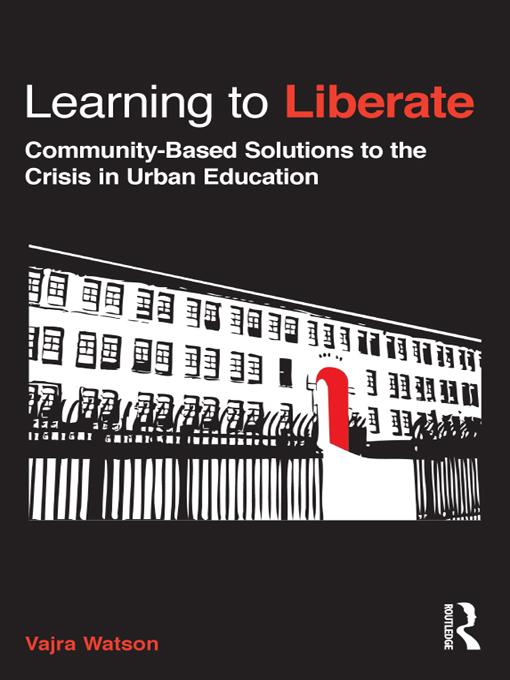
Few problems in education are as pressing as the severe crisis in urban schools. Though educators have tried a wide range of remedies, dismal results persist. This is especially true for low-income youth of color, who drop out of school—and into incarceration—at extremely high rates. The dual calamity of underachievement in schools and violence in many communities across the country is often met with blame and cynicism, and with a host of hurtful and unproductive quick fixes: blaming educators, pitting schools against each other, turning solely to the private sector, and ratcheting up the pressure on teachers and students. But real change will not be possible until we shift our focus from finding fault to developing partnerships, from documenting problems to discovering solutions. Learning to Liberate does just that by presenting true and compelling community-based approaches to school reform.
Drawing on over three years of ethnographic research, Vajra Watson explores the complicated process of reaching and teaching today's students. She reveals how four nontraditional educators successfully empower young people who have repeatedly been left behind. Using portraiture, a methodology rooted in vivid storytelling, Watson analyzes each educator's specific teaching tactics. Uncovering four distinct pedagogies—of communication, community, compassion, and commitment—she then pulls together their key strategies to create a theoretically grounded framework that is both useful and effective. A poignant, insightful, and practical analysis, Learning to Liberate is a timely resource for all educators and youth-serving practitioners who are committed to transforming "at-risk" youth into "at-promise" individuals who put their agency and potential into action in their schools and neighborhoods.
Before Memmo my notes were scattered across PDFs. Now a workspace pulls everything into one place — I see exactly what's still left to study.
Memmo's summaries are gold before exams. I don't have to re-read 800 pages two weeks before — just the important parts.
The AI chat has saved me the night before an exam more than once. I just keep asking until I get it — no waiting on a study group to reply.
The quizzes hit exactly what I need to know. Memmo tracks what I get stuck on — so I only practice what's worth it.
Flashcards with spaced repetition are magic. Memmo knows when I'm about to forget something and brings it back.
The AI podcasts are my favorite. I listen on my way to school and get a recap without sitting at a computer.

Handbok i kvalitativa metoder
281 kr

Hållbar utveckling: en introduktion för ingenjörer och andra problemlösare
334 kr

Brymans Samhällsvetenskapliga metoder
390 kr

Projektledning
491 kr

Den orättvisa hälsan: om socioekonomiska skillnader i hälsa och livslängd
326 kr

Vetenskapsteori för nybörjare
196 kr

Organizational Leadership
429 kr

På väg mot läraryrket
172 kr

Det sociala livet i skolan: Socialpsykologiska perspektiv
253 kr

Betygsättningens didaktik
151 kr

Personality
402 kr

Studying Leadership
404 kr

Managing Innovation
477 kr

Introduktion till samhällsvetenskaplig metod
347 kr

The Psychology of Sex and Gender
698 kr

Evidens och kunskap för socialt arbete
207 kr

Introduction to Leadership
605 kr