
Before Memmo my notes were scattered across PDFs. Now a workspace pulls everything into one place — I see exactly what's still left to study.
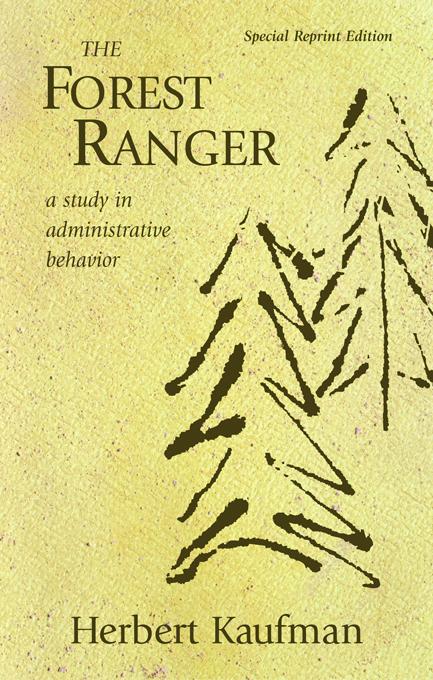
It is the rare book that remains in print for nearly fifty years, earning wide acclaim as a classic. The Forest Ranger has been essential reading for generations of professionals and scholars in forestry, public administration, and organizational behavior who are interested in the administration of public lands and how the top managers of a large, dispersed organization with multiple objectives like the Forest Service shape the behavior of its field officers into a coherent, unified program. Published as a special reprint in conjunction with the 100th anniversary of the U.S. Forest Service, The Forest Ranger is as relevant and timely today as when it was first issued in 1960.
In addition to the original text, this special reprint of The Forest Ranger includes two new forewords and an afterword that highlight how much we have learned from Herbert Kaufman. The first foreword, by Harold K. (Pete) Steen, former president of the Forest History Society, considers the book's impact on the forestry community and explains its continued relevance in light of changes in the culture and mission of today's Forest Service. The second, by Richard P. Nathan, co-director of the Rockefeller Institute of Government, considers the book's contribution to our understanding of administrative and organizational behavior.
A new afterword by author Herbert Kaufman describes how his landmark study came into being and offers a candid assessment of how his theories about the agency's operations and its future have held up over time. In 1960, the Forest Service had a welldeserved reputation for excellence, and The Forest Ranger was a seminal analysis of the how's and why's of its success. Kaufman also warned, however, that an organization so unified and well adapted to its environment would have difficulties navigating social change. He was right in his concerns: The environmental, civil rights, and women's movements have all presented challenges to the character and purpose of the Forest Service, ultimately changing the organization in subtle and not-so-subtle ways. Now, as then, The Forest Ranger is a striking and prescient case study of how a complex organization operates and evolves over time.
Before Memmo my notes were scattered across PDFs. Now a workspace pulls everything into one place — I see exactly what's still left to study.
Memmo's summaries are gold before exams. I don't have to re-read 800 pages two weeks before — just the important parts.
The AI chat has saved me the night before an exam more than once. I just keep asking until I get it — no waiting on a study group to reply.
The quizzes hit exactly what I need to know. Memmo tracks what I get stuck on — so I only practice what's worth it.
Flashcards with spaced repetition are magic. Memmo knows when I'm about to forget something and brings it back.
The AI podcasts are my favorite. I listen on my way to school and get a recap without sitting at a computer.

Handbok i kvalitativa metoder
281 kr

Hållbar utveckling: en introduktion för ingenjörer och andra problemlösare
334 kr

Brymans Samhällsvetenskapliga metoder
390 kr

Projektledning
491 kr

Den orättvisa hälsan: om socioekonomiska skillnader i hälsa och livslängd
326 kr

Organizational Leadership
429 kr

Vetenskapsteori för nybörjare
196 kr

På väg mot läraryrket
172 kr

Det sociala livet i skolan: Socialpsykologiska perspektiv
253 kr

Betygsättningens didaktik
151 kr

Personality
402 kr

Studying Leadership
404 kr

Managing Innovation
477 kr

Introduktion till samhällsvetenskaplig metod
347 kr

The Psychology of Sex and Gender
698 kr

Evidens och kunskap för socialt arbete
207 kr

Introduction to Leadership
605 kr