
Before Memmo my notes were scattered across PDFs. Now a workspace pulls everything into one place — I see exactly what's still left to study.
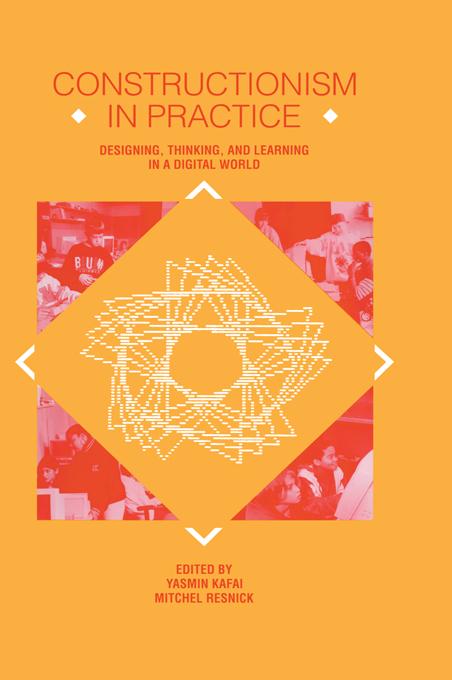
The digital revolution necessitates, but also makes possible, radical changes in how and what we learn. This book describes a set of innovative educational research projects at the MIT Media Laboratory, illustrating how new computational technologies can transform our conceptions of learning, education, and knowledge. The book draws on real-world education experiments conducted in formal and informal contexts: from inner-city schools and university labs to neighborhoods and after-school clubhouses. The papers in this book are divided in four interrelated sections as follows:
* Perspectives in Constructionism further develops the intellectual underpinnings of constructionist theory. This section looks closely at the role of perspective-taking in learning and discusses how both cognitive and affective processes play a central role in building connections between old and new knowledge.
* Learning through Design analyzes the relationship between designing and learning, and discusses ways that design activities can provide personally meaningful contexts for learning. This section investigates how and why children can learn through the processes of constructing artifacts such as games, textile patterns, robots and interactive devices.
* Learning in Communities focuses on the social aspects of constructionist learning, recognizing that how people learn is deeply influenced by the communities and cultures with which they interact. It examines the nature of learning in classroom, inner-city, and virtual communities.
* Learning about Systems examines how students make sense of biological, technological, and mathematical systems. This section explores the conceptual and epistemological barriers to learning about feedback, self-organization, and probability, and it discusses new technological tools and activities that can help people develop new ways of thinking about these phenomena.
Before Memmo my notes were scattered across PDFs. Now a workspace pulls everything into one place — I see exactly what's still left to study.
Memmo's summaries are gold before exams. I don't have to re-read 800 pages two weeks before — just the important parts.
The AI chat has saved me the night before an exam more than once. I just keep asking until I get it — no waiting on a study group to reply.
The quizzes hit exactly what I need to know. Memmo tracks what I get stuck on — so I only practice what's worth it.
Flashcards with spaced repetition are magic. Memmo knows when I'm about to forget something and brings it back.
The AI podcasts are my favorite. I listen on my way to school and get a recap without sitting at a computer.

Handbok i kvalitativa metoder
281 kr

Hållbar utveckling: en introduktion för ingenjörer och andra problemlösare
334 kr

Brymans Samhällsvetenskapliga metoder
390 kr

Projektledning
491 kr

Den orättvisa hälsan: om socioekonomiska skillnader i hälsa och livslängd
326 kr

Organizational Leadership
429 kr

Vetenskapsteori för nybörjare
196 kr

På väg mot läraryrket
172 kr

Det sociala livet i skolan: Socialpsykologiska perspektiv
253 kr

Betygsättningens didaktik
151 kr

Personality
402 kr

Studying Leadership
404 kr

Managing Innovation
477 kr

Introduktion till samhällsvetenskaplig metod
347 kr

The Psychology of Sex and Gender
698 kr

Evidens och kunskap för socialt arbete
207 kr

Introduction to Leadership
605 kr