
Before Memmo my notes were scattered across PDFs. Now a workspace pulls everything into one place — I see exactly what's still left to study.
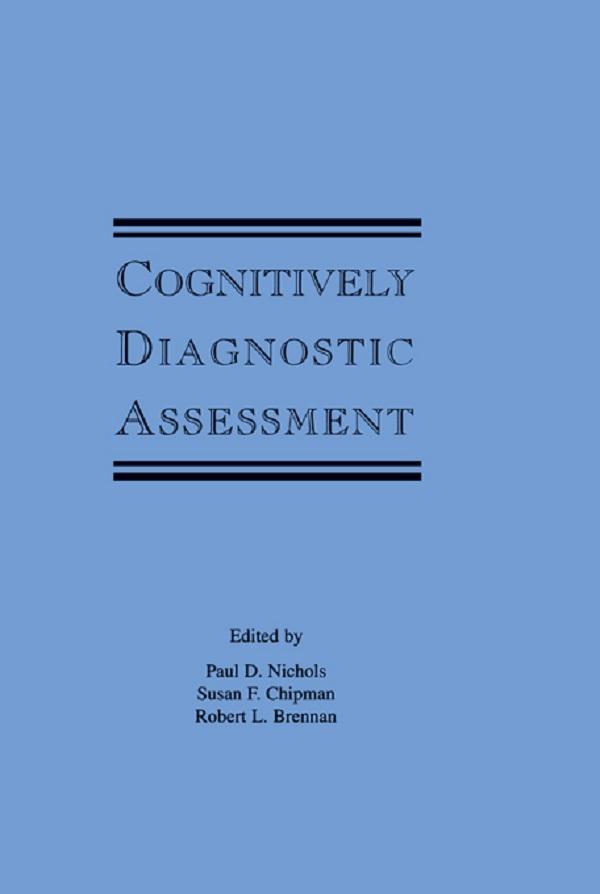
During the past two or three decades, research in cognitive science and psychology has yielded an improved understanding of the fundamental psychological nature of knowledge and cognitive skills that psychological testing attempts to measure. These theories have reached sufficient maturity, making it reasonable to look upon them to provide a sound theoretical foundation for assessment, particulary for the content of assessments. This fact, combined with much discontentedness over current testing practices, has inspired efforts to bring testing and cognitive theory together to create a new theoretical framework for psychological testing -- a framework developed for diagnosing learners' differences rather than for ranking learners based on their differences.
This volume presents some initial accomplishments in the effort to bring testing and cognitive theory together. Contributors originate from both of the relevant research communities -- cognitive research and psychometric theory. Some represent collaborations between representatives of the two communities; others are efforts to reach out in the direction of the other community. Taking fundamentally different forms, psychometric test theory assumes that knowledge can be represented in terms of one or at most a few dimensions, whereas modern cognitive theory typically represents knowledge in networks -- either networks of conceptual relationships or the transition networks of production systems.
Cognitively diagnostic assessment is a new enterprise and it is evident that many challenging problems remain to be addressed. Still, it is already possible to develop highly productive interactions between assessment and instruction in both automated tutoring systems and more conventional classrooms. The editors hope that the chapters presented here show how the reform of assessment can take a rigorous path.
Before Memmo my notes were scattered across PDFs. Now a workspace pulls everything into one place — I see exactly what's still left to study.
Memmo's summaries are gold before exams. I don't have to re-read 800 pages two weeks before — just the important parts.
The AI chat has saved me the night before an exam more than once. I just keep asking until I get it — no waiting on a study group to reply.
The quizzes hit exactly what I need to know. Memmo tracks what I get stuck on — so I only practice what's worth it.
Flashcards with spaced repetition are magic. Memmo knows when I'm about to forget something and brings it back.
The AI podcasts are my favorite. I listen on my way to school and get a recap without sitting at a computer.

Handbok i kvalitativa metoder
281 kr

Hållbar utveckling: en introduktion för ingenjörer och andra problemlösare
334 kr

Brymans Samhällsvetenskapliga metoder
390 kr

Projektledning
491 kr

Den orättvisa hälsan: om socioekonomiska skillnader i hälsa och livslängd
326 kr

Organizational Leadership
429 kr

Vetenskapsteori för nybörjare
196 kr

På väg mot läraryrket
172 kr

Det sociala livet i skolan: Socialpsykologiska perspektiv
253 kr

Betygsättningens didaktik
151 kr

Personality
402 kr

Studying Leadership
404 kr

Managing Innovation
477 kr

Introduktion till samhällsvetenskaplig metod
347 kr

The Psychology of Sex and Gender
698 kr

Evidens och kunskap för socialt arbete
207 kr

Introduction to Leadership
605 kr