
Before Memmo my notes were scattered across PDFs. Now a workspace pulls everything into one place — I see exactly what's still left to study.
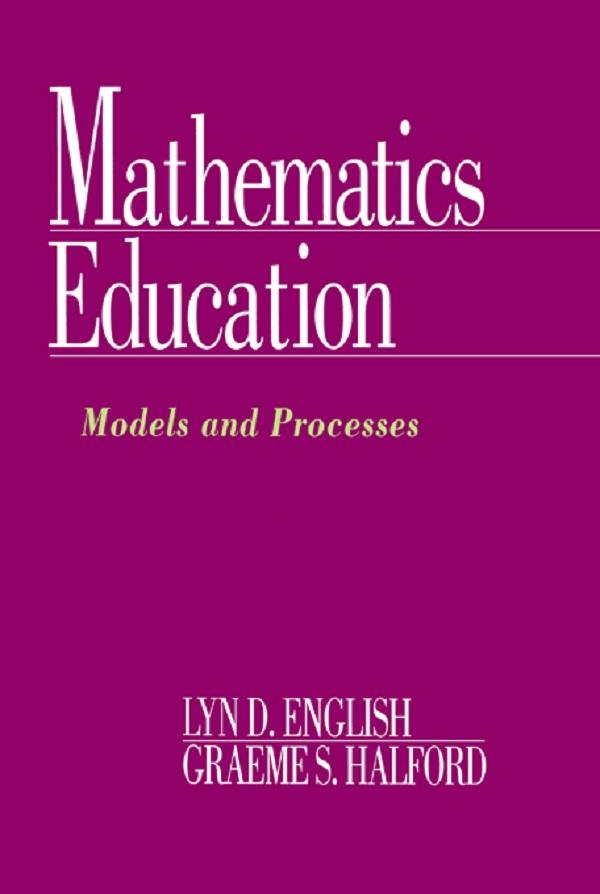
To define better techniques of mathematics education, this book combines a knowledge of cognitive science with mathematics curriculum theory and research. The concept of the human reasoning process has been changed fundamentally by cognitive science in the last two decades. The role of memory retrieval, domain-specific and domain-general skills, analogy, and mental models is better understood now than previously. The authors believe that cognitive science provides the most accurate account thus far of the actual processes that people use in mathematics and offers the best potential for genuine increases in efficiency. As such, they suggest that a cognitive science approach enables constructivist ideas to be analyzed and further developed in the search for greater understanding of children's mathematical learning.
Not simply an application of cognitive science, however, this book provides a new perspective on mathematics education by examining the nature of mathematical concepts and processes, how and why they are taught, why certain approaches appear more effective than others, and how children might be assisted to become more mathematically powerful. The authors use recent theories of analogy and knowledge representation -- combined with research on teaching practice -- to find ways of helping children form links and correspondences between different concepts, so as to overcome problems associated with fragmented knowledge. In so doing, they have capitalized on new insights into the values and limitations of using concrete teaching aids which can be analyzed in terms of analogy theory.
In addition to addressing the role of understanding, the authors have analyzed skill acquisition models in terms of their implications for the development of mathematical competence. They place strong emphasis on the development of students' mathematical reasoning and problem solving skills to promote flexible use of knowledge. The book further demonstrates how children have a number of general problem solving skills at their disposal which they can apply independently to the solution of novel problems, resulting in the enhancement of their mathematical knowledge.
Before Memmo my notes were scattered across PDFs. Now a workspace pulls everything into one place — I see exactly what's still left to study.
Memmo's summaries are gold before exams. I don't have to re-read 800 pages two weeks before — just the important parts.
The AI chat has saved me the night before an exam more than once. I just keep asking until I get it — no waiting on a study group to reply.
The quizzes hit exactly what I need to know. Memmo tracks what I get stuck on — so I only practice what's worth it.
Flashcards with spaced repetition are magic. Memmo knows when I'm about to forget something and brings it back.
The AI podcasts are my favorite. I listen on my way to school and get a recap without sitting at a computer.

Handbok i kvalitativa metoder
281 kr

Hållbar utveckling: en introduktion för ingenjörer och andra problemlösare
334 kr

Brymans Samhällsvetenskapliga metoder
390 kr

Projektledning
491 kr

Den orättvisa hälsan: om socioekonomiska skillnader i hälsa och livslängd
326 kr

Organizational Leadership
429 kr

Vetenskapsteori för nybörjare
196 kr

På väg mot läraryrket
172 kr

Det sociala livet i skolan: Socialpsykologiska perspektiv
253 kr

Betygsättningens didaktik
151 kr

Personality
402 kr

Studying Leadership
404 kr

Managing Innovation
477 kr

Introduktion till samhällsvetenskaplig metod
347 kr

The Psychology of Sex and Gender
698 kr

Evidens och kunskap för socialt arbete
207 kr

Introduction to Leadership
605 kr