
Before Memmo my notes were scattered across PDFs. Now a workspace pulls everything into one place — I see exactly what's still left to study.
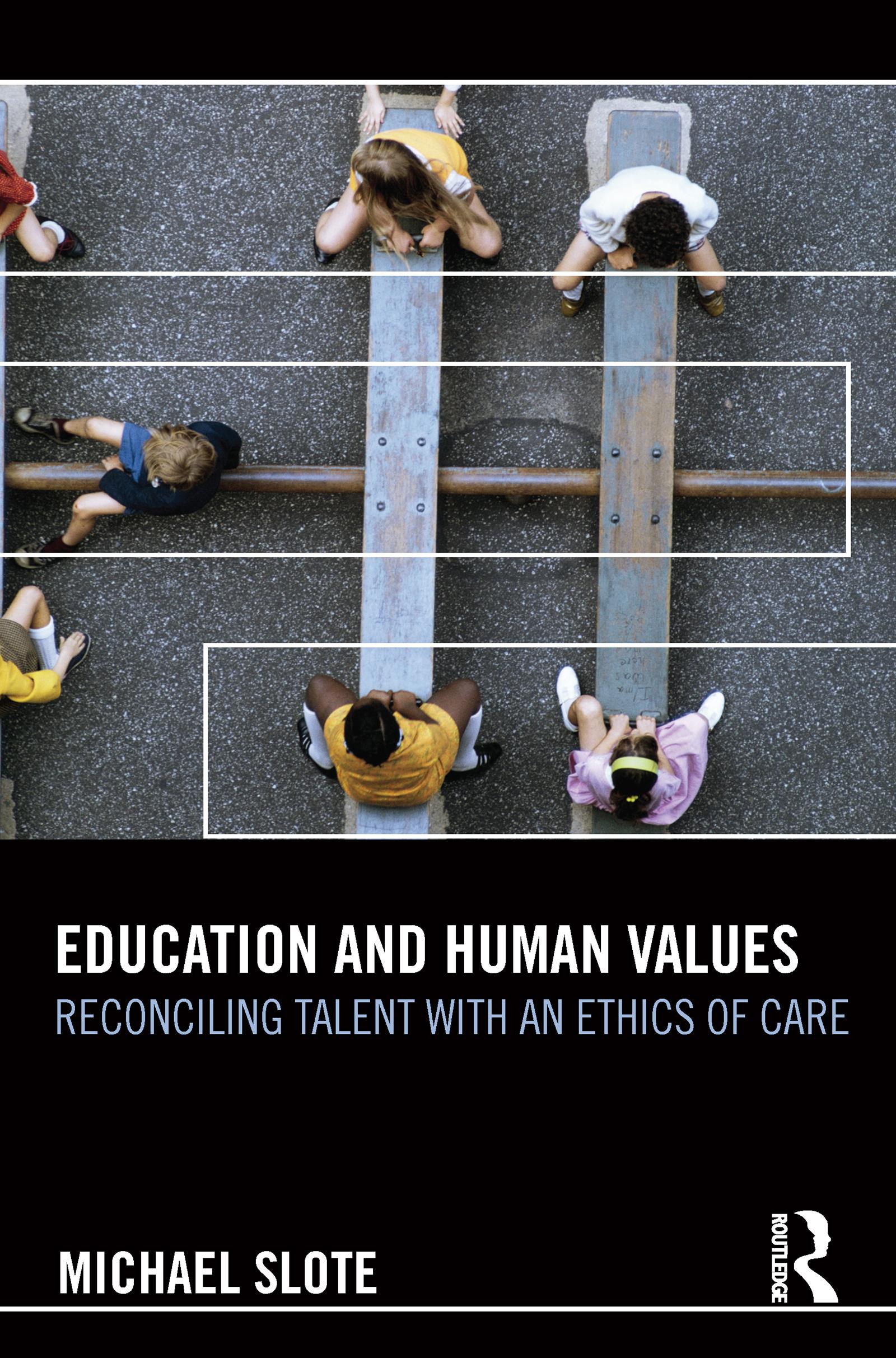
Two of our greatest educational theorists, John Dewey and Nel Noddings, have been reluctant to admit that some students are simply more talented than others. This was no doubt due to their feeling that such an admission was inconsistent with democratic concern for everyone. But there really is such a thing as superior talent; and the present book explains how that admission is compatible with our ideals of caring (and democracy). Traditionalists confident that some disciplines are more important than others haven’t worried that that way of putting things threatens to make those who are excluded feel quite bad about themselves. But an ethics of care can show us how to make these differences much less hurtful and more morally acceptable than anything that has been proposed by traditionalists.
So the present book offers a middle way between the denial of the reality of superior talents and an insensitive insistence on that reality. It argues that care ethics gives us a way to do this, and it bases that claim largely on the promise of such an ethics for moral education in schools and in homes. It is argued on psychological grounds that caring can only take place on the basis of empathy for others, and the book shows in great detail how empathy can be encouraged or develop in school and home contexts. Other approaches to moral education—like Kantian cognitive-developmentalism and Aristotelian character education—can’t account for (increasing) moral motivation in the way that an emphasis on the development of empathy allows. And in the end, it is only students educated via care ethics who will be sensitive to one another in a way that largely undercuts the negative psychological impact of educational institutions and practices that acknowledge the greater talents or creativity that some students have.
Before Memmo my notes were scattered across PDFs. Now a workspace pulls everything into one place — I see exactly what's still left to study.
Memmo's summaries are gold before exams. I don't have to re-read 800 pages two weeks before — just the important parts.
The AI chat has saved me the night before an exam more than once. I just keep asking until I get it — no waiting on a study group to reply.
The quizzes hit exactly what I need to know. Memmo tracks what I get stuck on — so I only practice what's worth it.
Flashcards with spaced repetition are magic. Memmo knows when I'm about to forget something and brings it back.
The AI podcasts are my favorite. I listen on my way to school and get a recap without sitting at a computer.

Handbok i kvalitativa metoder
281 kr

Hållbar utveckling: en introduktion för ingenjörer och andra problemlösare
334 kr

Brymans Samhällsvetenskapliga metoder
390 kr

Projektledning
491 kr

Den orättvisa hälsan: om socioekonomiska skillnader i hälsa och livslängd
326 kr

Vetenskapsteori för nybörjare
196 kr

Organizational Leadership
429 kr

På väg mot läraryrket
172 kr

Det sociala livet i skolan: Socialpsykologiska perspektiv
253 kr

Betygsättningens didaktik
151 kr

Personality
402 kr

Studying Leadership
404 kr

Managing Innovation
477 kr

Introduktion till samhällsvetenskaplig metod
347 kr

The Psychology of Sex and Gender
698 kr

Evidens och kunskap för socialt arbete
207 kr

Introduction to Leadership
605 kr