
Before Memmo my notes were scattered across PDFs. Now a workspace pulls everything into one place — I see exactly what's still left to study.
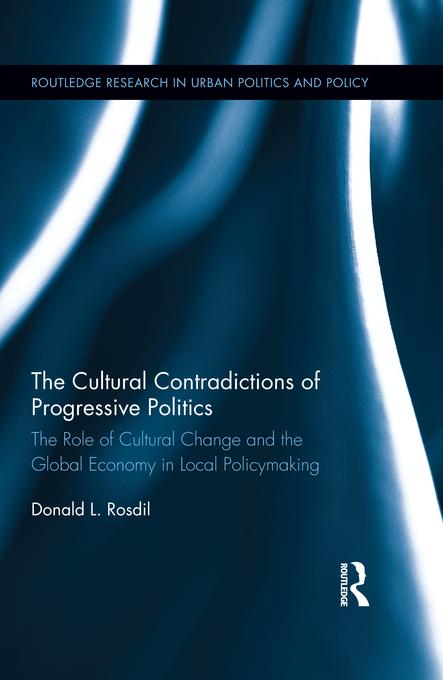
Why do some U.S. cities like Seattle and Boston impose social exactions and sustainability targets on private investment while others like Las Vegas and Houston offer property tax and fee remissions to business, tolerate environmentally hazardous activities such as oil drilling, and express skepticism even about recycling mandates? The behavior of the former cities appears especially puzzling in view of globalization processes that seemingly offer many more options to mobile capital and expose cities’ vulnerability to private investment decisions.
Cultural Contradictions examines the paradoxical finding that some U.S. cities can impose burdensome regulations and extract social and environmental contributions from the private sector despite an apparently weak bargaining position. It usescultural change and the growth of non-traditional subcultures to explain why cities adopt these progressive policies. Responding to the urban policy literature’s tendency to prioritize economic considerations over other kinds of causal factors, the book demonstrates the joint impact of culture and economics in encouraging policy outcomes which emphasize social justice, human rights, and environmental sustainability in large U.S. cities.
The book makes several specific contributions to urban literature. First, it argues that cities in which nontraditional cultural beliefs and practices thrive and which are strongly linked to dynamic economic sectors such as information services, professional, scientific and technical services, financial services, and education and health care services are especially likely to adopt progressive policies. It establishes this claim using both statistical analysis of large-N city samples and a closer investigation of four case studies. Second, it reveals how progressive policies are a plausible response to psychological concerns associated with unconventional ways of life and the nature of postindustrial society. Finally, the book indicates how these new ways of life and postindustrial economic sectors grow in mutually reinforcing ways in order to make these policies acceptable to local economic elites and therefore favorable to the city’s future development.
Before Memmo my notes were scattered across PDFs. Now a workspace pulls everything into one place — I see exactly what's still left to study.
Memmo's summaries are gold before exams. I don't have to re-read 800 pages two weeks before — just the important parts.
The AI chat has saved me the night before an exam more than once. I just keep asking until I get it — no waiting on a study group to reply.
The quizzes hit exactly what I need to know. Memmo tracks what I get stuck on — so I only practice what's worth it.
Flashcards with spaced repetition are magic. Memmo knows when I'm about to forget something and brings it back.
The AI podcasts are my favorite. I listen on my way to school and get a recap without sitting at a computer.

Handbok i kvalitativa metoder
281 kr

Hållbar utveckling: en introduktion för ingenjörer och andra problemlösare
334 kr

Brymans Samhällsvetenskapliga metoder
390 kr

Projektledning
491 kr

Den orättvisa hälsan: om socioekonomiska skillnader i hälsa och livslängd
326 kr

Vetenskapsteori för nybörjare
196 kr

Organizational Leadership
429 kr

På väg mot läraryrket
172 kr

Det sociala livet i skolan: Socialpsykologiska perspektiv
253 kr

Betygsättningens didaktik
151 kr

Personality
402 kr

Studying Leadership
404 kr

Managing Innovation
477 kr

Introduktion till samhällsvetenskaplig metod
347 kr

The Psychology of Sex and Gender
698 kr

Evidens och kunskap för socialt arbete
207 kr

Introduction to Leadership
605 kr