
Before Memmo my notes were scattered across PDFs. Now a workspace pulls everything into one place — I see exactly what's still left to study.
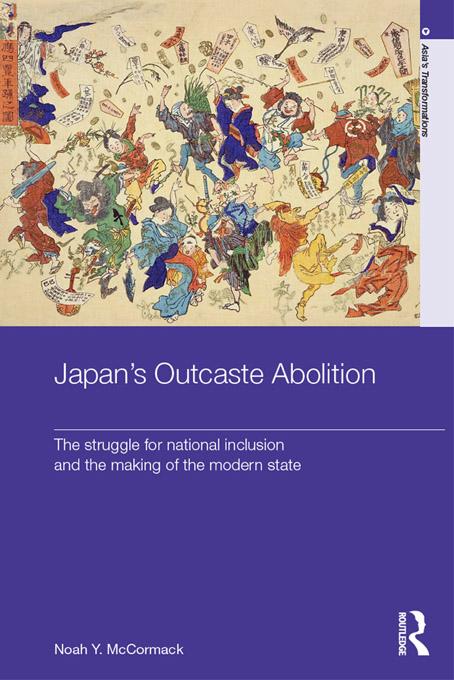
The Tokugawa Shogunate, which governed Japan for two and a half centuries until the mid-1860s, classed people into hierarchically ranked status groups (mibun). The early Tokugawa rulers legally established these status groups through the late-sixteenth and early-seventeenth centuries, adapting and clarifying existing customary divisions between warriors, peasants, artisans, and merchants. Subsequently, during the two and a half centuries of Tokugawa rule, status laws backed by coercive force worked to limit social mobility between groups and regulate relations between people of different status.
This book begins by examining the origins and evolution of the outcaste groups within the Tokugawa status order. It then looks into the complex processes leading up to the abolition of outcaste status and the institution of legal equality in 1871 under the Meiji regime, and analyzes subsequent practices and theories of social discrimination against firstly ‘former outcastes’ and ‘New Commoners’ and then ‘Burakumin’. Finally, it analyses the tactics and strategies of liberation adopted at local and national levels by anti-discrimination movements in Meiji Japan.
Detailing the history of early-modern Japanese outcastes into the post-abolition era, Japan’s Outcaste Abolition explores the dynamics of national inclusion, social exclusion, and the making of disciplined modern subjects. It will therefore be of great interest to students and scholars of Japanese history, culture and society, social history and Asian studies.
Before Memmo my notes were scattered across PDFs. Now a workspace pulls everything into one place — I see exactly what's still left to study.
Memmo's summaries are gold before exams. I don't have to re-read 800 pages two weeks before — just the important parts.
The AI chat has saved me the night before an exam more than once. I just keep asking until I get it — no waiting on a study group to reply.
The quizzes hit exactly what I need to know. Memmo tracks what I get stuck on — so I only practice what's worth it.
Flashcards with spaced repetition are magic. Memmo knows when I'm about to forget something and brings it back.
The AI podcasts are my favorite. I listen on my way to school and get a recap without sitting at a computer.

Handbok i kvalitativa metoder
281 kr

Hållbar utveckling: en introduktion för ingenjörer och andra problemlösare
334 kr

Brymans Samhällsvetenskapliga metoder
390 kr

Projektledning
491 kr

Den orättvisa hälsan: om socioekonomiska skillnader i hälsa och livslängd
326 kr

Vetenskapsteori för nybörjare
196 kr

Organizational Leadership
429 kr

På väg mot läraryrket
172 kr

Det sociala livet i skolan: Socialpsykologiska perspektiv
253 kr

Betygsättningens didaktik
151 kr

Personality
402 kr

Studying Leadership
404 kr

Managing Innovation
477 kr

Introduktion till samhällsvetenskaplig metod
347 kr

The Psychology of Sex and Gender
698 kr

Evidens och kunskap för socialt arbete
207 kr

Introduction to Leadership
605 kr