
Before Memmo my notes were scattered across PDFs. Now a workspace pulls everything into one place — I see exactly what's still left to study.
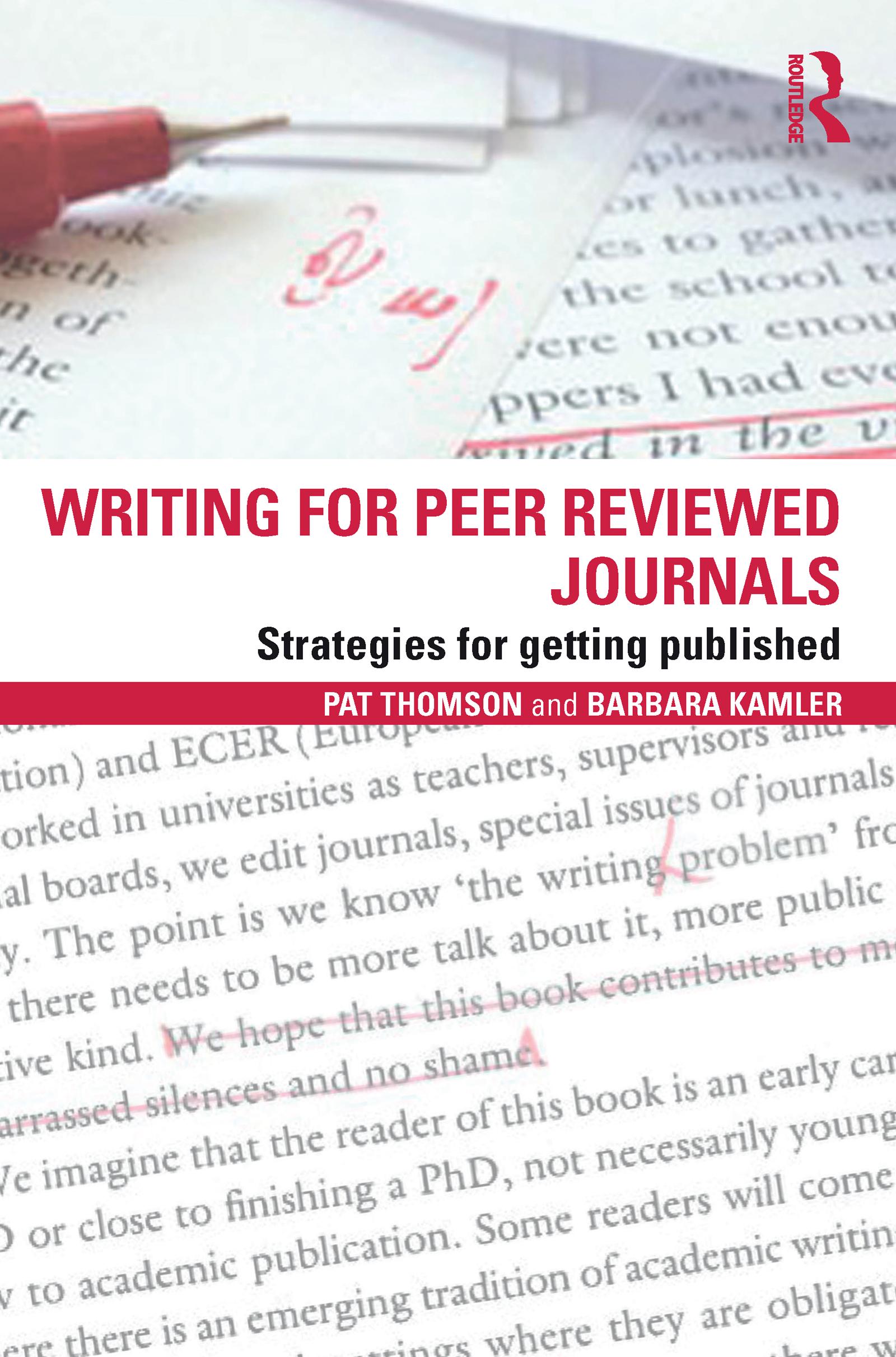
It’s not easy getting published, but everyone has to do it. Writing for Peer Reviewed Journals presents an insider’s perspective on the secret business of academic publishing, making explicit many of the dilemmas and struggles faced by all writers, but rarely discussed. Its unique approach is theorised and practical. It offers a set of moves for writing a journal article that is structured and doable but also attends to the identity issues that manifest on the page and in the politics of academic life.
The book comprehensively assists anyone concerned about getting published; whether they are early in their career or moving from a practice base into higher education, or more experienced but still feeling in need of further information. Avoiding a ‘tips and tricks’ approach, which tends to oversimplify what is at stake in getting published, the authors emphasise the production, nurture and sustainability of scholarship through writing – a focus on both the scholar and the text or what they call text work/identity work. The chapters are ordered to develop a systematic approach to the process, including such topics as:
Writing for Peer Reviewed Journals uses a wide range of multi-disciplinary examples from the writing workshops the authors have run in universities around the world: including the UK, Canada, Australia, New Zealand, Ireland, South Africa, Norway, Sweden, Denmark and the United States. This international approach coupled with theoretically grounded strategies to guide the authoring process ensure that people at all stages of their career are addressed.
This lively book uses a combination of personal stories, student texts, published journal abstracts and excerpts from interviews with journal editors and publishers. Written in an accessible style, one which does not use the patronising ‘you’ of advice books, it offers a collegial approach to a task which is difficult for most scholars, regardless of their years of experience.
Before Memmo my notes were scattered across PDFs. Now a workspace pulls everything into one place — I see exactly what's still left to study.
Memmo's summaries are gold before exams. I don't have to re-read 800 pages two weeks before — just the important parts.
The AI chat has saved me the night before an exam more than once. I just keep asking until I get it — no waiting on a study group to reply.
The quizzes hit exactly what I need to know. Memmo tracks what I get stuck on — so I only practice what's worth it.
Flashcards with spaced repetition are magic. Memmo knows when I'm about to forget something and brings it back.
The AI podcasts are my favorite. I listen on my way to school and get a recap without sitting at a computer.

Handbok i kvalitativa metoder
281 kr

Hållbar utveckling: en introduktion för ingenjörer och andra problemlösare
334 kr

Brymans Samhällsvetenskapliga metoder
390 kr

Projektledning
491 kr

Den orättvisa hälsan: om socioekonomiska skillnader i hälsa och livslängd
326 kr

Vetenskapsteori för nybörjare
196 kr

Organizational Leadership
429 kr

På väg mot läraryrket
172 kr

Det sociala livet i skolan: Socialpsykologiska perspektiv
253 kr

Betygsättningens didaktik
151 kr

Personality
402 kr

Studying Leadership
404 kr

Managing Innovation
477 kr

Introduktion till samhällsvetenskaplig metod
347 kr

The Psychology of Sex and Gender
698 kr

Evidens och kunskap för socialt arbete
207 kr

Introduction to Leadership
605 kr