
Before Memmo my notes were scattered across PDFs. Now a workspace pulls everything into one place — I see exactly what's still left to study.
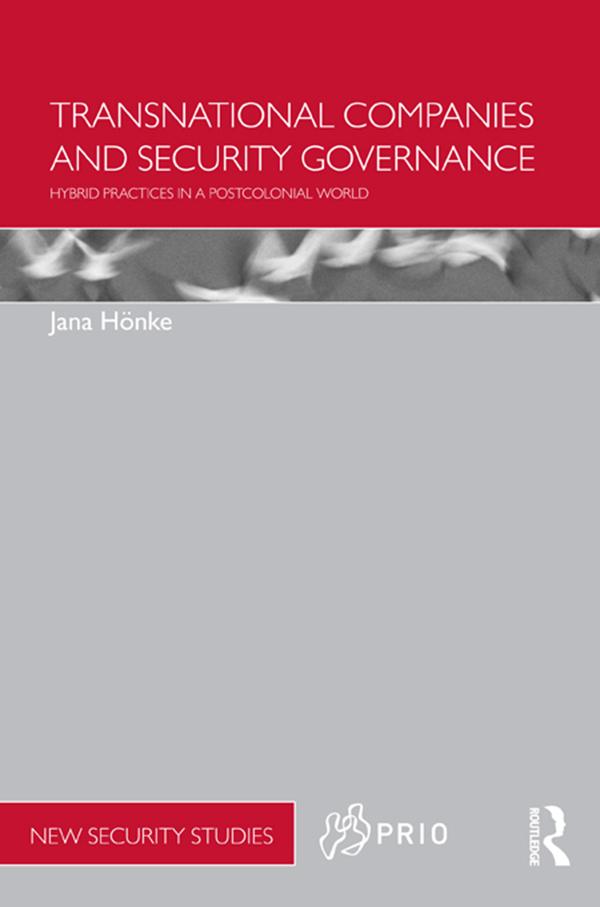
This book investigates governance practiced by non-state actors. It analyses how multinational mining companies protect their sites in fragile contexts and what that tells us about political ordering 'beyond' the state.
Based on extensive primary research in the Democratic Republic of Congo, South Africa, Europe and North America, the book compares companies' political role in the 19th and 21st centuries. It demonstrates that despite a number of disturbing parallels, many contemporary practices are not a reversion to the past but unique to the present. The book discloses hybrid security practices with highly ambiguous effects around the sites of contemporary companies that have committed to norms of corporate social and security responsibility. Companies invest in local communities, and offer human rights training to security forces alongside coercive techniques of fortress protection, and stability-oriented clientele practice and arrangements of indirect rule. The book traces this hybridity back to contradictory collective meaning systems that cross borders and structure the perceptions and choices of company managers, private security officers, NGO collaborators and others practitioners. The book argues that hybrid security practices are not the result of an encounter between a supposed ‘local’ with the liberal ‘global’. Instead, this hybridity is inherent in the transnational and part and parcel of liberal transnational governance. Therefore, more critical reflection of global governance in practice is required.
These issues are sharply pertinent to liberal peacebuilding as well as global governance more broadly. The book will be of interest to anyone interested in business, politics and human rights; critical security studies; peacebuilding and statebuilding; African politics; and ethnographic and sociological approaches to global governance and international relations more generally.
Before Memmo my notes were scattered across PDFs. Now a workspace pulls everything into one place — I see exactly what's still left to study.
Memmo's summaries are gold before exams. I don't have to re-read 800 pages two weeks before — just the important parts.
The AI chat has saved me the night before an exam more than once. I just keep asking until I get it — no waiting on a study group to reply.
The quizzes hit exactly what I need to know. Memmo tracks what I get stuck on — so I only practice what's worth it.
Flashcards with spaced repetition are magic. Memmo knows when I'm about to forget something and brings it back.
The AI podcasts are my favorite. I listen on my way to school and get a recap without sitting at a computer.

Handbok i kvalitativa metoder
281 kr

Hållbar utveckling: en introduktion för ingenjörer och andra problemlösare
334 kr

Brymans Samhällsvetenskapliga metoder
390 kr

Projektledning
491 kr

Den orättvisa hälsan: om socioekonomiska skillnader i hälsa och livslängd
326 kr

Vetenskapsteori för nybörjare
196 kr

Organizational Leadership
429 kr

På väg mot läraryrket
172 kr

Det sociala livet i skolan: Socialpsykologiska perspektiv
253 kr

Betygsättningens didaktik
151 kr

Personality
402 kr

Studying Leadership
404 kr

Managing Innovation
477 kr

Introduktion till samhällsvetenskaplig metod
347 kr

The Psychology of Sex and Gender
698 kr

Evidens och kunskap för socialt arbete
207 kr

Introduction to Leadership
605 kr