
Before Memmo my notes were scattered across PDFs. Now a workspace pulls everything into one place — I see exactly what's still left to study.
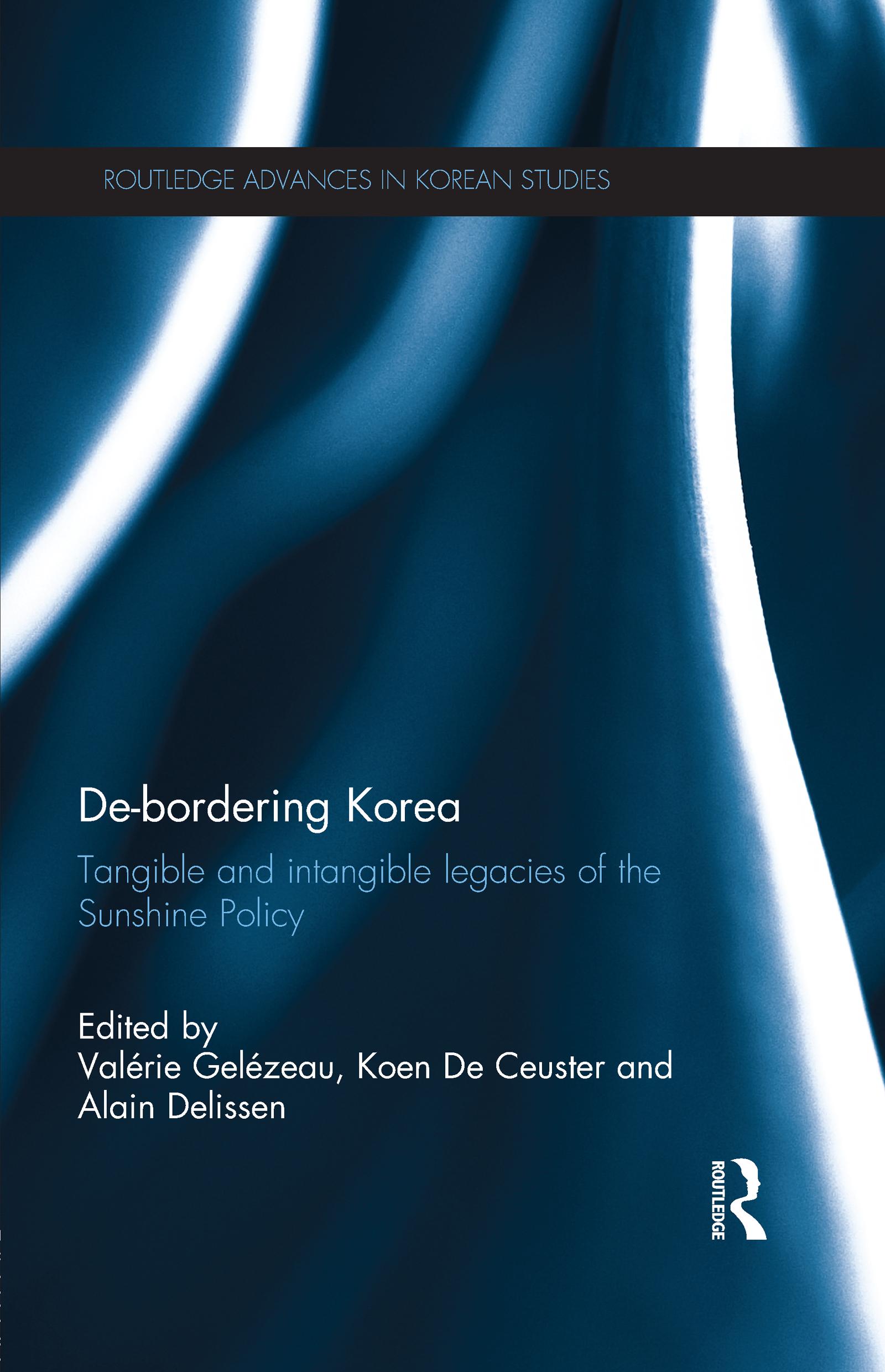
As tensions remain on the Korean peninsula, this book looks back on the decade of improved inter-Korean relations and engagement between 1998 and 2008, now known as the ‘Sunshine Policy’ era. Moving beyond traditional economic and political perspectives, it explores how this decade of intensified cooperation both affected and reshaped existing physical, social and mental boundaries between the two Koreas, and how this ‘de-bordering’ and ‘re-bordering’ has changed the respective attitudes towards the other.
Based around three key themes, ‘Space’, ‘People’, and ‘Representations’, this book looks at the tangible and intangible areas of contact created by North-South engagement during the years of the Sunshine Policy. ‘Space’ focuses on the border regions and discusses how the border reflects the dynamics of multiple types of exchanges and connections between the two Koreas, as well as the new territorial structures these have created. ‘People’ addresses issues in human interactions and social organizations, looking at North Korean defectors in the South, shifting patterns of North-South competition in the ‘Korean’ diaspora of post-Soviet Central Asia, and the actual and physical presence of the Other in various social settings. Finally, ‘Representations’ analyses the image of the other Korea as it is produced, circulated, altered/falsified and received (or not) on either side of the Korean border.
The contributors to this volume draw on a broad spectrum of disciplines ranging from geography, anthropology and archaeology, to media studies, history and sociology, in order to show how the division between North and South Korea functions as an essential matrix for geographical, social and psychological structures on both sides of the border. As such, this book will appeal to students and scholars from numerous fields of study, including Korean studies, Korean culture and society, and international relations more broadly.
Before Memmo my notes were scattered across PDFs. Now a workspace pulls everything into one place — I see exactly what's still left to study.
Memmo's summaries are gold before exams. I don't have to re-read 800 pages two weeks before — just the important parts.
The AI chat has saved me the night before an exam more than once. I just keep asking until I get it — no waiting on a study group to reply.
The quizzes hit exactly what I need to know. Memmo tracks what I get stuck on — so I only practice what's worth it.
Flashcards with spaced repetition are magic. Memmo knows when I'm about to forget something and brings it back.
The AI podcasts are my favorite. I listen on my way to school and get a recap without sitting at a computer.

Handbok i kvalitativa metoder
281 kr

Hållbar utveckling: en introduktion för ingenjörer och andra problemlösare
334 kr

Brymans Samhällsvetenskapliga metoder
390 kr

Projektledning
491 kr

Den orättvisa hälsan: om socioekonomiska skillnader i hälsa och livslängd
326 kr

Organizational Leadership
429 kr

Vetenskapsteori för nybörjare
196 kr

På väg mot läraryrket
172 kr

Det sociala livet i skolan: Socialpsykologiska perspektiv
253 kr

Betygsättningens didaktik
151 kr

Personality
402 kr

Studying Leadership
404 kr

Managing Innovation
477 kr

Introduktion till samhällsvetenskaplig metod
347 kr

The Psychology of Sex and Gender
698 kr

Evidens och kunskap för socialt arbete
207 kr

Introduction to Leadership
605 kr