
Before Memmo my notes were scattered across PDFs. Now a workspace pulls everything into one place — I see exactly what's still left to study.
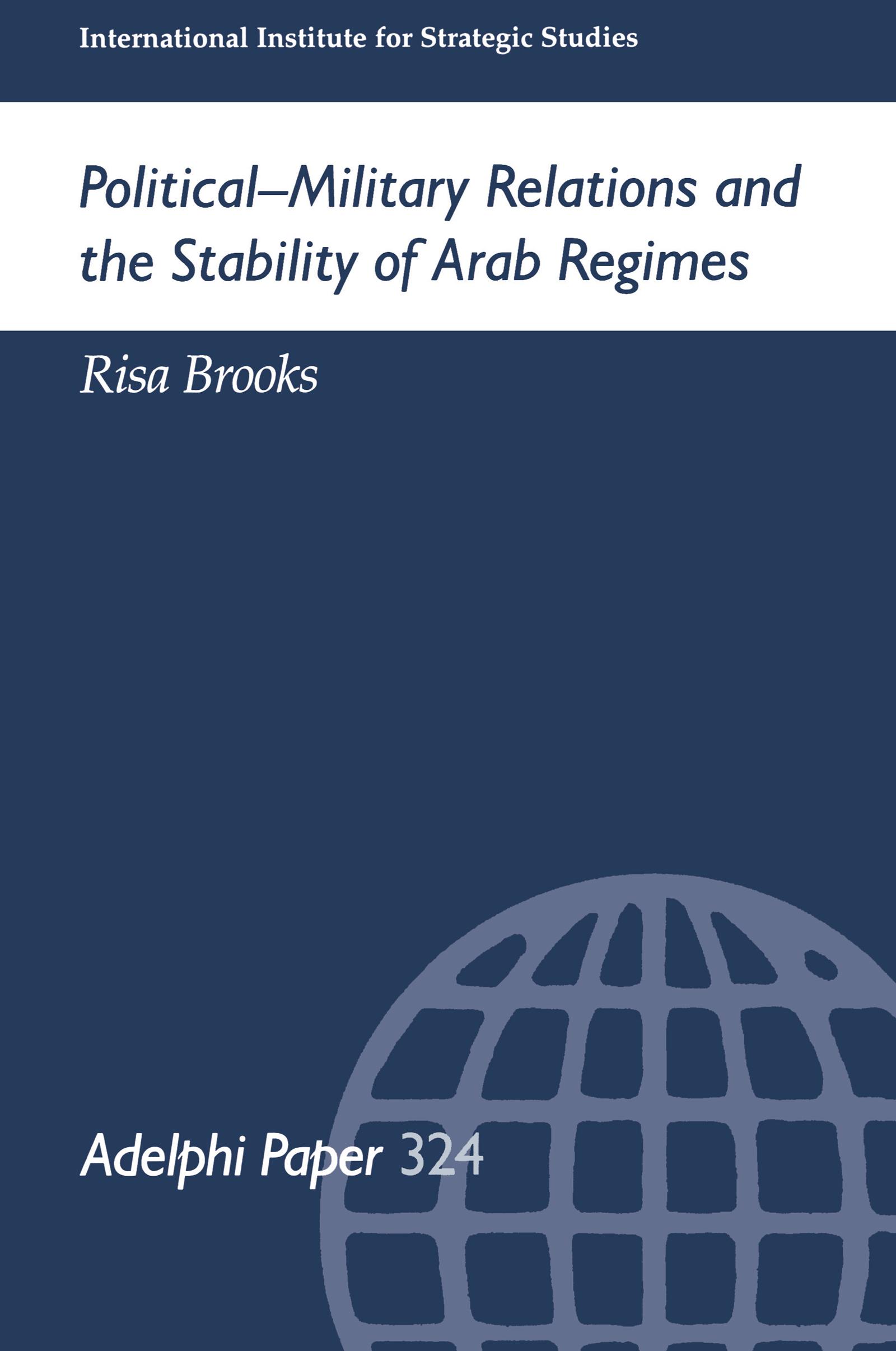
Arab leaderships have been remarkably stable since the 1970s, particularly given the frequency of military coups in preceding years. Nonetheless, the military remains a key force in most Arab states and political leaders must maintain its loyalty if they are to retain office. Regimes have used a range of methods to ensure the military’s backing:
In this paper, Risa Brooks argues that the need for Arab regimes to maintain political control can undermine the combat potential of their armed forces. Centralising command, creating overlapping commands, politicising selection criteria and authorising involvement in economic activities all potentially compromise military effectiveness.
The fact that regimes have successfully managed political–military relations in the past does not mean that they will automatically do so in the future. Changing social or economic conditions could upset the equilibrium in political–military relations. Regime stability cannot therefore be taken for granted. Transition to new leadership is a looming issue for the key regimes in Egypt, Syria and Jordan; political–military relations will play a crucial role in how it is resolved. New leaders must gain and maintain social support if they are to consolidate power. The fact that so many Middle Eastern regimes face uncertain transitions raises the sobering prospect of profound instability and change in this strategically vital region. Maintaining political control is a continuous and evolving process. A breakdown in social support for the leadership, failure to detect a conspiracy within the military and economic or political change that threatens military prerogatives could all disrupt political–military relations. Current stability should not give rise to complacency.
Before Memmo my notes were scattered across PDFs. Now a workspace pulls everything into one place — I see exactly what's still left to study.
Memmo's summaries are gold before exams. I don't have to re-read 800 pages two weeks before — just the important parts.
The AI chat has saved me the night before an exam more than once. I just keep asking until I get it — no waiting on a study group to reply.
The quizzes hit exactly what I need to know. Memmo tracks what I get stuck on — so I only practice what's worth it.
Flashcards with spaced repetition are magic. Memmo knows when I'm about to forget something and brings it back.
The AI podcasts are my favorite. I listen on my way to school and get a recap without sitting at a computer.

Handbok i kvalitativa metoder
281 kr

Hållbar utveckling: en introduktion för ingenjörer och andra problemlösare
334 kr

Brymans Samhällsvetenskapliga metoder
390 kr

Projektledning
491 kr

Den orättvisa hälsan: om socioekonomiska skillnader i hälsa och livslängd
326 kr

Vetenskapsteori för nybörjare
196 kr

Organizational Leadership
429 kr

På väg mot läraryrket
172 kr

Det sociala livet i skolan: Socialpsykologiska perspektiv
253 kr

Betygsättningens didaktik
151 kr

Personality
402 kr

Studying Leadership
404 kr

Managing Innovation
477 kr

Introduktion till samhällsvetenskaplig metod
347 kr

The Psychology of Sex and Gender
698 kr

Evidens och kunskap för socialt arbete
207 kr

Introduction to Leadership
605 kr