
Before Memmo my notes were scattered across PDFs. Now a workspace pulls everything into one place — I see exactly what's still left to study.
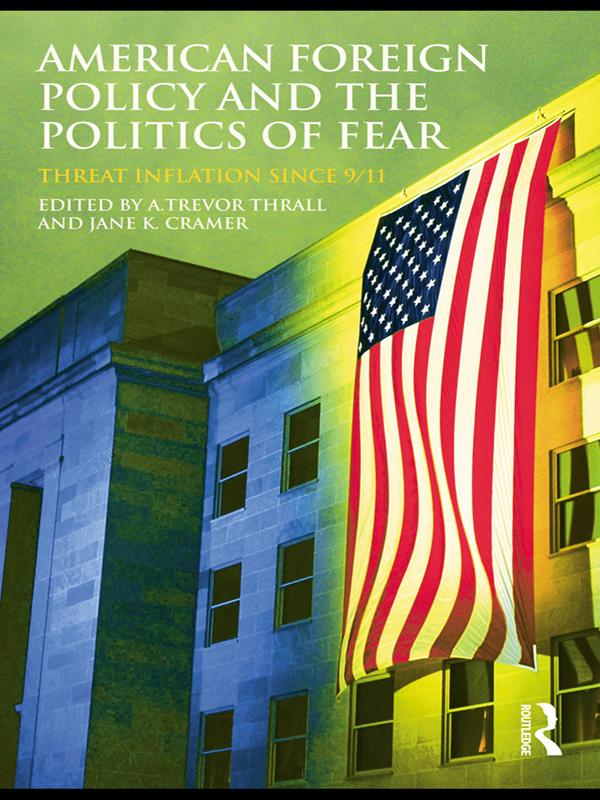
This edited volume addresses the issue of threat inflation in American foreign policy and domestic politics. The Bush administration's aggressive campaign to build public support for an invasion of Iraq reheated fears about the president's ability to manipulate the public, and many charged the administration with 'threat inflation', duping the news media and misleading the public into supporting the war under false pretences.
Presenting the latest research, these essays seek to answer the question of why threat inflation occurs and when it will be successful. Simply defined, it is the effort by elites to create concern for a threat that goes beyond the scope and urgency that disinterested analysis would justify. More broadly, the process concerns how elites view threats, the political uses of threat inflation, the politics of threat framing among competing elites, and how the public interprets and perceives threats via the news media.
The war with Iraq gets special attention in this volume, along with the 'War on Terror'. Although many believe that the Bush administration successfully inflated the Iraq threat, there is not a neat consensus about why this was successful. Through both theoretical contributions and case studies, this book showcases the four major explanations of threat inflation -- realism, domestic politics, psychology, and constructivism -- and makes them confront one another directly. The result is a richer appreciation of this important dynamic in US politics and foreign policy, present and future.
This book will be of much interests to students of US foreign and national security policy, international security, strategic studies and IR in general.
Trevor Thrall is Assistant Professor of Political Science and directs the Master of Public Policy program at the University of Michigan - Dearborn. Jane Kellett Cramer is an Assistant Professor of Political Science at the University of Oregon.
Before Memmo my notes were scattered across PDFs. Now a workspace pulls everything into one place — I see exactly what's still left to study.
Memmo's summaries are gold before exams. I don't have to re-read 800 pages two weeks before — just the important parts.
The AI chat has saved me the night before an exam more than once. I just keep asking until I get it — no waiting on a study group to reply.
The quizzes hit exactly what I need to know. Memmo tracks what I get stuck on — so I only practice what's worth it.
Flashcards with spaced repetition are magic. Memmo knows when I'm about to forget something and brings it back.
The AI podcasts are my favorite. I listen on my way to school and get a recap without sitting at a computer.

Handbok i kvalitativa metoder
281 kr

Hållbar utveckling: en introduktion för ingenjörer och andra problemlösare
334 kr

Brymans Samhällsvetenskapliga metoder
390 kr

Projektledning
491 kr

Den orättvisa hälsan: om socioekonomiska skillnader i hälsa och livslängd
326 kr

Vetenskapsteori för nybörjare
196 kr

Organizational Leadership
429 kr

På väg mot läraryrket
172 kr

Det sociala livet i skolan: Socialpsykologiska perspektiv
253 kr

Betygsättningens didaktik
151 kr

Personality
402 kr

Studying Leadership
404 kr

Managing Innovation
477 kr

Introduktion till samhällsvetenskaplig metod
347 kr

The Psychology of Sex and Gender
698 kr

Evidens och kunskap för socialt arbete
207 kr

Introduction to Leadership
605 kr