
Before Memmo my notes were scattered across PDFs. Now a workspace pulls everything into one place — I see exactly what's still left to study.
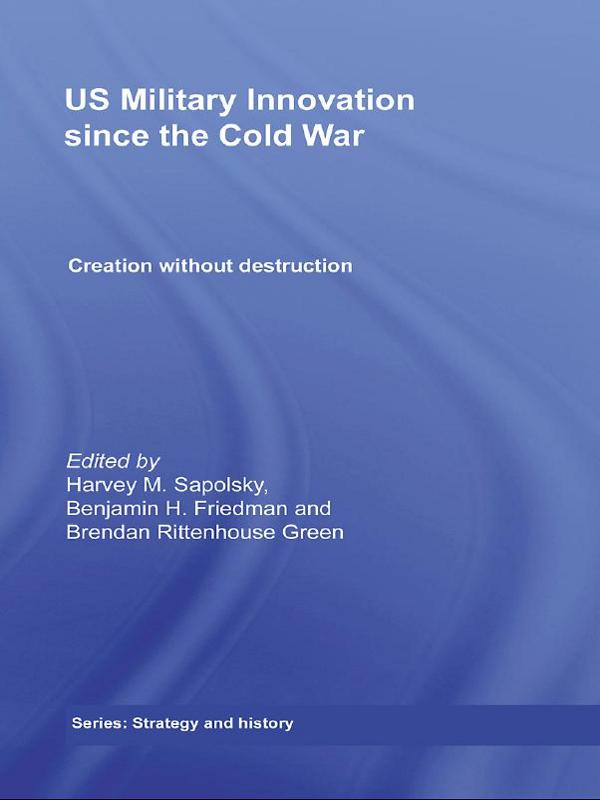
This book explains how the US military reacted to the 'Revolution in Military Affairs' (RMA), and failed to innovate its organization or doctrine to match the technological breakthroughs it brought about.
Many called for the transformation of the US military in the years after the end of the Cold War, seeking the changes in organization and doctrine that would complete the RMA innovation and a commitment to counter-insurgency, peace keeping and nation building missions. This volume describes the origins, uses, and limits of the RMA technologies, examines how each of the five US armed services (categorising the Special Operations as a separate service) made their adjustments both to the technologies and the use of force, and how the role of the civilian officials and the defense industry altered in this process of change and avoidance of change.
The book examines the internal politics of the services as well as civil/military relations to identify the external pressures on the services for significant change in their doctrine and weapons. Many have noted the failure of the services to innovate in what can be called the 'Second Inter-war Period' (the years after the Cold War). This book offers explanations for this failure and arguments about the possible range and desirability of military innovation in the post-Cold war era.
This book will be of great interest to students of strategic studies, US defence politics, military studies, and US politics.
Harvey M. Sapolsky is Professor of Public Policy and Organization in the Department of Political Science at MIT and former Director of the Security Studies Program. Benjamin H. Friedman is a Research Fellow in Defense and Homeland Security Studies at the Cato Institute and a Ph.D. Candidate in Political Science at MIT. Brendan Green is a Ph.D. Candidate in Political Science at MIT and an affiliate of the Security Studies Program.
Before Memmo my notes were scattered across PDFs. Now a workspace pulls everything into one place — I see exactly what's still left to study.
Memmo's summaries are gold before exams. I don't have to re-read 800 pages two weeks before — just the important parts.
The AI chat has saved me the night before an exam more than once. I just keep asking until I get it — no waiting on a study group to reply.
The quizzes hit exactly what I need to know. Memmo tracks what I get stuck on — so I only practice what's worth it.
Flashcards with spaced repetition are magic. Memmo knows when I'm about to forget something and brings it back.
The AI podcasts are my favorite. I listen on my way to school and get a recap without sitting at a computer.

Handbok i kvalitativa metoder
281 kr

Hållbar utveckling: en introduktion för ingenjörer och andra problemlösare
334 kr

Brymans Samhällsvetenskapliga metoder
390 kr

Projektledning
491 kr

Den orättvisa hälsan: om socioekonomiska skillnader i hälsa och livslängd
326 kr

Vetenskapsteori för nybörjare
196 kr

Organizational Leadership
429 kr

På väg mot läraryrket
172 kr

Det sociala livet i skolan: Socialpsykologiska perspektiv
253 kr

Betygsättningens didaktik
151 kr

Personality
402 kr

Studying Leadership
404 kr

Managing Innovation
477 kr

Introduktion till samhällsvetenskaplig metod
347 kr

The Psychology of Sex and Gender
698 kr

Evidens och kunskap för socialt arbete
207 kr

Introduction to Leadership
605 kr