
Before Memmo my notes were scattered across PDFs. Now a workspace pulls everything into one place — I see exactly what's still left to study.
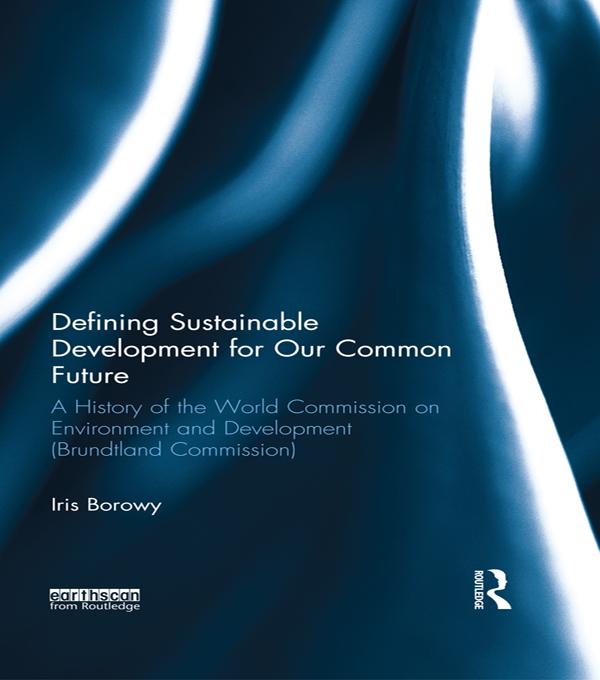
The UN World Commission on Environment and Development, chaired by former Norwegian Prime Minister Gro Harlem Brundtland, alerted the world to the urgency of making progress toward economic development that could be sustained without depleting natural resources or harming the environment. Written by an international group of politicians, civil servants and experts on the environment and development, the Brundtland Report changed sustainable development from a physical notion to one based on social, economic and environmental issues.
This book positions the Brundtland Commission as a key event within a longer series of international reactions to pressing problems of global poverty and environmental degradation. It shows that its report, "Our Common Future", published in 1987, covered much more than its definition of sustainable development as "development that meets the needs of the present without compromising the ability of future generations to meet their own needs" for which it became best known. It also addressed a long list of issues which remain unresolved today. The book explores how the work of the Commission juggled contradictory expectations and world views, which existed within the Commission and beyond, and drew on the concept of sustainable development as a way to reconcile profound differences. The result was both an immense success and disappointment. Coining an irresistibly simple definition enabled the Brundtland Commission to place sustainability firmly on the international agenda. This definition gained acceptability for a potentially divisive concept, but it also diverted attention from underlying demands for fundamental political and social changes.
Meanwhile, the central message of the Commission – the need to make inconvenient sustainability considerations a part of global politics as much as of everyday life – has been side-lined. The book thus assesses to what extent the Brundtland Commission represented an immense step forward or a missed opportunity.
Before Memmo my notes were scattered across PDFs. Now a workspace pulls everything into one place — I see exactly what's still left to study.
Memmo's summaries are gold before exams. I don't have to re-read 800 pages two weeks before — just the important parts.
The AI chat has saved me the night before an exam more than once. I just keep asking until I get it — no waiting on a study group to reply.
The quizzes hit exactly what I need to know. Memmo tracks what I get stuck on — so I only practice what's worth it.
Flashcards with spaced repetition are magic. Memmo knows when I'm about to forget something and brings it back.
The AI podcasts are my favorite. I listen on my way to school and get a recap without sitting at a computer.

Handbok i kvalitativa metoder
281 kr

Hållbar utveckling: en introduktion för ingenjörer och andra problemlösare
334 kr

Brymans Samhällsvetenskapliga metoder
390 kr

Projektledning
491 kr

Den orättvisa hälsan: om socioekonomiska skillnader i hälsa och livslängd
326 kr

Vetenskapsteori för nybörjare
196 kr

Organizational Leadership
429 kr

På väg mot läraryrket
172 kr

Det sociala livet i skolan: Socialpsykologiska perspektiv
253 kr

Betygsättningens didaktik
151 kr

Personality
402 kr

Studying Leadership
404 kr

Managing Innovation
477 kr

Introduktion till samhällsvetenskaplig metod
347 kr

The Psychology of Sex and Gender
698 kr

Evidens och kunskap för socialt arbete
207 kr

Introduction to Leadership
605 kr