
Before Memmo my notes were scattered across PDFs. Now a workspace pulls everything into one place — I see exactly what's still left to study.
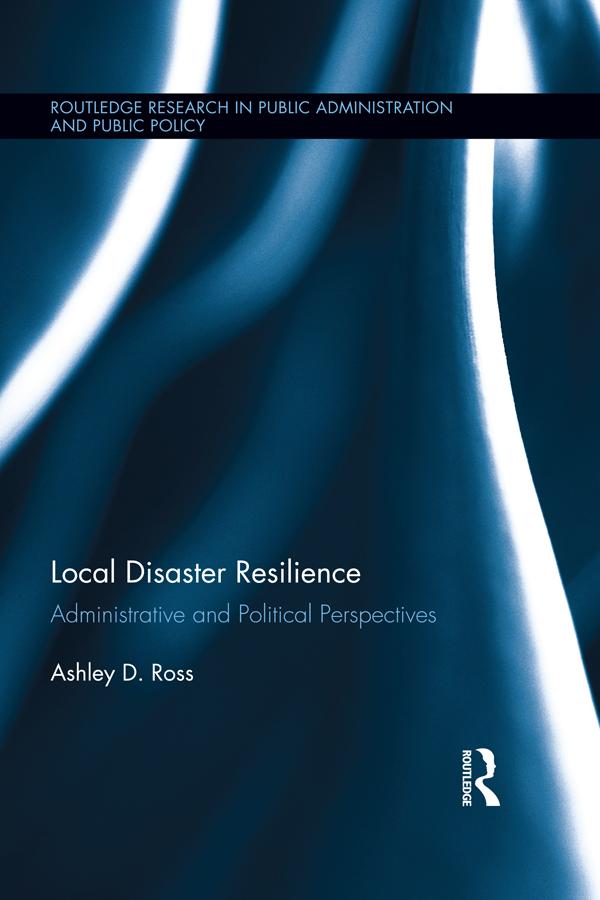
Since 2000, the Gulf Coast states – Texas, Louisiana, Mississippi, Alabama, and Florida – have experienced a series of hurricanes, multiple floods and severe storms, and one oil spill. These disasters have not only been numerous but also devastating. Response to and recovery from these unprecedented disasters has been fraught with missteps in management. In efforts to avoid similar failures in the future, government agencies and policy practitioners have looked to recast emergency management, and community resilience has emerged as a way for to better prevent, manage, and recover from these disasters. How is disaster resilience perceived by local government officials and translated into their disaster response and recovery efforts?
Ashley D. Ross systematically explores and measures disaster resilience across the Gulf Coast to gain a better understanding of how resilience in concept is translated into disaster management practices, particularly on the local government level. In doing so, she presents disaster resilience theory to the Gulf Coast using existing data to create county-level baseline indicators of Gulf Coast disaster resilience and an original survey of county emergency managers and elected municipal officials in 60 counties and 120 municipalities across the Gulf States. The findings of the original survey measure the disaster resilience perceptions held by local government officials, which are examined to identify commonalities and differences across the set of cases. Additional analyses compare these perceptions to objective baseline indicators of disaster resilience to assess how perceptions align with resilience realities.
Local Disaster Resilience not only fills a critical gap in the literature by applying existing theories and models to a region that has experienced the worst disasters the United States has faced in the past decade, but it can also be used as a tool to advance our knowledge of disasters in an interdisciplinary manner.
Before Memmo my notes were scattered across PDFs. Now a workspace pulls everything into one place — I see exactly what's still left to study.
Memmo's summaries are gold before exams. I don't have to re-read 800 pages two weeks before — just the important parts.
The AI chat has saved me the night before an exam more than once. I just keep asking until I get it — no waiting on a study group to reply.
The quizzes hit exactly what I need to know. Memmo tracks what I get stuck on — so I only practice what's worth it.
Flashcards with spaced repetition are magic. Memmo knows when I'm about to forget something and brings it back.
The AI podcasts are my favorite. I listen on my way to school and get a recap without sitting at a computer.

Handbok i kvalitativa metoder
281 kr

Hållbar utveckling: en introduktion för ingenjörer och andra problemlösare
334 kr

Brymans Samhällsvetenskapliga metoder
390 kr

Projektledning
491 kr

Den orättvisa hälsan: om socioekonomiska skillnader i hälsa och livslängd
326 kr

Organizational Leadership
429 kr

Vetenskapsteori för nybörjare
196 kr

På väg mot läraryrket
172 kr

Det sociala livet i skolan: Socialpsykologiska perspektiv
253 kr

Betygsättningens didaktik
151 kr

Personality
402 kr

Studying Leadership
404 kr

Managing Innovation
477 kr

Introduktion till samhällsvetenskaplig metod
347 kr

The Psychology of Sex and Gender
698 kr

Evidens och kunskap för socialt arbete
207 kr

Introduction to Leadership
605 kr