
Before Memmo my notes were scattered across PDFs. Now a workspace pulls everything into one place — I see exactly what's still left to study.
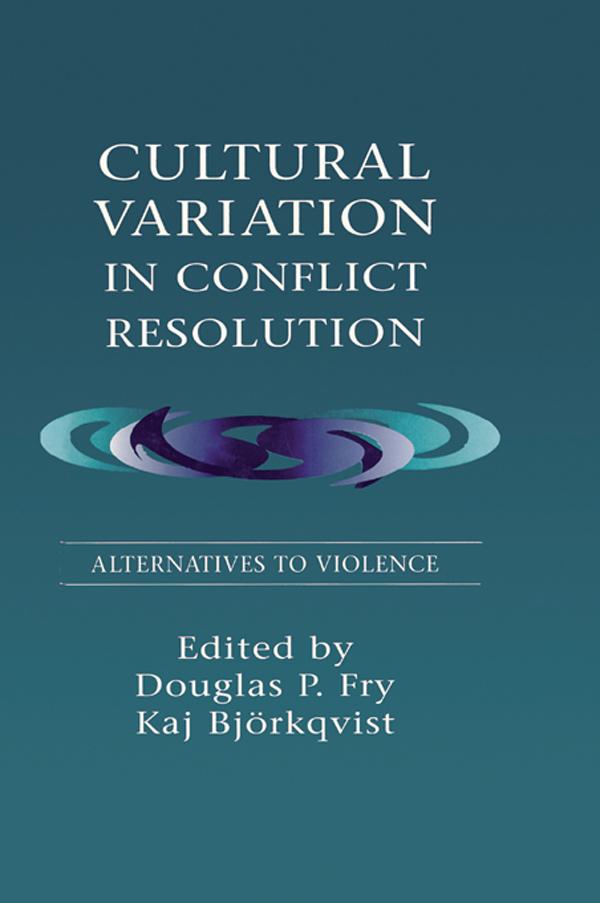
This volume's central purpose is to provide a clearly written, scholarly exploration of cultural variation regarding conflict resolution and in so doing, highlight certain alternatives to violence. It presents an interdisciplinary examination of how conflicts are perceived and handled in a variety of cultural settings. Drawing on data and models from anthropology, psychology, and political science, the chapters analyze conflict resolution across the societal spectrum, including cases from Western and non-Western traditions, complex and tribal societies, and violent and non-violent cultures. While demonstrating the extremely important impact of culture on conflict resolution processes, the book does not solely emphasize cultural specificity. Rather--through introductory chapters, section introductions, and a concluding chapter--the volume editors draw attention to cross-cultural patterns in an attempt to further the search for more general conflict principles.
An explicit message throughout the book is that alternatives to violence exist. The volume demonstrates that at various levels--from the interpersonal to the international-- conflicts can be handled in ways that cause far less pain and destruction than violence. Chapters by psychologists discuss social and cognitive processes for facilitating the learning of alternatives to violence among children and youth. Anthropology contributors explore mechanisms for dealing with social conflict which allow some cultures to remain relatively peaceful and consider implications of their work for reducing violence in other societies. Chapters by former President of Costa Rica, Oscar Arias, and by political scientists examine how non-violent political solutions can be employed as alternatives to warfare and violent resistence.
Before Memmo my notes were scattered across PDFs. Now a workspace pulls everything into one place — I see exactly what's still left to study.
Memmo's summaries are gold before exams. I don't have to re-read 800 pages two weeks before — just the important parts.
The AI chat has saved me the night before an exam more than once. I just keep asking until I get it — no waiting on a study group to reply.
The quizzes hit exactly what I need to know. Memmo tracks what I get stuck on — so I only practice what's worth it.
Flashcards with spaced repetition are magic. Memmo knows when I'm about to forget something and brings it back.
The AI podcasts are my favorite. I listen on my way to school and get a recap without sitting at a computer.

Handbok i kvalitativa metoder
281 kr

Hållbar utveckling: en introduktion för ingenjörer och andra problemlösare
334 kr

Brymans Samhällsvetenskapliga metoder
390 kr

Projektledning
491 kr

Den orättvisa hälsan: om socioekonomiska skillnader i hälsa och livslängd
326 kr

Organizational Leadership
429 kr

Vetenskapsteori för nybörjare
196 kr

På väg mot läraryrket
172 kr

Det sociala livet i skolan: Socialpsykologiska perspektiv
253 kr

Betygsättningens didaktik
151 kr

Personality
402 kr

Studying Leadership
404 kr

Managing Innovation
477 kr

Introduktion till samhällsvetenskaplig metod
347 kr

The Psychology of Sex and Gender
698 kr

Evidens och kunskap för socialt arbete
207 kr

Introduction to Leadership
605 kr