
Before Memmo my notes were scattered across PDFs. Now a workspace pulls everything into one place — I see exactly what's still left to study.
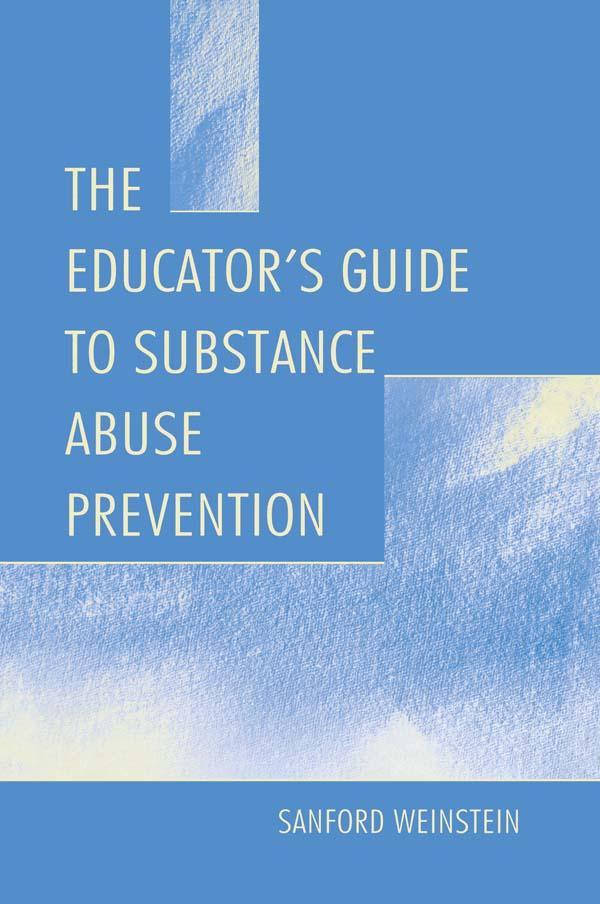
The Educator's Guide to Substance Abuse Prevention is for educators and other school personnel who are concerned about student drug use and school violence. It will help them to appreciate and use their humanity, professional skills, educational ideals, and the school curriculum as tools for substance abuse prevention. Teachers' concerns are addressed in several ways. First, the text provides a guide through which they may resolve personal and professional concerns about the commitments, limits, and boundaries of their working relationships with students. Second, it describes tasks that teachers can perform and mental health issues they can address in creating classroom policies, procedures, and rules to promote healthful learning activity in the classroom. Third, the author summarizes and interprets research and theory about substance abuse as they apply specifically to educational prevention and to professional teaching practice--arguing that classroom management strategies, learning activities, and social interaction are a teacher's primary tools of prevention, and showing how teachers may use these tools in any curricular area and without direct reference to drugs.
A highlight of this text is its emphasis on helping teachers to explore drug-related issues from within the context of their own curricular specialties and to integrate substance abuse prevention with the curriculum in many school subjects--including the arts, literature, social studies, history, government, science, and culture. Action-oriented prevention strategies based on these content areas are suggested. The Educator's Guide to Substance Abuse Prevention:
*focuses primarily on teaching, learning, and prevention rather than on information about drugs;
*helps teachers to better use what they already do, know, and are in order to respond competently, responsibly, and with sensitivity to the needs of their students;
*attends to the needs of teachers who do prevention work and the needs of children who are the target of prevention efforts;
*describes student disappointment and disillusionment with family, school, and community as sources of risk and the legitimate domain in which teachers may serve a curative role;
*provides extensive coverage of historical, social, and cultural issues related to substance abuse and school violence; and
*alerts teachers to the risk to children posed by extremist adult groups, prominent negative role models, popular culture, and peer pressure.
Before Memmo my notes were scattered across PDFs. Now a workspace pulls everything into one place — I see exactly what's still left to study.
Memmo's summaries are gold before exams. I don't have to re-read 800 pages two weeks before — just the important parts.
The AI chat has saved me the night before an exam more than once. I just keep asking until I get it — no waiting on a study group to reply.
The quizzes hit exactly what I need to know. Memmo tracks what I get stuck on — so I only practice what's worth it.
Flashcards with spaced repetition are magic. Memmo knows when I'm about to forget something and brings it back.
The AI podcasts are my favorite. I listen on my way to school and get a recap without sitting at a computer.

Handbok i kvalitativa metoder
281 kr

Hållbar utveckling: en introduktion för ingenjörer och andra problemlösare
334 kr

Brymans Samhällsvetenskapliga metoder
390 kr

Projektledning
491 kr

Den orättvisa hälsan: om socioekonomiska skillnader i hälsa och livslängd
326 kr

Organizational Leadership
429 kr

Vetenskapsteori för nybörjare
196 kr

På väg mot läraryrket
172 kr

Det sociala livet i skolan: Socialpsykologiska perspektiv
253 kr

Betygsättningens didaktik
151 kr

Personality
402 kr

Studying Leadership
404 kr

Managing Innovation
477 kr

Introduktion till samhällsvetenskaplig metod
347 kr

The Psychology of Sex and Gender
698 kr

Evidens och kunskap för socialt arbete
207 kr

Introduction to Leadership
605 kr