
Before Memmo my notes were scattered across PDFs. Now a workspace pulls everything into one place — I see exactly what's still left to study.
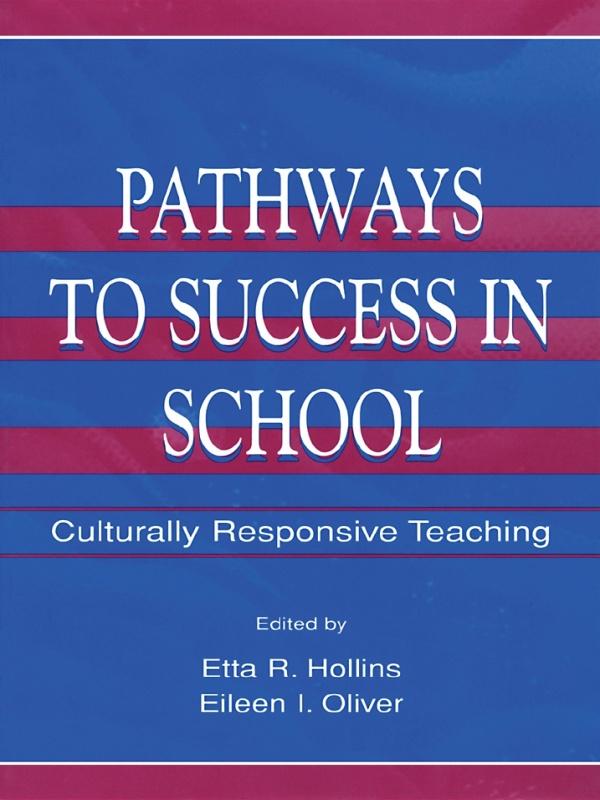
This text is designed to help preservice and in-service teachers identify pathways to productive teaching and learning for students from culturally and experientially diverse backgrounds.
To better serve an increasingly diverse population, teachers need to be competent in selecting and developing culturally responsive curricula and instructional approaches that better facilitate learning for all students. They must be able to attend to diversity within and across cultural groups, and validate students' cultural knowledge acquired outside the classroom. To provide equitable access to learning, they must be able to strategically select or develop instructional approaches that build upon their students' learning propensities, cognitive schemata, experiential backgrounds, and perceptions.
The chapter authors in this text present ways of understanding ones' own thinking (metacognition), and ways of thinking about teaching and learning situations and constructing productive strategies. The reader is engaged in:
*Learning about the context in which he or she will practice,
*Understanding key aspects of student's cultural and experiential background and learning preferences,
*Exploring ways to bring these factors together in framing and selecting meaningful curriculum content and learning experiences.
The volume is organized into three interrelated sections: Part I presents two approaches to becoming a competent practitioner; Part II offers approaches to developing and using culturally relevant pedagogy; Part III addresses curriculum content and design. Helpful pedagogical features are included to facilitate its use as a textbook: Each of the three main parts begins with an overview that provides an introduction and summary of the main ideas addressed and the relationship among ideas presented by different authors; each chapter opens with focus questions and concludes with suggested learning experiences; chapter-end references may be used to expand the reader's knowledge in specific areas.
Before Memmo my notes were scattered across PDFs. Now a workspace pulls everything into one place — I see exactly what's still left to study.
Memmo's summaries are gold before exams. I don't have to re-read 800 pages two weeks before — just the important parts.
The AI chat has saved me the night before an exam more than once. I just keep asking until I get it — no waiting on a study group to reply.
The quizzes hit exactly what I need to know. Memmo tracks what I get stuck on — so I only practice what's worth it.
Flashcards with spaced repetition are magic. Memmo knows when I'm about to forget something and brings it back.
The AI podcasts are my favorite. I listen on my way to school and get a recap without sitting at a computer.

Handbok i kvalitativa metoder
281 kr

Hållbar utveckling: en introduktion för ingenjörer och andra problemlösare
334 kr

Brymans Samhällsvetenskapliga metoder
390 kr

Projektledning
491 kr

Den orättvisa hälsan: om socioekonomiska skillnader i hälsa och livslängd
326 kr

Vetenskapsteori för nybörjare
196 kr

Organizational Leadership
429 kr

På väg mot läraryrket
172 kr

Det sociala livet i skolan: Socialpsykologiska perspektiv
253 kr

Betygsättningens didaktik
151 kr

Personality
402 kr

Studying Leadership
404 kr

Managing Innovation
477 kr

Introduktion till samhällsvetenskaplig metod
347 kr

The Psychology of Sex and Gender
698 kr

Evidens och kunskap för socialt arbete
207 kr

Introduction to Leadership
605 kr