
Before Memmo my notes were scattered across PDFs. Now a workspace pulls everything into one place — I see exactly what's still left to study.
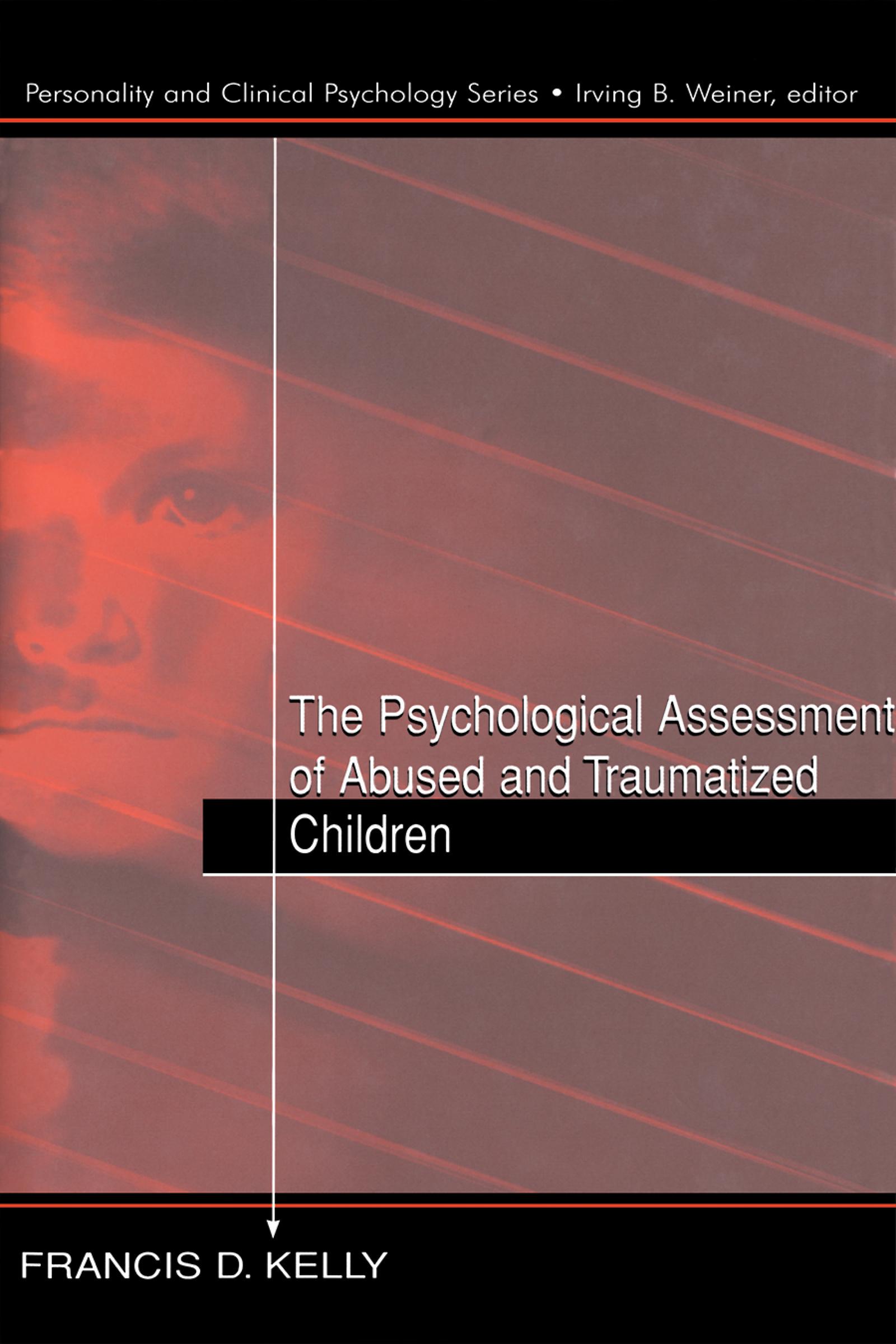
The past decade has seen more and more clinicians involved in the assessment and treatment of abused and traumatized children. They have contributed to an impressively large body of literature on the impact of abuse and trauma at all ages, the focus of which has been the short and long-term sequelae apparent in the child's behavior, emotional experience, and social interaction. But there have been few efforts to investigate the ways in which abuse and trauma damage the intrapsychic systems and structures that often guide, direct, and inform the child's manifest adjustment and functioning. The need to redress the balance was the major impetus for this book.
Kelly offers a clinical paradigm for the personality assessment of abused or traumatized children via projective instruments--the TAT and Rorschach--and shows how various projective measures and indices can be utilized as sensitive barometers of changes in self, object, and ego functioning following therapeutic interventions and other corrective experiences. But further, integrating the tenets of trauma theory and those of psychoanalytic theory, he sets this clinical paradigm in a meaningful theoretical context, and draws on both theory and clinical experience to develop a comprehensive psychological composite of the child who has been maltreated.
Part I provides an overview of theoretical models relevant to the assessment and diagnosis of the maltreated child. Contemporary psychoanalytic theory serves as one frame and is discussed first, with particular emphasis on object relations and ego functions. Equal attention is devoted to developmental psychology as another frame.
Part II reviews relevant research. The Mutality of Autonomy Scale (MOA) and the Social Cognition and Object Relations Scale (SCORS) are introduced as examples of reliable and valid instruments readily employed to assess the impact of abuse or trauma on a child's object relations functioning. Additional Rorschach indices--boundary disturbance measures, thought disorder indices, trauma markers, and defensive functions measures--are discussed as measures of the impact on different facets of ego functioning. These various projective measures can be utilized as sensitive barometers of changes in self, object, and ego functioning following therapeutic interventions and other corrective experiences.
Part III includes a variety of extended clinical illustrations.
Seven cases of boys and girls subjected to varying degrees of abuse and trauma are presented to demonstrate the clinical utility of projective material for assessment, diagnosis, and treatment planning. For the clinician who takes the idiographical-phenomenological approach, appropriate given the uniqueness of each situation of abuse or trauma and the frequent brevity and barrenness of the protocol, such material can open a window onto a rich vista of the child's psychological terrain. The resulting map can point the way to wise decisions about type, timing, and level of therapeutic intervention, the resolution of such process issues as transference and countertransference, plus additional questions.
Two cases of adult women who were abused as children and find themselves continuing to struggle with enduring unresolved issues vis a vis their own children are also presented. These cases underscore the value of TAT and Rorschach material, and object relations measures, in assessing and understanding the abusive and potentially abusive parent.
Before Memmo my notes were scattered across PDFs. Now a workspace pulls everything into one place — I see exactly what's still left to study.
Memmo's summaries are gold before exams. I don't have to re-read 800 pages two weeks before — just the important parts.
The AI chat has saved me the night before an exam more than once. I just keep asking until I get it — no waiting on a study group to reply.
The quizzes hit exactly what I need to know. Memmo tracks what I get stuck on — so I only practice what's worth it.
Flashcards with spaced repetition are magic. Memmo knows when I'm about to forget something and brings it back.
The AI podcasts are my favorite. I listen on my way to school and get a recap without sitting at a computer.

Handbok i kvalitativa metoder
281 kr

Hållbar utveckling: en introduktion för ingenjörer och andra problemlösare
334 kr

Brymans Samhällsvetenskapliga metoder
390 kr

Projektledning
491 kr

Den orättvisa hälsan: om socioekonomiska skillnader i hälsa och livslängd
326 kr

Vetenskapsteori för nybörjare
196 kr

Organizational Leadership
429 kr

På väg mot läraryrket
172 kr

Det sociala livet i skolan: Socialpsykologiska perspektiv
253 kr

Betygsättningens didaktik
151 kr

Personality
402 kr

Studying Leadership
404 kr

Managing Innovation
477 kr

Introduktion till samhällsvetenskaplig metod
347 kr

The Psychology of Sex and Gender
698 kr

Evidens och kunskap för socialt arbete
207 kr

Introduction to Leadership
605 kr