
Before Memmo my notes were scattered across PDFs. Now a workspace pulls everything into one place — I see exactly what's still left to study.
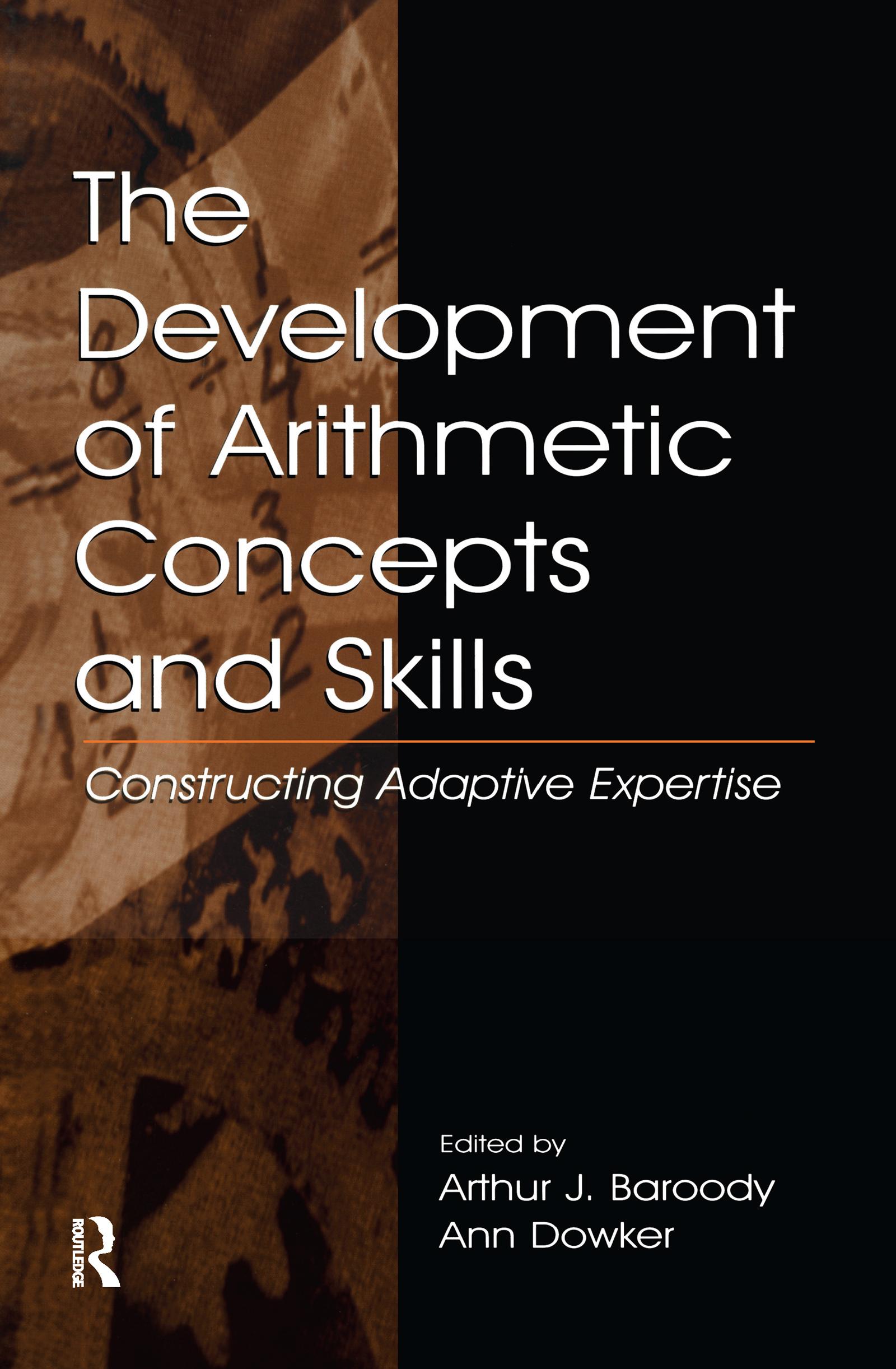
This volume focuses on two related questions that are central to both the psychology of mathematical thinking and learning and to the improvement of mathematics education:
What is the nature of arithmetic expertise?
How can instruction best promote it?
Contributors from a variety of specialities, including cognitive, developmental, educational, and neurological psychology; mathematics education; and special education offer theoretical perspectives and much needed empirical evidence about these issues.
As reported in this volume, both theory and research indicate that the nature of arithmetic expertise and how to best promote it are far more complex than conventional wisdom and many scholars, past and present, have suggested. The results of psychological, educational, and clinical studies using a wide range of arithmetic tasks and populations (including "normally" and atypically developing children, non-injured and brain-injured adults, and savants) all point to the same conclusion: The heart of arithmetic fluency, in general, and the flexible and creative use of strategies, in particular, is what is termed "adaptive expertise" (meaningful or conceptually based knowledge). The construction of adaptive expertise in mathematics is, for the first time, examined across various arithmetic topics and age groups.
This book will be an invaluable resource for researchers and graduate students interested in mathematical cognition and learning (including mathematics educators, developmental and educational psychologists, and neuropsychologists), educators (including teachers, curriculum supervisors, and school administrators), and others interested in improving arithmetic instruction (including officials in national and local education departments, the media, and parents).
Before Memmo my notes were scattered across PDFs. Now a workspace pulls everything into one place — I see exactly what's still left to study.
Memmo's summaries are gold before exams. I don't have to re-read 800 pages two weeks before — just the important parts.
The AI chat has saved me the night before an exam more than once. I just keep asking until I get it — no waiting on a study group to reply.
The quizzes hit exactly what I need to know. Memmo tracks what I get stuck on — so I only practice what's worth it.
Flashcards with spaced repetition are magic. Memmo knows when I'm about to forget something and brings it back.
The AI podcasts are my favorite. I listen on my way to school and get a recap without sitting at a computer.

Handbok i kvalitativa metoder
281 kr

Hållbar utveckling: en introduktion för ingenjörer och andra problemlösare
334 kr

Brymans Samhällsvetenskapliga metoder
390 kr

Projektledning
491 kr

Den orättvisa hälsan: om socioekonomiska skillnader i hälsa och livslängd
326 kr

Vetenskapsteori för nybörjare
196 kr

Organizational Leadership
429 kr

På väg mot läraryrket
172 kr

Det sociala livet i skolan: Socialpsykologiska perspektiv
253 kr

Betygsättningens didaktik
151 kr

Personality
402 kr

Studying Leadership
404 kr

Managing Innovation
477 kr

Introduktion till samhällsvetenskaplig metod
347 kr

The Psychology of Sex and Gender
698 kr

Evidens och kunskap för socialt arbete
207 kr

Introduction to Leadership
605 kr