
Before Memmo my notes were scattered across PDFs. Now a workspace pulls everything into one place — I see exactly what's still left to study.
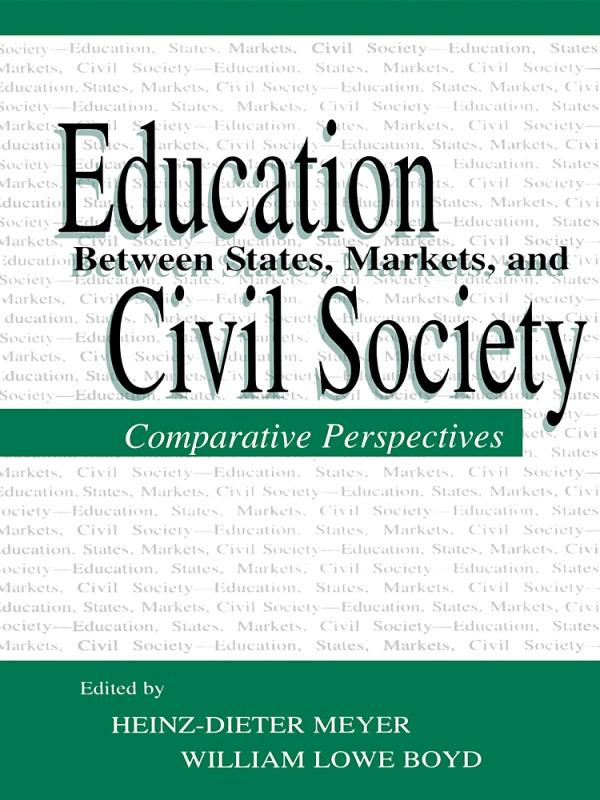
*How should education be organized in pluralistic and multicultural societies?
*What are the roles in education of civil society, markets, governments, and the family?
*How can the idea of the civil society help to reorient education policy discussions that are sometimes stuck in either-or juxtapositions of "market versus government" or "individualism versus communitarianism?"
*What are some of the traditions of civil society--across countries and across history--that educators and policymakers today can revive or build on?
These questions are at the center of this book. Its goal is to understand how we can accommodate cultural, ethnic, and religious pluralism in a political and conceptual framework that is sufficiently flexible to combine choice with equity, a commitment to a shared civil and political culture with openness to exploring and affirming the distinct ethnicity, race, creed, or culture of different groups.
To address these questions, the authors take up the notion of the civil society, an idea that has experienced a popular and scholarly revival in recent years as numerous citizens, action groups, political philosophers, and social scientists make the case that only a democratic civil society can sustain a democratic state. The implications of this development for education have to date been very little explored. This book is a step toward addressing this gap.
Going beyond simple juxtapositions of "market versus government" in education reform, the book as a whole develops an integrative perspective informed by the idea of the civil society. It combines current policy issues with a look at their historical development, and evaluates U.S. educational policy in the context of a range of international cases. The authors--education scholars, sociologists, economists, historians, and philosophers-- explore from diverse disciplinary, political, and philosophical points of view, the potential of the civil society and civic associations for education. At the same time, they share the hope that a thorough reconsideration of the role of the state, the market, and the civil society will help to energize ongoing experiments with charter schools, voucher schemes, and a variety of other plans to increase educational and school autonomy.
Before Memmo my notes were scattered across PDFs. Now a workspace pulls everything into one place — I see exactly what's still left to study.
Memmo's summaries are gold before exams. I don't have to re-read 800 pages two weeks before — just the important parts.
The AI chat has saved me the night before an exam more than once. I just keep asking until I get it — no waiting on a study group to reply.
The quizzes hit exactly what I need to know. Memmo tracks what I get stuck on — so I only practice what's worth it.
Flashcards with spaced repetition are magic. Memmo knows when I'm about to forget something and brings it back.
The AI podcasts are my favorite. I listen on my way to school and get a recap without sitting at a computer.

Handbok i kvalitativa metoder
281 kr

Hållbar utveckling: en introduktion för ingenjörer och andra problemlösare
334 kr

Brymans Samhällsvetenskapliga metoder
390 kr

Projektledning
491 kr

Den orättvisa hälsan: om socioekonomiska skillnader i hälsa och livslängd
326 kr

Vetenskapsteori för nybörjare
196 kr

Organizational Leadership
429 kr

På väg mot läraryrket
172 kr

Det sociala livet i skolan: Socialpsykologiska perspektiv
253 kr

Betygsättningens didaktik
151 kr

Personality
402 kr

Studying Leadership
404 kr

Managing Innovation
477 kr

Introduktion till samhällsvetenskaplig metod
347 kr

The Psychology of Sex and Gender
698 kr

Evidens och kunskap för socialt arbete
207 kr

Introduction to Leadership
605 kr