
Before Memmo my notes were scattered across PDFs. Now a workspace pulls everything into one place — I see exactly what's still left to study.
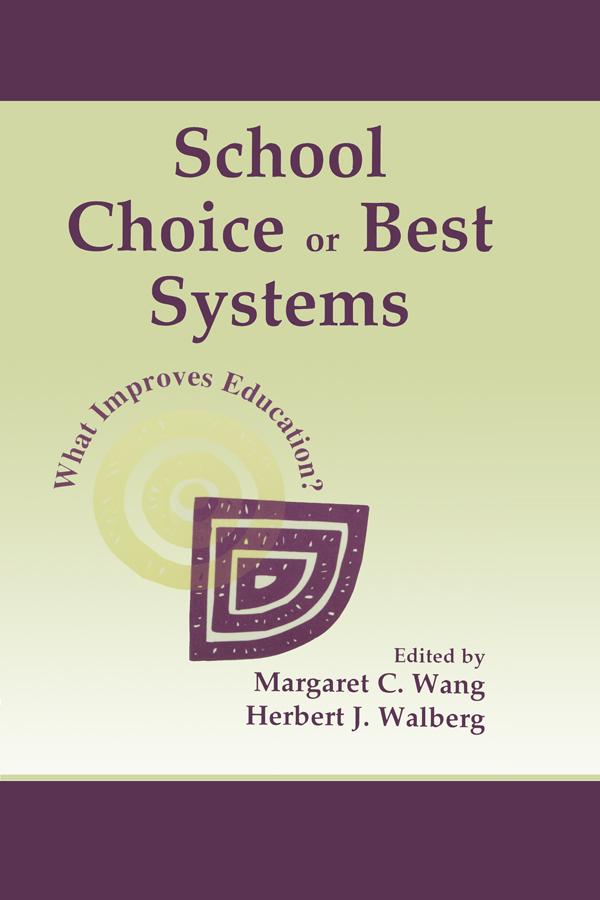
This book addresses one of the most urgent questions in American society today, one that is currently in the spotlight and hotly debated on all sides: Who shall rule the schools--parents or educators?
School Choice or Best Systems: What Improves Education? presents an overview of research and practical applications of innovative--even radical--school reforms being implemented across the United States. These fall along a continuum ranging from "parental choice" to "best systems." At the one extreme are schools of choice, which allow parents to choose and even govern schools for their children. These include charter schools, traditional private and parochial schools, schools that are privately governed but publicly funded through vouchers, and those that are funded by private scholarships provided by both corporations and wealthy individuals. At the other extreme are centralized state or district systems, based on reform initiatives and new systems of education that have been developed in response to views of citizens and legislators that schools can do much better. These schools, which specify uniform goals, policies, and programs for each school, are highly innovative systems based on research or representing advanced thinking about "what works," and have attracted wide interest.
Important questions related to schools of choice and best systems are addressed: How can we choose among schools of choice and best systems? Among the various approaches within each of these alternatives? How can we understand their guiding principles and operational practices? What results do they produce? How can we evaluate their claims? In choosing among the alternatives, how should issues of student achievement, accountability, costs, feasibility, and equity be factored in?
This volume brings together leading researchers and education leaders who have carried out the latest studies and advances in the field, providing a forum for them to set forth the arguments and evidence that will be most helpful in making choices for tomorrow's schools. It does not provide a single "right" answer--values and preferences differ across parents, schools, districts, and states. However, there are benefits for all from seeing the rigorous research, challenging thinking, and alternate points of view this volume presents.
Before Memmo my notes were scattered across PDFs. Now a workspace pulls everything into one place — I see exactly what's still left to study.
Memmo's summaries are gold before exams. I don't have to re-read 800 pages two weeks before — just the important parts.
The AI chat has saved me the night before an exam more than once. I just keep asking until I get it — no waiting on a study group to reply.
The quizzes hit exactly what I need to know. Memmo tracks what I get stuck on — so I only practice what's worth it.
Flashcards with spaced repetition are magic. Memmo knows when I'm about to forget something and brings it back.
The AI podcasts are my favorite. I listen on my way to school and get a recap without sitting at a computer.

Handbok i kvalitativa metoder
281 kr

Hållbar utveckling: en introduktion för ingenjörer och andra problemlösare
334 kr

Brymans Samhällsvetenskapliga metoder
390 kr

Projektledning
491 kr

Den orättvisa hälsan: om socioekonomiska skillnader i hälsa och livslängd
326 kr

Vetenskapsteori för nybörjare
196 kr

Organizational Leadership
429 kr

På väg mot läraryrket
172 kr

Det sociala livet i skolan: Socialpsykologiska perspektiv
253 kr

Betygsättningens didaktik
151 kr

Personality
402 kr

Studying Leadership
404 kr

Managing Innovation
477 kr

Introduktion till samhällsvetenskaplig metod
347 kr

The Psychology of Sex and Gender
698 kr

Evidens och kunskap för socialt arbete
207 kr

Introduction to Leadership
605 kr