
Before Memmo my notes were scattered across PDFs. Now a workspace pulls everything into one place — I see exactly what's still left to study.
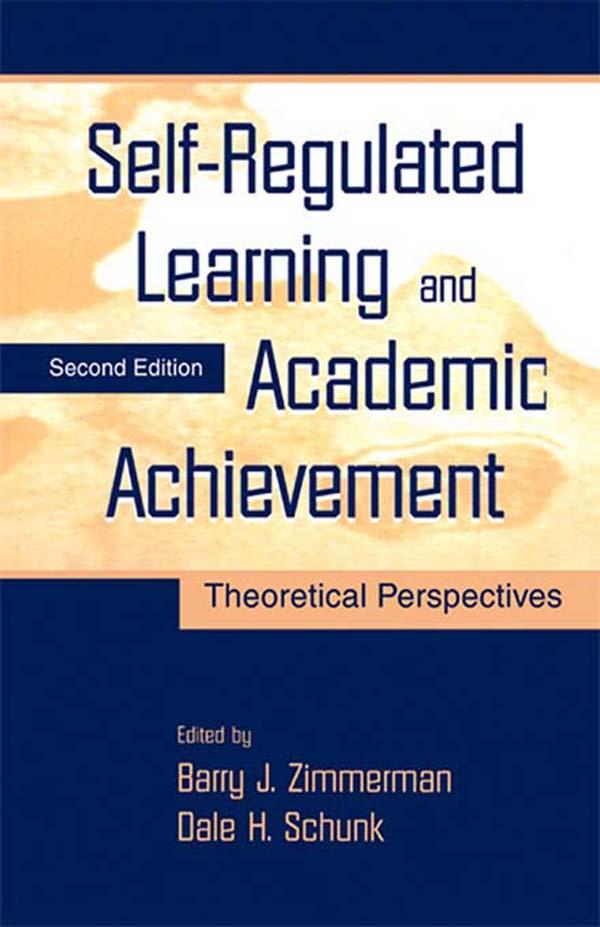
This volume brings together internationally known researchers representing different theoretical perspectives on students' self-regulation of learning. Diverse theories on how students become self-regulated learners are compared in terms of their conceptual origins, scientific form, research productivity, and pedagogical effectiveness. This is the only comprehensive comparison of diverse classical theories of self-regulated learning in print.
The first edition of this text, published in 1989, presented descriptions of such differing perspectives as operant, phenomenological, social learning, volitional, Vygotskian, and constructivist theories. In this new edition, the same prominent editors and authors reassess these classic models in light of a decade of very productive research. In addition, an information processing perspective is included, reflecting its growing prominence.
Self-regulation models have proven especially appealing to teachers, coaches, and tutors looking for specific recommendations regarding how students activate, alter, and sustain their learning practices. Techniques for enhancing these processes have been studied with considerable success in tutoring sessions, computer learning programs, coaching sessions, and self-directed practice sessions. The results of these applications are discussed in this new edition.
The introductory chapter presents a historical overview of research and a theoretical framework for comparing and contrasting the theories described in the following chapters, all of which follow a common organizational format. This parallel format enables the book to function like an authored textbook rather than a typical edited volume. The final chapter offers an historical assessment of changes in theory and trends for future research.
This volume is especially relevant for students and professionals in educational psychology, school psychology, guidance and counseling, developmental psychology, child and family development, as well as for students in general teacher education.
Before Memmo my notes were scattered across PDFs. Now a workspace pulls everything into one place — I see exactly what's still left to study.
Memmo's summaries are gold before exams. I don't have to re-read 800 pages two weeks before — just the important parts.
The AI chat has saved me the night before an exam more than once. I just keep asking until I get it — no waiting on a study group to reply.
The quizzes hit exactly what I need to know. Memmo tracks what I get stuck on — so I only practice what's worth it.
Flashcards with spaced repetition are magic. Memmo knows when I'm about to forget something and brings it back.
The AI podcasts are my favorite. I listen on my way to school and get a recap without sitting at a computer.

Handbok i kvalitativa metoder
281 kr

Hållbar utveckling: en introduktion för ingenjörer och andra problemlösare
334 kr

Brymans Samhällsvetenskapliga metoder
390 kr

Projektledning
491 kr

Den orättvisa hälsan: om socioekonomiska skillnader i hälsa och livslängd
326 kr

Organizational Leadership
429 kr

Vetenskapsteori för nybörjare
196 kr

På väg mot läraryrket
172 kr

Det sociala livet i skolan: Socialpsykologiska perspektiv
253 kr

Betygsättningens didaktik
151 kr

Personality
402 kr

Studying Leadership
404 kr

Managing Innovation
477 kr

Introduktion till samhällsvetenskaplig metod
347 kr

The Psychology of Sex and Gender
698 kr

Evidens och kunskap för socialt arbete
207 kr

Introduction to Leadership
605 kr