
Before Memmo my notes were scattered across PDFs. Now a workspace pulls everything into one place — I see exactly what's still left to study.
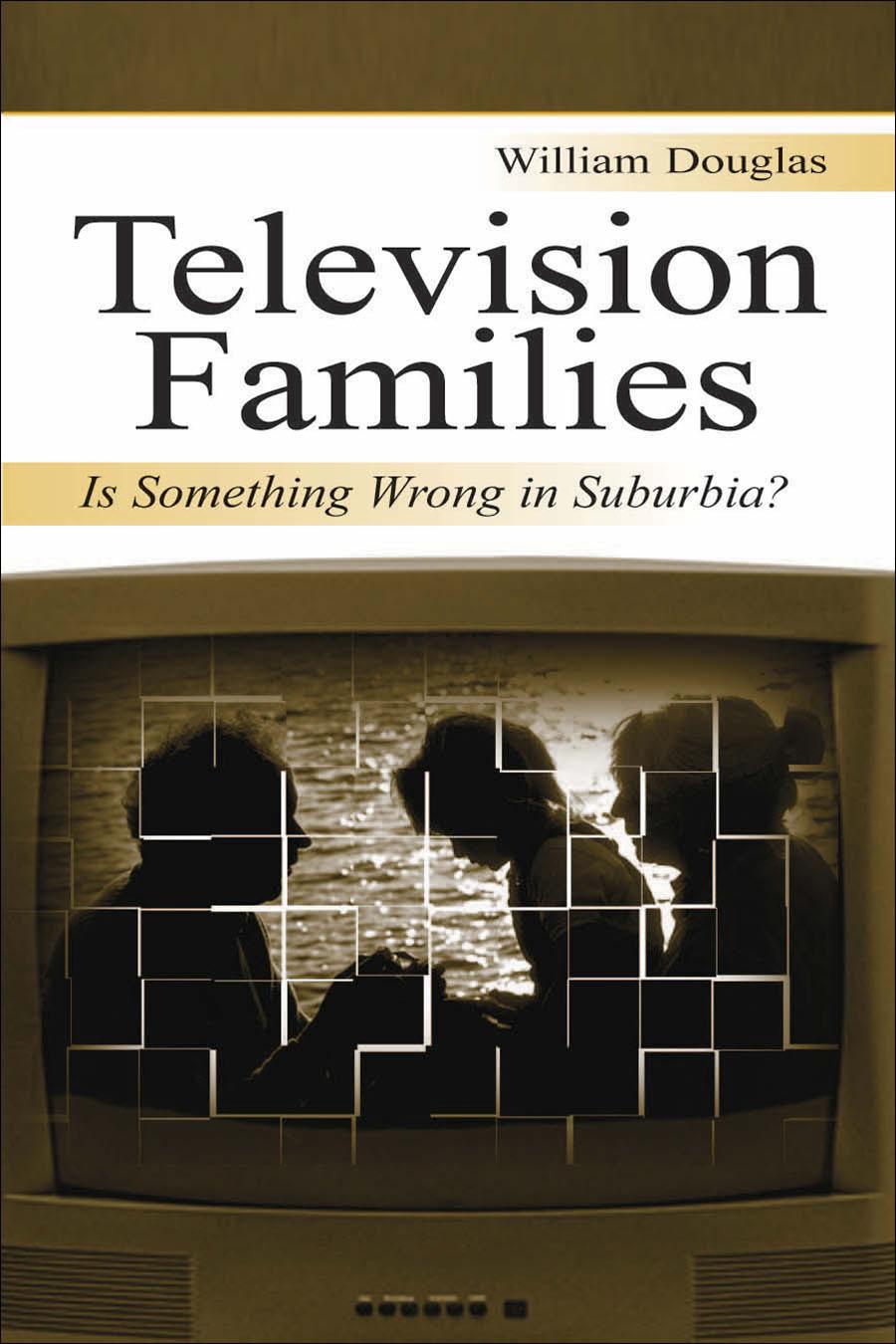
This volume examines the analysis that was designed to map the development of the television family and assess its current state and, at the same time, to provide insight into the tangled relationships between fictional and real family life. In order to do this, the investigation examines the evolution of the American family, paying special attention to the postwar family, which is not only used recurrently as a benchmark for assessing the performance of modern families but also constituted television's first generation of families. The investigation also traces the evolution of the popular family in vaudeville, comics, and radio. However, the primary focus of the examination is the development of the television family, from families, such as the Nelsons, Andersons, and Cleavers, to more contemporary families, such as the Huxtables, Conners, and Taylors.
The unit of analysis for the investigation is the relationship rather than the individual. Hence, the book deals with the portrayal of spousal, parent-child, and sibling relationships and how those portrayals differ across time and across groups defined by ethnicity, gender, and age. Moreover, the relational analysis is expansive so that television family relationships are examined in regard to power and affect, performance, and satisfaction and stability.
Television Families provides a thorough summary and critical review of extant research, designed to promote informed classroom discussion. At the same time, it advances a number of hypotheses and recommendations and, as such, is intended to influence subsequent theory and research in the area. The book is intended for senior undergraduate students, graduate students, and television and family researchers.
Before Memmo my notes were scattered across PDFs. Now a workspace pulls everything into one place — I see exactly what's still left to study.
Memmo's summaries are gold before exams. I don't have to re-read 800 pages two weeks before — just the important parts.
The AI chat has saved me the night before an exam more than once. I just keep asking until I get it — no waiting on a study group to reply.
The quizzes hit exactly what I need to know. Memmo tracks what I get stuck on — so I only practice what's worth it.
Flashcards with spaced repetition are magic. Memmo knows when I'm about to forget something and brings it back.
The AI podcasts are my favorite. I listen on my way to school and get a recap without sitting at a computer.

Handbok i kvalitativa metoder
281 kr

Hållbar utveckling: en introduktion för ingenjörer och andra problemlösare
334 kr

Brymans Samhällsvetenskapliga metoder
390 kr

Projektledning
491 kr

Den orättvisa hälsan: om socioekonomiska skillnader i hälsa och livslängd
326 kr

Organizational Leadership
429 kr

Vetenskapsteori för nybörjare
196 kr

På väg mot läraryrket
172 kr

Det sociala livet i skolan: Socialpsykologiska perspektiv
253 kr

Betygsättningens didaktik
151 kr

Personality
402 kr

Studying Leadership
404 kr

Managing Innovation
477 kr

Introduktion till samhällsvetenskaplig metod
347 kr

The Psychology of Sex and Gender
698 kr

Evidens och kunskap för socialt arbete
207 kr

Introduction to Leadership
605 kr