
Before Memmo my notes were scattered across PDFs. Now a workspace pulls everything into one place — I see exactly what's still left to study.
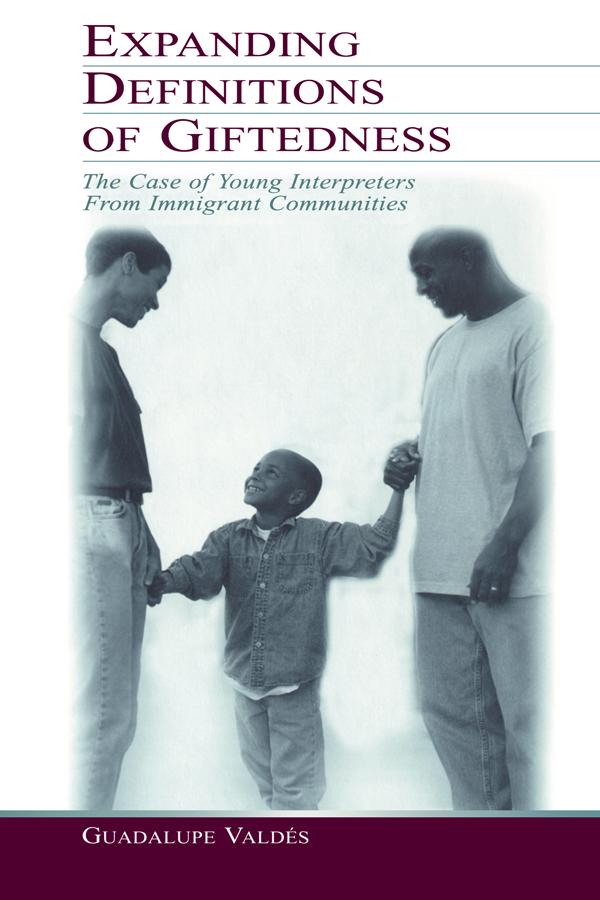
This book is about bilingual young people who have been selected by their families to carry out the hard work of interpreting and translating to mediate communication between themselves and the outside world--between minority and majority communities. It examines the experiences of these young interpreters and the skills they develop in order to fulfill this role.
The authors' purpose in this volume is to contribute to extending current definitions of gifted and talented, by proposing and offering evidence that the young people who are selected to serve as family interpreters perform at remarkably high levels of accomplishment when compared with others of their age, experience, and environment, and should thus clearly be included in the 1993 U.S. federal definition of giftedness.
They maintain that not only are these capabilities currently overlooked by existing assessment procedures, but also that there is little understanding of the ways in which the unique talents of young interpreters might be nurtured and developed in academic settings.
A strong case is made that in order for such students to be identified as gifted on the basis of their bilingual abilities, the field of gifted and talented education must embrace the concept that bilingualism is a strength. The field must also make developing bilingualism a focus of programs designed to meet the needs of the increasingly multilingual student population in the United States.
The research this book reports--part of a larger five-year study of giftedness through linguistic and cultural lenses, funded by OERI through the National Research Center on the Gifted and Talented--was conducted by researchers whose background is very much outside the field of gifted education. Rather, their focus is on language, working within the traditions of qualitative sociolinguistics. Thus, this book offers a unique approach to the exploration of giftedness. It asks researchers and practitioners ordinarily accustomed to working with quantitative data to examine and make sense of detailed and rich analyses of students' linguistic performance, and argues that it is only by understanding the challenges of such bilingual interactions that the field of gifted and talented education can expand and reframe its vision of giftedness.
Before Memmo my notes were scattered across PDFs. Now a workspace pulls everything into one place — I see exactly what's still left to study.
Memmo's summaries are gold before exams. I don't have to re-read 800 pages two weeks before — just the important parts.
The AI chat has saved me the night before an exam more than once. I just keep asking until I get it — no waiting on a study group to reply.
The quizzes hit exactly what I need to know. Memmo tracks what I get stuck on — so I only practice what's worth it.
Flashcards with spaced repetition are magic. Memmo knows when I'm about to forget something and brings it back.
The AI podcasts are my favorite. I listen on my way to school and get a recap without sitting at a computer.

Handbok i kvalitativa metoder
281 kr

Hållbar utveckling: en introduktion för ingenjörer och andra problemlösare
334 kr

Brymans Samhällsvetenskapliga metoder
390 kr

Projektledning
491 kr

Den orättvisa hälsan: om socioekonomiska skillnader i hälsa och livslängd
326 kr

Organizational Leadership
429 kr

Vetenskapsteori för nybörjare
196 kr

På väg mot läraryrket
172 kr

Det sociala livet i skolan: Socialpsykologiska perspektiv
253 kr

Betygsättningens didaktik
151 kr

Personality
402 kr

Studying Leadership
404 kr

Managing Innovation
477 kr

Introduktion till samhällsvetenskaplig metod
347 kr

The Psychology of Sex and Gender
698 kr

Evidens och kunskap för socialt arbete
207 kr

Introduction to Leadership
605 kr