
Before Memmo my notes were scattered across PDFs. Now a workspace pulls everything into one place — I see exactly what's still left to study.
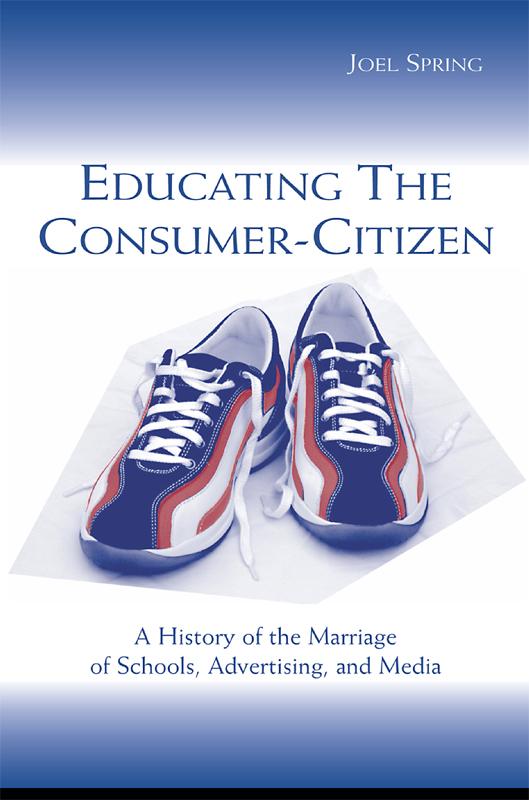
In Educating the Consumer-Citizen: A History of the Marriage of Schools, Advertising, and Media, Joel Spring charts the rise of consumerism as the dominant American ideology of the 21st century. He documents and analyzes how, from the early 19th century through the present, the combined endeavors of schools, advertising, and media have led to the creation of a consumerist ideology and ensured its central place in American life and global culture.
Spring first defines consumerist ideology and consumer-citizen and explores their 19th-century origins in schools, children's literature, the commercialization of American cities, advertising, newspapers, and the development of department stores. He then traces the rise of consumerist ideology in the 20th century by looking closely at: the impact of the home economics profession on the education of women as consumers and the development of an American cuisine based on packaged and processed foods; the influence of advertising images of sports heroes, cowboys, and the clean-shaven businessman in shaping male identity; the outcomes of the growth of the high school as a mass institution on the development of teenage consumer markets; the consequences of commercial radio and television joining with the schools to educate a consumer-oriented population so that, by the 1950s, consumerist images were tied to the Cold War and presented as the "American way of life" in both media and schools; the effects of the civil rights movement on integrating previously excluded groups into the consumer society; the changes the women's movement demanded in textbooks, school curricula, media, and advertising that led to a new image of women in the consumer market; and the ascent of fast food education. Spring carries the story into the 21st century by examining the evolving marriage of schools, advertising, and media and its ongoing role in educating the consumer-citizen and creating an integrated consumer market.
This book will be of wide interest to scholars, professionals, and students across foundations of education, history and sociology of education, educational policy, mass communications, American history, and cultural studies. It is highly appropriate as a text for courses in these areas.
Before Memmo my notes were scattered across PDFs. Now a workspace pulls everything into one place — I see exactly what's still left to study.
Memmo's summaries are gold before exams. I don't have to re-read 800 pages two weeks before — just the important parts.
The AI chat has saved me the night before an exam more than once. I just keep asking until I get it — no waiting on a study group to reply.
The quizzes hit exactly what I need to know. Memmo tracks what I get stuck on — so I only practice what's worth it.
Flashcards with spaced repetition are magic. Memmo knows when I'm about to forget something and brings it back.
The AI podcasts are my favorite. I listen on my way to school and get a recap without sitting at a computer.

Handbok i kvalitativa metoder
281 kr

Hållbar utveckling: en introduktion för ingenjörer och andra problemlösare
334 kr

Brymans Samhällsvetenskapliga metoder
390 kr

Projektledning
491 kr

Den orättvisa hälsan: om socioekonomiska skillnader i hälsa och livslängd
326 kr

Organizational Leadership
429 kr

Vetenskapsteori för nybörjare
196 kr

På väg mot läraryrket
172 kr

Det sociala livet i skolan: Socialpsykologiska perspektiv
253 kr

Betygsättningens didaktik
151 kr

Personality
402 kr

Studying Leadership
404 kr

Managing Innovation
477 kr

Introduktion till samhällsvetenskaplig metod
347 kr

The Psychology of Sex and Gender
698 kr

Evidens och kunskap för socialt arbete
207 kr

Introduction to Leadership
605 kr