
Before Memmo my notes were scattered across PDFs. Now a workspace pulls everything into one place — I see exactly what's still left to study.
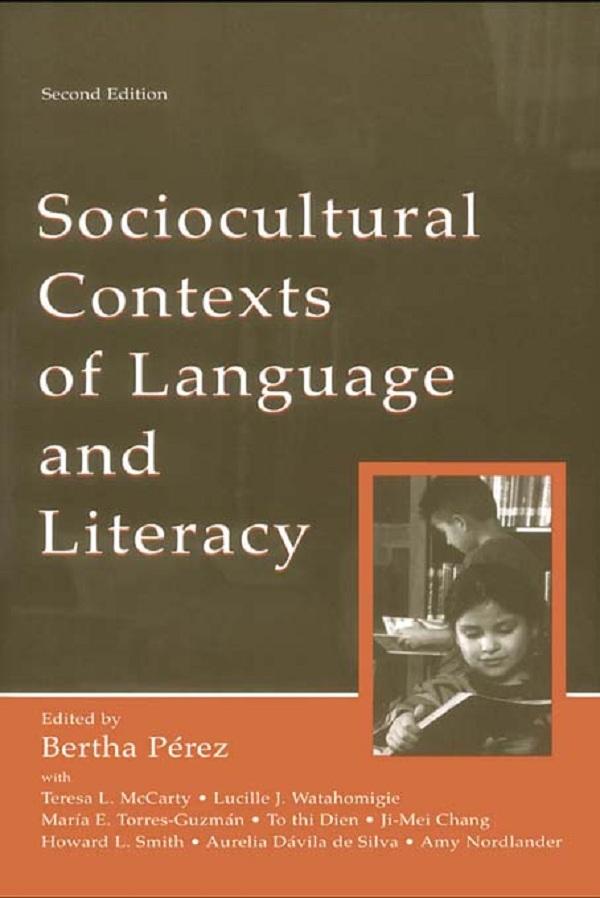
Sociocultural Contexts of Language and Literacy, Second Edition engages prospective and in-service teachers in learning about linguistically and culturally diverse students, and in using this knowledge to enrich literacy learning in classrooms and communities. The text is grounded in current research and theory that integrate sociocultural and constructivist concepts and perspectives and provide a framework teachers can use to develop strategies for teaching reading, writing, and thinking to diverse students.
The focus on English literacy development does not imply advocacy for "English only" or ESL as the primary mode of literacy instruction. Rather, the authors take the position that learners need to develop literacy in their native language and that the concepts and skills learned in developing the native language create a foundation of strength from which students can develop English literacy.
Part I introduces relevant research and language learning theories. Part II provides research reviews and information about literacy learning within specific culturally and linguistically diverse communities. The chapters in Part III challenge the reader to view the multiple social, intellectual, cultural, and language differences children bring to the classroom as an opportunity for learning and building on the diversity among students. Activities and suggested readings at the end of each chapter involve readers in reflection, observation, meaning making, and the construction of application processes for their new understandings.
New in the Second Edition:
*updated research and theory on multilingual and second language literacy;
*a focus on the interpretation of these research findings to make them useful for teachers and teacher educators in understanding and articulating the research bases for literacy practices;
*attention to current intensely debated issues, such as standards, the phonics movement, and high-stakes testing; and
*new activities and suggested readings.
Before Memmo my notes were scattered across PDFs. Now a workspace pulls everything into one place — I see exactly what's still left to study.
Memmo's summaries are gold before exams. I don't have to re-read 800 pages two weeks before — just the important parts.
The AI chat has saved me the night before an exam more than once. I just keep asking until I get it — no waiting on a study group to reply.
The quizzes hit exactly what I need to know. Memmo tracks what I get stuck on — so I only practice what's worth it.
Flashcards with spaced repetition are magic. Memmo knows when I'm about to forget something and brings it back.
The AI podcasts are my favorite. I listen on my way to school and get a recap without sitting at a computer.

Handbok i kvalitativa metoder
281 kr

Hållbar utveckling: en introduktion för ingenjörer och andra problemlösare
334 kr

Brymans Samhällsvetenskapliga metoder
390 kr

Projektledning
491 kr

Den orättvisa hälsan: om socioekonomiska skillnader i hälsa och livslängd
326 kr

Vetenskapsteori för nybörjare
196 kr

Organizational Leadership
429 kr

På väg mot läraryrket
172 kr

Det sociala livet i skolan: Socialpsykologiska perspektiv
253 kr

Betygsättningens didaktik
151 kr

Personality
402 kr

Studying Leadership
404 kr

Managing Innovation
477 kr

Introduktion till samhällsvetenskaplig metod
347 kr

The Psychology of Sex and Gender
698 kr

Evidens och kunskap för socialt arbete
207 kr

Introduction to Leadership
605 kr