
Before Memmo my notes were scattered across PDFs. Now a workspace pulls everything into one place — I see exactly what's still left to study.
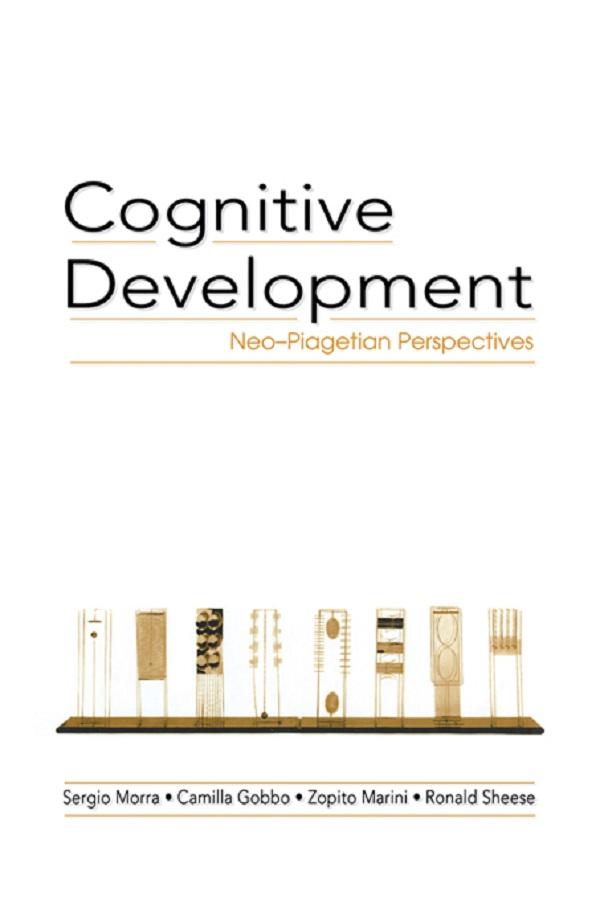
Tying together almost four decades of neo-Piagetian research, Cognitive Development provides a unique critical analysis and a comparison of concepts across neo-Piagetian theories. Like Piaget, neo-Piagetian theorists take a constructivist approach to cognitive development, are broad in scope, and assume that cognitive development is divided into stages with qualitative differences. Unlike Piaget, however, they define the increasing complexity of the stages in accordance with the child’s information processing system, rather than in terms of logical properties. This volume illustrates these characteristics and evidences the exciting possibilities for neo-Piagetian research to build connections both with other theoretical approaches such as dynamic systems and with other fields such as brain science.
The opening chapter provides a historical orientation, including a critical distinction between the "logical" and the "dialectical" Piaget. In subsequent chapters the major theories and experimental findings are reviewed, including Pascual-Leone's Theory of Constructive Operators, Halford's structuralist theory, Fischer's dynamic systems approach to skills, Case's theory of Central Conceptual Structures, Siegler’s microgenetic approach, and the proposals of Mounoud and Karmiloff-Smith, as well as the work of others, including Demetriou and de Ribaupierre. The interrelation of emotional and cognitive development is discussed extensively, as is relevant non neo-Piagetian research on information processing. The application of neo-Piagetian research to a variety of topics including children's problem solving, psychometrics, and education is highlighted. The book concludes with the authors' views on possibilities for an integrated neo-Piagetian approach to cognitive development.
Before Memmo my notes were scattered across PDFs. Now a workspace pulls everything into one place — I see exactly what's still left to study.
Memmo's summaries are gold before exams. I don't have to re-read 800 pages two weeks before — just the important parts.
The AI chat has saved me the night before an exam more than once. I just keep asking until I get it — no waiting on a study group to reply.
The quizzes hit exactly what I need to know. Memmo tracks what I get stuck on — so I only practice what's worth it.
Flashcards with spaced repetition are magic. Memmo knows when I'm about to forget something and brings it back.
The AI podcasts are my favorite. I listen on my way to school and get a recap without sitting at a computer.

Handbok i kvalitativa metoder
281 kr

Hållbar utveckling: en introduktion för ingenjörer och andra problemlösare
334 kr

Brymans Samhällsvetenskapliga metoder
390 kr

Projektledning
491 kr

Den orättvisa hälsan: om socioekonomiska skillnader i hälsa och livslängd
326 kr

Organizational Leadership
429 kr

Vetenskapsteori för nybörjare
196 kr

På väg mot läraryrket
172 kr

Det sociala livet i skolan: Socialpsykologiska perspektiv
253 kr

Betygsättningens didaktik
151 kr

Personality
402 kr

Studying Leadership
404 kr

Managing Innovation
477 kr

Introduktion till samhällsvetenskaplig metod
347 kr

The Psychology of Sex and Gender
698 kr

Evidens och kunskap för socialt arbete
207 kr

Introduction to Leadership
605 kr