
Before Memmo my notes were scattered across PDFs. Now a workspace pulls everything into one place — I see exactly what's still left to study.
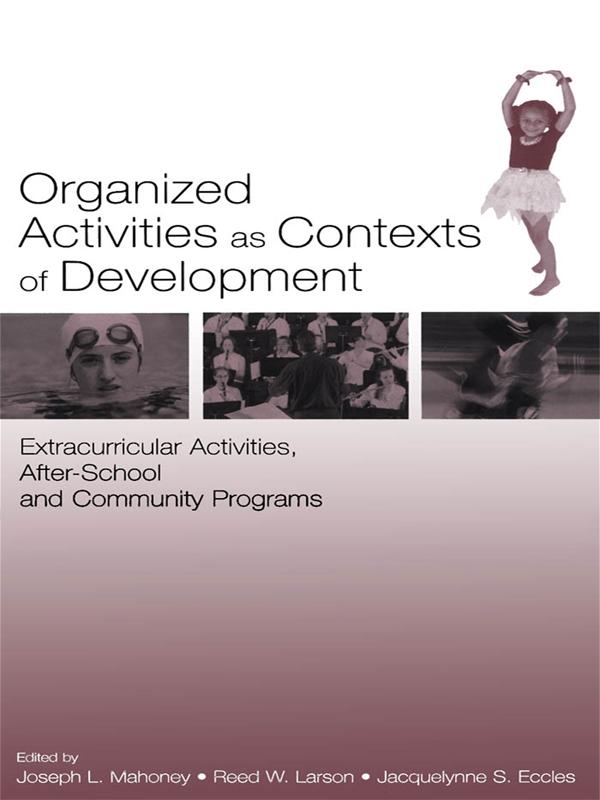
School-aged children in the U.S. and other Western nations spend almost half of their waking hours in leisure activities. For some, out-of-school time is perceived as inconsequential or even counterproductive to the health and well-being of young persons. Recently, however, there has been a growing recognition that--along with family, peers, and school--the organized activities in which some youth participate during these hours are important contexts of emotional, social, and civic development. They provide opportunities for young persons to learn and develop competencies that are largely neglected by schools. At the same time, communities and national governments are now channeling considerable resources into creating organized activities for young people's out-of-school time. This volume brings together a multidisciplinary, international group of experts to provide conceptual, empirical, and policy-relevant advances in research on children's and adolescents' participation in the developmental contexts represented by extracurricular activities, and after-school and community programs.
Organized Activities as Contexts of Development provides a handbook-like coverage of research in this new emerging field. It considers a broad developmental time-span from middle childhood through early adulthood, providing information on how motivation, participation, and developmental experiences change as youth get older. The contents cover one of the most salient topics in child and adolescent research, education, and social policy, placing consistent emphasis on developmental aspects and implications of organized activity participation for young persons. Representing contributors from several fields of study--psychology, criminal justice, leisure science, sociology, human development, education, prevention, and public policy--the book is designed to appeal to students and scholars in all these areas. Additionally, the volume is written to be of interest to professionals who administer programs and develop policy on youth.
Before Memmo my notes were scattered across PDFs. Now a workspace pulls everything into one place — I see exactly what's still left to study.
Memmo's summaries are gold before exams. I don't have to re-read 800 pages two weeks before — just the important parts.
The AI chat has saved me the night before an exam more than once. I just keep asking until I get it — no waiting on a study group to reply.
The quizzes hit exactly what I need to know. Memmo tracks what I get stuck on — so I only practice what's worth it.
Flashcards with spaced repetition are magic. Memmo knows when I'm about to forget something and brings it back.
The AI podcasts are my favorite. I listen on my way to school and get a recap without sitting at a computer.

Handbok i kvalitativa metoder
281 kr

Hållbar utveckling: en introduktion för ingenjörer och andra problemlösare
334 kr

Brymans Samhällsvetenskapliga metoder
390 kr

Projektledning
491 kr

Den orättvisa hälsan: om socioekonomiska skillnader i hälsa och livslängd
326 kr

Vetenskapsteori för nybörjare
196 kr

Organizational Leadership
429 kr

På väg mot läraryrket
172 kr

Det sociala livet i skolan: Socialpsykologiska perspektiv
253 kr

Betygsättningens didaktik
151 kr

Personality
402 kr

Studying Leadership
404 kr

Managing Innovation
477 kr

Introduktion till samhällsvetenskaplig metod
347 kr

The Psychology of Sex and Gender
698 kr

Evidens och kunskap för socialt arbete
207 kr

Introduction to Leadership
605 kr