
Before Memmo my notes were scattered across PDFs. Now a workspace pulls everything into one place — I see exactly what's still left to study.
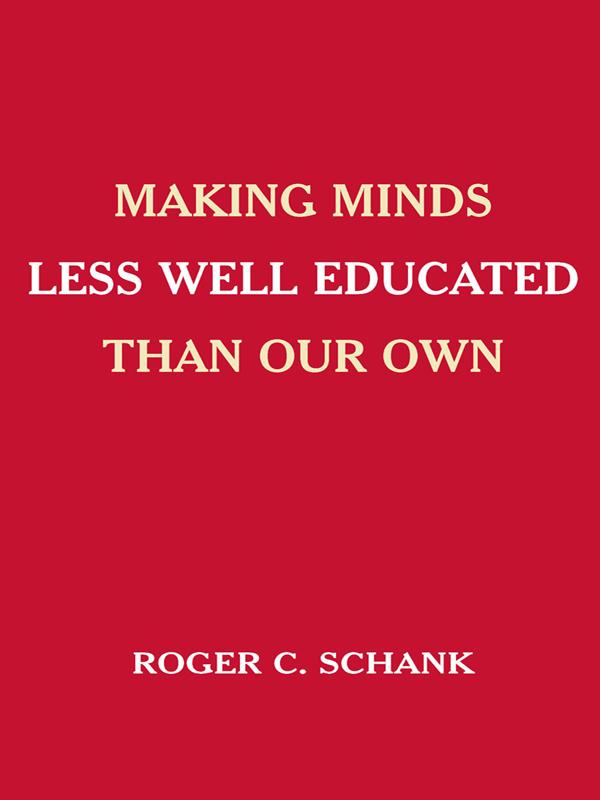
In the author's words: "This book is an honest attempt to understand what it means to be educated in today's world." His argument is this: No matter how important science and technology seem to industry or government or indeed to the daily life of people, as a society we believe that those educated in literature, history, and other humanities are in some way better informed, more knowing, and somehow more worthy of the descriptor "well educated." This 19th-century conception of the educated mind weighs heavily on our notions on how we educate our young. When we focus on intellectual and scholarly issues in high school as opposed to issues, such as communications, basic psychology, or child raising, we are continuing to rely on outdated notions of the educated mind that come from elitist notions of who is to be educated and what that means. To accommodate the realities of today's world it is necessary to change these elitist notions. We need to rethink what it means to be educated and begin to focus on a new conception of the very idea of education. Students need to learn how to think, not how to accomplish tasks, such as passing standardized tests and reciting rote facts.
In this engaging book, Roger C. Schank sets forth the premises of his argument, cites its foundations in the Great Books themselves, and illustrates it with examples from an experimental curriculum that has been used in graduate schools and with K-12 students.
Making Minds Less Well Educated Than Our Own is essential reading for scholars and students in the learning sciences, instructional design, curriculum theory and planning, educational policy, school reform, philosophy of education, higher education, and anyone interested in what it means to be educated in today's world.
Before Memmo my notes were scattered across PDFs. Now a workspace pulls everything into one place — I see exactly what's still left to study.
Memmo's summaries are gold before exams. I don't have to re-read 800 pages two weeks before — just the important parts.
The AI chat has saved me the night before an exam more than once. I just keep asking until I get it — no waiting on a study group to reply.
The quizzes hit exactly what I need to know. Memmo tracks what I get stuck on — so I only practice what's worth it.
Flashcards with spaced repetition are magic. Memmo knows when I'm about to forget something and brings it back.
The AI podcasts are my favorite. I listen on my way to school and get a recap without sitting at a computer.

Handbok i kvalitativa metoder
281 kr

Hållbar utveckling: en introduktion för ingenjörer och andra problemlösare
334 kr

Brymans Samhällsvetenskapliga metoder
390 kr

Projektledning
491 kr

Den orättvisa hälsan: om socioekonomiska skillnader i hälsa och livslängd
326 kr

Organizational Leadership
429 kr

Vetenskapsteori för nybörjare
196 kr

På väg mot läraryrket
172 kr

Det sociala livet i skolan: Socialpsykologiska perspektiv
253 kr

Betygsättningens didaktik
151 kr

Personality
402 kr

Studying Leadership
404 kr

Managing Innovation
477 kr

Introduktion till samhällsvetenskaplig metod
347 kr

The Psychology of Sex and Gender
698 kr

Evidens och kunskap för socialt arbete
207 kr

Introduction to Leadership
605 kr