
Before Memmo my notes were scattered across PDFs. Now a workspace pulls everything into one place — I see exactly what's still left to study.
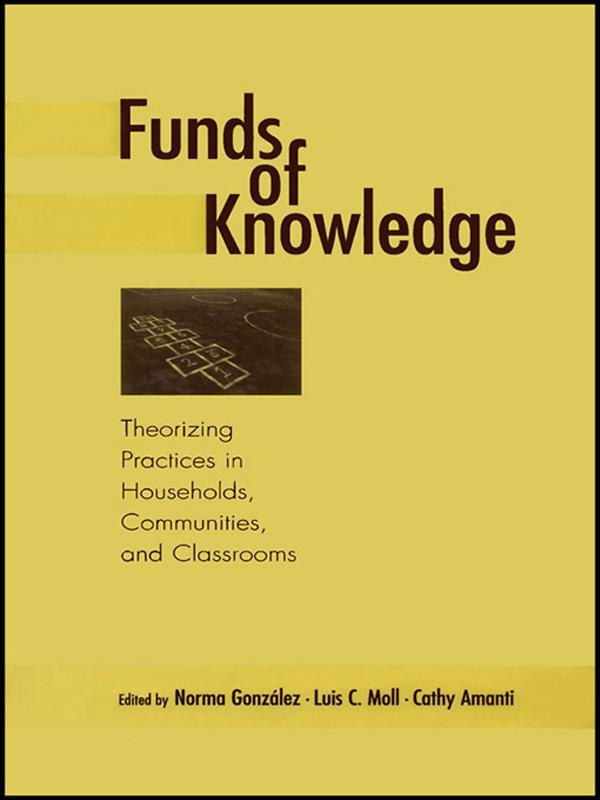
The concept of "funds of knowledge" is based on a simple premise: people are competent and have knowledge, and their life experiences have given them that knowledge. The claim in this book is that first-hand research experiences with families allow one to document this competence and knowledge, and that such engagement provides many possibilities for positive pedagogical actions.
Drawing from both Vygotskian and neo-sociocultural perspectives in designing a methodology that views the everyday practices of language and action as constructing knowledge, the funds of knowledge approach facilitates a systematic and powerful way to represent communities in terms of the resources they possess and how to harness them for classroom teaching.
This book accomplishes three objectives: It gives readers the basic methodology and techniques followed in the contributors' funds of knowledge research; it extends the boundaries of what these researchers have done; and it explores the applications to classroom practice that can result from teachers knowing the communities in which they work.
In a time when national educational discourses focus on system reform and wholesale replicability across school sites, this book offers a counter-perspective stating that instruction must be linked to students' lives, and that details of effective pedagogy should be linked to local histories and community contexts. This approach should not be confused with parent participation programs, although that is often a fortuitous consequence of the work described. It is also not an attempt to teach parents "how to do school" although that could certainly be an outcome if the parents so desired. Instead, the funds of knowledge approach attempts to accomplish something that may be even more challenging: to alter the perceptions of working-class or poor communities by viewing their households primarily in terms of their strengths and resources, their defining pedagogical characteristics.
Funds of Knowledge: Theorizing Practices in Households, Communities, and Classrooms is a critically important volume for all teachers and teachers-to-be, and for researchers and graduate students of language, culture, and education.
Before Memmo my notes were scattered across PDFs. Now a workspace pulls everything into one place — I see exactly what's still left to study.
Memmo's summaries are gold before exams. I don't have to re-read 800 pages two weeks before — just the important parts.
The AI chat has saved me the night before an exam more than once. I just keep asking until I get it — no waiting on a study group to reply.
The quizzes hit exactly what I need to know. Memmo tracks what I get stuck on — so I only practice what's worth it.
Flashcards with spaced repetition are magic. Memmo knows when I'm about to forget something and brings it back.
The AI podcasts are my favorite. I listen on my way to school and get a recap without sitting at a computer.

Handbok i kvalitativa metoder
281 kr

Hållbar utveckling: en introduktion för ingenjörer och andra problemlösare
334 kr

Brymans Samhällsvetenskapliga metoder
390 kr

Projektledning
491 kr

Den orättvisa hälsan: om socioekonomiska skillnader i hälsa och livslängd
326 kr

Vetenskapsteori för nybörjare
196 kr

Organizational Leadership
429 kr

På väg mot läraryrket
172 kr

Det sociala livet i skolan: Socialpsykologiska perspektiv
253 kr

Betygsättningens didaktik
151 kr

Personality
402 kr

Studying Leadership
404 kr

Managing Innovation
477 kr

Introduktion till samhällsvetenskaplig metod
347 kr

The Psychology of Sex and Gender
698 kr

Evidens och kunskap för socialt arbete
207 kr

Introduction to Leadership
605 kr