
Before Memmo my notes were scattered across PDFs. Now a workspace pulls everything into one place — I see exactly what's still left to study.
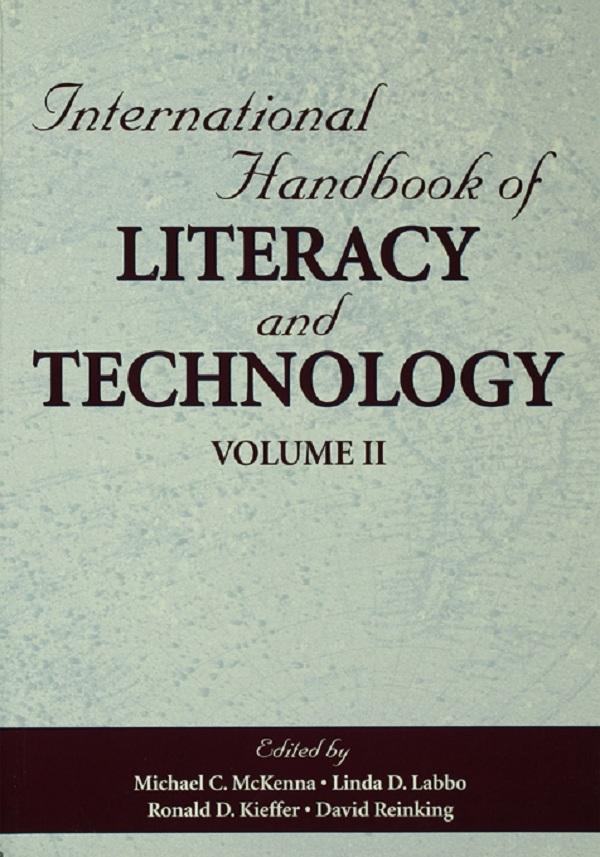
This Handbook provides a comprehensive and international representation of state-of-the art research, theory, and practice related to principal areas in which significant developments are occurring in the study of literacy and technology. It offers a glimpse of the commonalities faced by literacy educators around the world, together with specific challenges raised by unique circumstances.
Volume I of this Handbook endeavored to lay essential groundwork for the study of literacy and technology; it retains an explanatory value that will not weaken over time. Volume II differs considerably in conception. It assumes for the most part a higher level of expertise on the part of readers, and the projects and applications described by the contributors are characterized by greater sophistication. The scope of technology use is broader, and the challenges that have emerged are in sharper focus. A powerful feature of this volume is the addition of commentaries from experts across the field on the potential of technology in key dimensions of literacy. The title of Volume II has changed slightly to reflect the inclusion of contributions on a broad geographic basis. It is now a truly international Handbook, with chapter authors from six countries and five continents.
The International Handbook of Literacy and Technology: Volume II is organized in five sections:
*The Role of Technology in the New Literacies;
*Technology Applications with Specific Populations;
*Literacy Software and the Internet;
*Teacher Education and Professional Development; and
*The Potential of Technology in Key Dimensions of Literacy.
The effects of technology on literate activity have been both sweeping and subtle, marked by an increasing variety of changes that are difficult to evaluate and project. Perhaps the only prediction that can be offered with certainty is that the impact of technology is irreversible. Specific changes may come and go, but literacy and technology seem inextricably linked. This Handbook is dedicated to that linkage and to examining the intricacies that define it.
International Handbook of Literacy and Technology: Volume II is an essential reference for researchers, professionals, and students in reading/literacy education, literacy and technology, educational technology, and related areas, and will serve well as a text for upper-level and graduate courses on these topics.
Before Memmo my notes were scattered across PDFs. Now a workspace pulls everything into one place — I see exactly what's still left to study.
Memmo's summaries are gold before exams. I don't have to re-read 800 pages two weeks before — just the important parts.
The AI chat has saved me the night before an exam more than once. I just keep asking until I get it — no waiting on a study group to reply.
The quizzes hit exactly what I need to know. Memmo tracks what I get stuck on — so I only practice what's worth it.
Flashcards with spaced repetition are magic. Memmo knows when I'm about to forget something and brings it back.
The AI podcasts are my favorite. I listen on my way to school and get a recap without sitting at a computer.

Handbok i kvalitativa metoder
281 kr

Hållbar utveckling: en introduktion för ingenjörer och andra problemlösare
334 kr

Brymans Samhällsvetenskapliga metoder
390 kr

Projektledning
491 kr

Den orättvisa hälsan: om socioekonomiska skillnader i hälsa och livslängd
326 kr

Vetenskapsteori för nybörjare
196 kr

Organizational Leadership
429 kr

På väg mot läraryrket
172 kr

Det sociala livet i skolan: Socialpsykologiska perspektiv
253 kr

Betygsättningens didaktik
151 kr

Personality
402 kr

Studying Leadership
404 kr

Managing Innovation
477 kr

Introduktion till samhällsvetenskaplig metod
347 kr

The Psychology of Sex and Gender
698 kr

Evidens och kunskap för socialt arbete
207 kr

Introduction to Leadership
605 kr