
Before Memmo my notes were scattered across PDFs. Now a workspace pulls everything into one place — I see exactly what's still left to study.
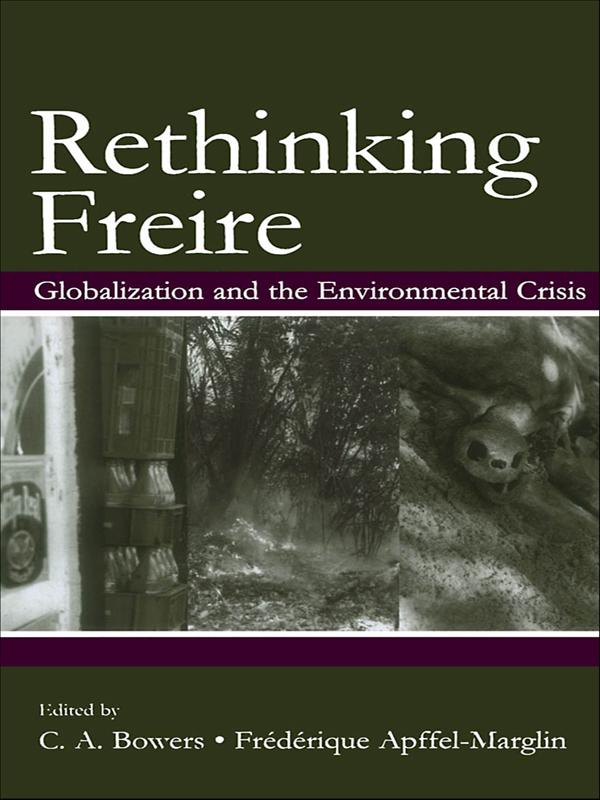
This landmark collection of essays by Third World activists highlights two major world changes which, they argue, have been neglected by Freire and his many followers: the Third World grass-roots cultural resistance to economic globalization, and the ecological crisis.
One source of the activist-authors' criticisms of Freire's pedagogy is rooted in their attempts to combine consciousness raising with literacy programs in such diverse cultural settings as Bolivia, Peru, India, Southern Mexico, and Cambodia, where they discovered that Freire's pedagogy is based on western assumptions that undermine indigenous knowledge systems. Equally important, these authors make the case in various ways that a major limitation with Freire's ideas, and which is reproduced in the writings of his followers, is that he did not recognize the cultural implications of the world's ecological crisis.
Several essays in the collection focus directly on how the cultural assumptions Freire took for granted were also the assumptions that gave conceptual and moral legitimacy to the Industrial Revolution--and continue to be the basis of the thinking behind economic globalization. The essays also explain why cultural diversity is essential to the preservation of biological diversity, and how intergenerational knowledge and patterns of mutual aid within different cultures provide alternatives to a consumer dependent lifestyle.
In his Afterword, C.A. Bowers addresses the need to adopt a more ecological way of thinking--one that recognizes the many ways the individual is nested in the interdependent networks of culture and how diverse cultures are nested in natural systems. It also stresses that one of the tasks of educators is to help students recognize the patterns and relationships of everyday life, and to assess them in terms of their contribution to less consumer dependent relationships and activities. As the essays in this volume affirm, this involves facilitating students' awareness of differences between cultures, the impact of consumerism on ecosystems, and the connections between hyper-consumerism and environmental racism and the colonizing relationship of the South by the North. Re-Thinking Freire: Globalization and the Environmental Crisis is a major contribution to this critical endeavor.
Before Memmo my notes were scattered across PDFs. Now a workspace pulls everything into one place — I see exactly what's still left to study.
Memmo's summaries are gold before exams. I don't have to re-read 800 pages two weeks before — just the important parts.
The AI chat has saved me the night before an exam more than once. I just keep asking until I get it — no waiting on a study group to reply.
The quizzes hit exactly what I need to know. Memmo tracks what I get stuck on — so I only practice what's worth it.
Flashcards with spaced repetition are magic. Memmo knows when I'm about to forget something and brings it back.
The AI podcasts are my favorite. I listen on my way to school and get a recap without sitting at a computer.

Handbok i kvalitativa metoder
281 kr

Hållbar utveckling: en introduktion för ingenjörer och andra problemlösare
334 kr

Brymans Samhällsvetenskapliga metoder
390 kr

Projektledning
491 kr

Den orättvisa hälsan: om socioekonomiska skillnader i hälsa och livslängd
326 kr

Organizational Leadership
429 kr

Vetenskapsteori för nybörjare
196 kr

På väg mot läraryrket
172 kr

Det sociala livet i skolan: Socialpsykologiska perspektiv
253 kr

Betygsättningens didaktik
151 kr

Personality
402 kr

Studying Leadership
404 kr

Managing Innovation
477 kr

Introduktion till samhällsvetenskaplig metod
347 kr

The Psychology of Sex and Gender
698 kr

Evidens och kunskap för socialt arbete
207 kr

Introduction to Leadership
605 kr