
Before Memmo my notes were scattered across PDFs. Now a workspace pulls everything into one place — I see exactly what's still left to study.
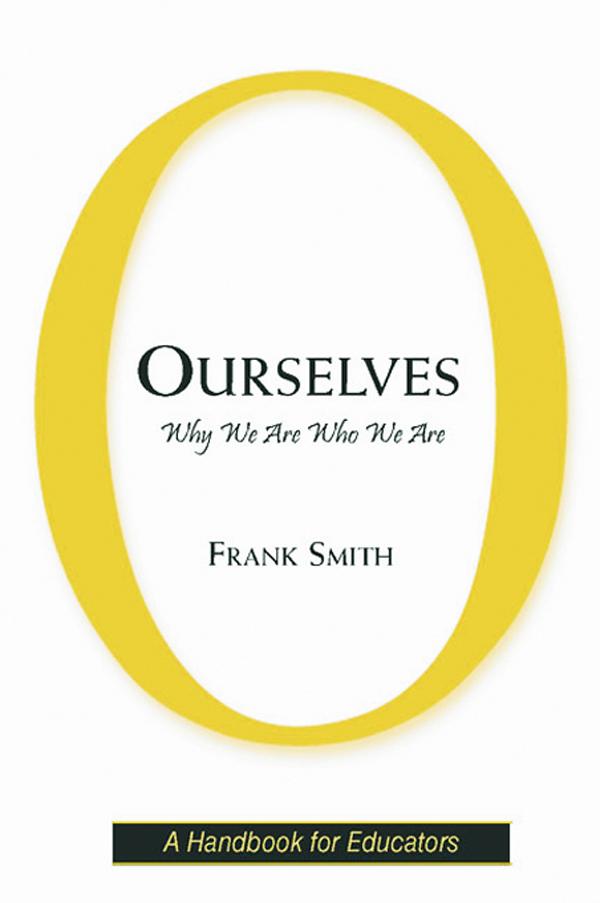
This book delves into how we come to terms with ourselves, with other people, and with the world in general. It is about how we come to be what we are, and to think the way we do. It is a book about influences on this process. A particular influence to which Smith gives central consideration is language, not just in terms of the communicative networks in which it engages us--the “information” that presents itself to us--but in the largely unsuspected framework for thought that lies within language itself. He also considers deeply the role of technology.
This is a book of description, not of explanations--these are two quite different intellectual territories. Smith writes about what can be observed, not philosophized about. Thus he does not discuss the inner workings of the human brain. His claim is that what he is interested in--thinking, learning, understanding, remembering--have never been found in the brain. The aim is to describe the scope and limits for how we can be seen to think, learn, understand, and remember--but not to “explain” such behavior by recourse to hypothetical inner entities.
Ourselves speaks especially to educators. It outlines the possibilities and limitations inherent in all of us. It delineates who we are, but also stresses that no two people are the same, that what we become depends on our journeys in life and the people we encounter on the way. The formal part of learning that is called education is particularly sensitive to the role of people who organize critical experiences for us, our teachers. The brief summaries at the end of each chapter reinforce and highlight points that are of particular relevance to teachers.
Researchers, professionals, and graduate students across the fields of literacy education, psychology of reading, learning theory, human learning, educational psychology, and psycholinguistics will find this book compelling.
Before Memmo my notes were scattered across PDFs. Now a workspace pulls everything into one place — I see exactly what's still left to study.
Memmo's summaries are gold before exams. I don't have to re-read 800 pages two weeks before — just the important parts.
The AI chat has saved me the night before an exam more than once. I just keep asking until I get it — no waiting on a study group to reply.
The quizzes hit exactly what I need to know. Memmo tracks what I get stuck on — so I only practice what's worth it.
Flashcards with spaced repetition are magic. Memmo knows when I'm about to forget something and brings it back.
The AI podcasts are my favorite. I listen on my way to school and get a recap without sitting at a computer.

Handbok i kvalitativa metoder
281 kr

Hållbar utveckling: en introduktion för ingenjörer och andra problemlösare
334 kr

Brymans Samhällsvetenskapliga metoder
390 kr

Projektledning
491 kr

Den orättvisa hälsan: om socioekonomiska skillnader i hälsa och livslängd
326 kr

Organizational Leadership
429 kr

Vetenskapsteori för nybörjare
196 kr

På väg mot läraryrket
172 kr

Det sociala livet i skolan: Socialpsykologiska perspektiv
253 kr

Betygsättningens didaktik
151 kr

Personality
402 kr

Studying Leadership
404 kr

Managing Innovation
477 kr

Introduktion till samhällsvetenskaplig metod
347 kr

The Psychology of Sex and Gender
698 kr

Evidens och kunskap för socialt arbete
207 kr

Introduction to Leadership
605 kr