
Before Memmo my notes were scattered across PDFs. Now a workspace pulls everything into one place — I see exactly what's still left to study.
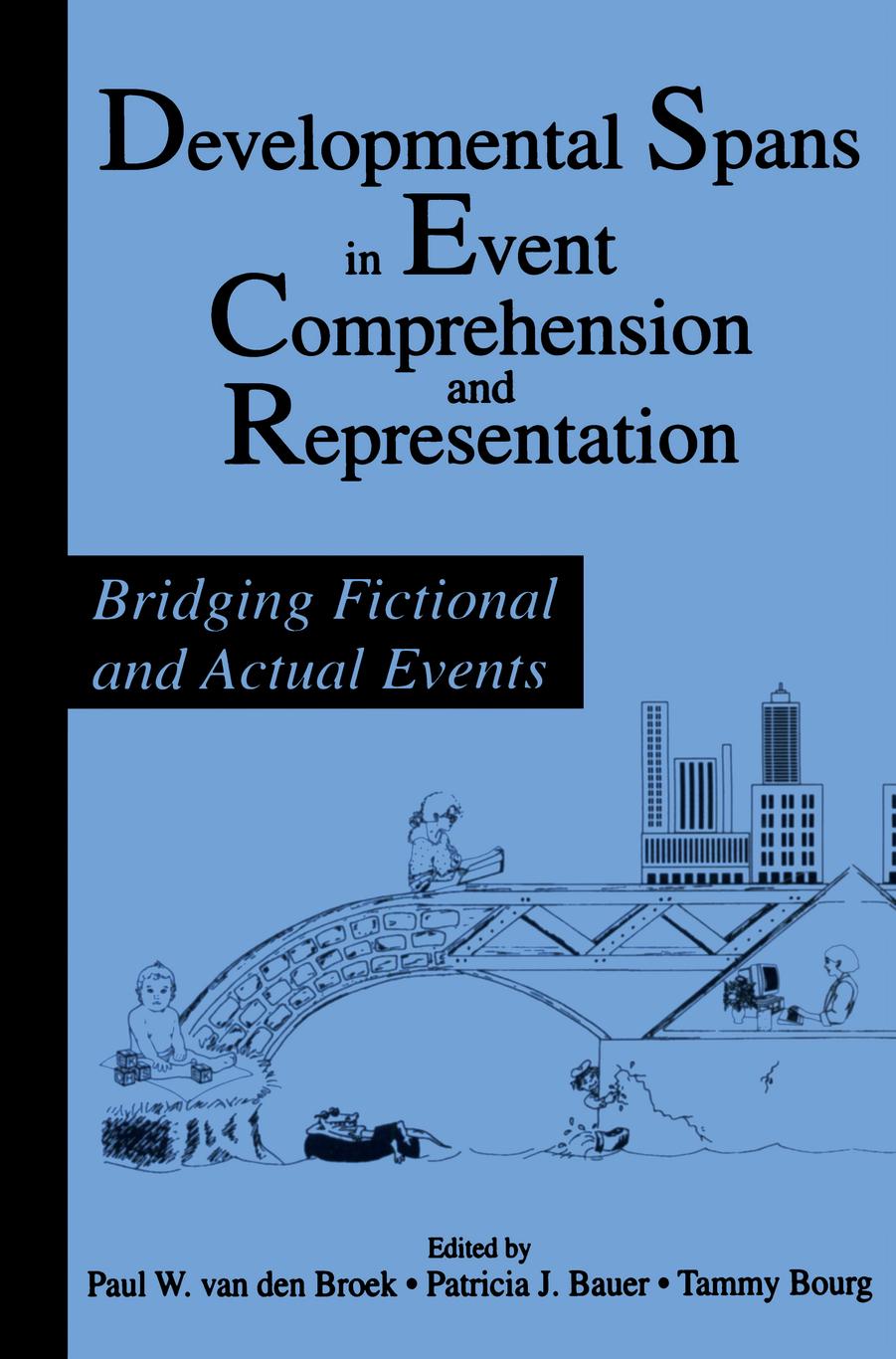
This book is about building metaphorical bridges--all sorts of bridges. At the most basic level, it concerns the bridges that individuals build to understand the events that they experience--the bridges that connect the events in the mind's eye. At another level, it is about bridges that interconnect findings and theoretical frameworks concerning event comprehension and representation in different age groups, ranging from infancy to adulthood. Finally, it is about building bridges between researchers who share interests, yet may not ordinarily even be aware of each other's work. The success of the book will be measured in terms of the extent to which the contributors have been able to create a picture of the course of development across a wide span in chronological age, and across different types of events, from the fictional to the actual.
The individuals whose work is represented in this book conduct their work in a shared environment--they all have an intellectual and scholarly interest in event comprehension and representation. These interests are manifest in the overlapping themes of their work. These include a focus on how people come to temporally integrate individual "snapshots" to form a coherent event that unfolds over time, to understand cause and effect, and to appreciate the role of the goal of events. Another overlapping theme involves the possibility of individual differences. These themes are apparent in work on the early development of representations of specific episodes and autobiographical memories, and comprehension of complex events such as stories involving multiple characters and emotions.
The editors of this volume had two missions:
* to create a development span by bringing together researchers working from infancy to adulthood, and
* to create a bridge between individuals working from within the text comprehension perspective, within the naturalistic perspective, and with laboratory analogues to the naturalistic perspective.
Their measure of success will be the extent to which they have been able to create a picture of the course of development across a wide span in chronological age, and across different types of events--from fictional to actual.
Before Memmo my notes were scattered across PDFs. Now a workspace pulls everything into one place — I see exactly what's still left to study.
Memmo's summaries are gold before exams. I don't have to re-read 800 pages two weeks before — just the important parts.
The AI chat has saved me the night before an exam more than once. I just keep asking until I get it — no waiting on a study group to reply.
The quizzes hit exactly what I need to know. Memmo tracks what I get stuck on — so I only practice what's worth it.
Flashcards with spaced repetition are magic. Memmo knows when I'm about to forget something and brings it back.
The AI podcasts are my favorite. I listen on my way to school and get a recap without sitting at a computer.

Handbok i kvalitativa metoder
281 kr

Hållbar utveckling: en introduktion för ingenjörer och andra problemlösare
334 kr

Brymans Samhällsvetenskapliga metoder
390 kr

Projektledning
491 kr

Den orättvisa hälsan: om socioekonomiska skillnader i hälsa och livslängd
326 kr

Organizational Leadership
429 kr

Vetenskapsteori för nybörjare
196 kr

På väg mot läraryrket
172 kr

Det sociala livet i skolan: Socialpsykologiska perspektiv
253 kr

Betygsättningens didaktik
151 kr

Personality
402 kr

Studying Leadership
404 kr

Managing Innovation
477 kr

Introduktion till samhällsvetenskaplig metod
347 kr

The Psychology of Sex and Gender
698 kr

Evidens och kunskap för socialt arbete
207 kr

Introduction to Leadership
605 kr