
Before Memmo my notes were scattered across PDFs. Now a workspace pulls everything into one place — I see exactly what's still left to study.
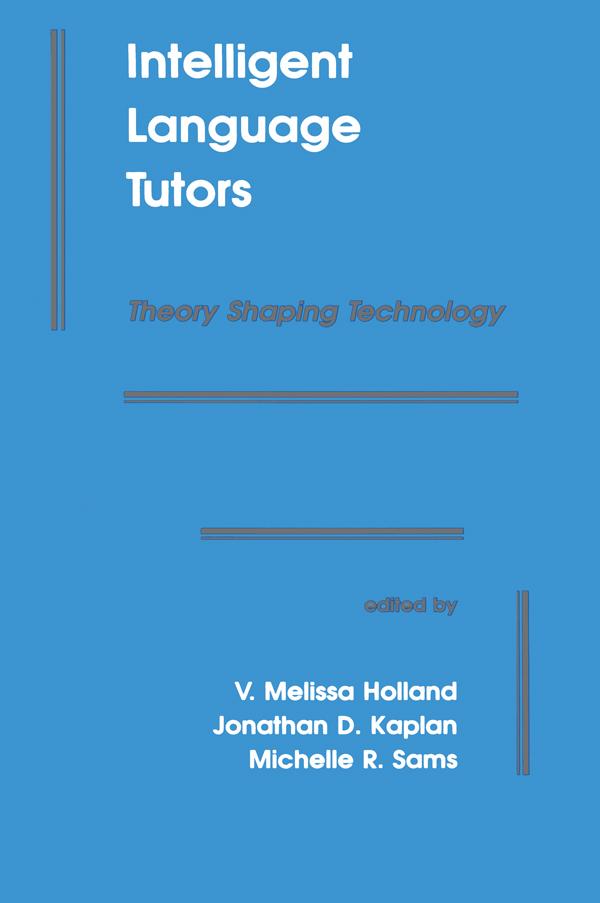
The techniques of natural language processing (NLP) have been widely applied in machine translation and automated message understanding, but have only recently been utilized in second language teaching. This book offers both an argument for and a critical examination of this new application, with an examination of how systems may be designed to exploit the power of NLP, accomodate its limitations, and minimize its risks. This volume marks the first collection of work in the U.S. and Canada that incorporates advanced human language technologies into language tutoring systems, covering languages as diverse as Arabic, Spanish, Japanese, and English.
The book is organized into sections that express the levels of analysis dealt with in learning and teaching a language and with the tasks of the student as writer, reader, conversant, and actor in the world. These sections bring together research by specialists in linguistics, artificial intelligence, psychology, instructional design, and language teaching. In addition to providing detailed descriptions of working systems, amply illustrated with screens from lesson and authoring interfaces, the contributors address a spectrum of common issues:
* What can current NLP technology contribute to computer-assisted language instruction and to research on language learning?
* How can this technology meet the demands of pedagogical theory for communicative language teaching in authentic contexts?
* How can designers constrain tutoring environments to ensure accurate analysis of learners' language?
* What can NLP-based systems teach us about language acquisition, about linguistic theory, and about theories of language pedagogy?
* What lessons have been learned in using these systems to date?
Discipline-specific issues are illuminated as well: the relative merits of the major syntactic frameworks for NLP-based language tutoring; the adaptation of theories like lexical conceptual structure to support semantic interpretation; the integration of input language with visual microworlds and dialogue games; the pragmatics of the tutoring discourse; the selection of instructional principles to guide system design; and the accomodation of design to individual differences and learner styles. A concluding section assesses this work from larger theoretical and practical perspectives -- experimental psychology and psycholinguistics, linguistics, language teaching, and second language acquisition research.
Before Memmo my notes were scattered across PDFs. Now a workspace pulls everything into one place — I see exactly what's still left to study.
Memmo's summaries are gold before exams. I don't have to re-read 800 pages two weeks before — just the important parts.
The AI chat has saved me the night before an exam more than once. I just keep asking until I get it — no waiting on a study group to reply.
The quizzes hit exactly what I need to know. Memmo tracks what I get stuck on — so I only practice what's worth it.
Flashcards with spaced repetition are magic. Memmo knows when I'm about to forget something and brings it back.
The AI podcasts are my favorite. I listen on my way to school and get a recap without sitting at a computer.

Handbok i kvalitativa metoder
281 kr

Hållbar utveckling: en introduktion för ingenjörer och andra problemlösare
334 kr

Brymans Samhällsvetenskapliga metoder
390 kr

Projektledning
491 kr

Den orättvisa hälsan: om socioekonomiska skillnader i hälsa och livslängd
326 kr

Vetenskapsteori för nybörjare
196 kr

Organizational Leadership
429 kr

På väg mot läraryrket
172 kr

Det sociala livet i skolan: Socialpsykologiska perspektiv
253 kr

Betygsättningens didaktik
151 kr

Personality
402 kr

Studying Leadership
404 kr

Managing Innovation
477 kr

Introduktion till samhällsvetenskaplig metod
347 kr

The Psychology of Sex and Gender
698 kr

Evidens och kunskap för socialt arbete
207 kr

Introduction to Leadership
605 kr