
Before Memmo my notes were scattered across PDFs. Now a workspace pulls everything into one place — I see exactly what's still left to study.
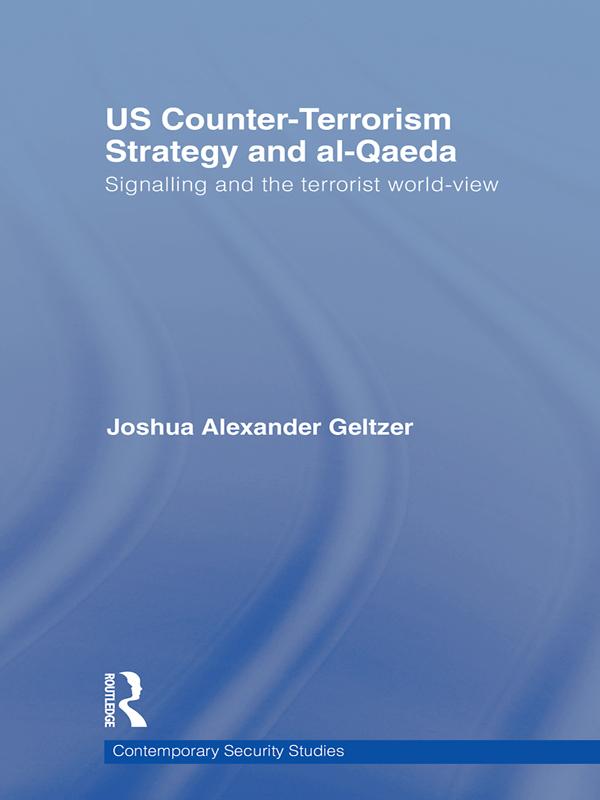
This book examines the communicative aspects and implications of US counter-terrorist policies towards al-Qaeda.
Recent US counter-terrorist strategy has been largely based upon projecting certain perceptions of America as an actor to those drawn to al-Qaeda, and this book investigates in what ways, and to what extent, US officials believed that the signals sent by what America did and said could influence the behaviour of the terrorist and would-be terrorist. The study then draws on a growing understanding of that audience to analyse how those drawn to al-Qaeda were and, indeed, still are likely to be influenced by the perceptions of America that Washington's policies generated. The study's central argument is that, given al-Qaeda's unconventional strategy and the particularities of the world-view characterising those drawn to the group, America's counter-terrorist signalling proved largely counter-productive to America's objective of undermining al-Qaeda's strategic narrative, instead serving in many ways to validate it.
Firstly, this book seeks to reveal the significant and largely unexplored role that signalling has played in US counter-terrorist policy towards al-Qaeda. Second, it tries to capture the objectives, strategy, tactics, ideology, and other defining features of the world-view characterising those drawn to al-Qaeda. Third, it strives to combine those two lines of inquiry by applying the al-Qaeda world-view to a critical analysis of the signals sent by US policies. Finally, the book aims to offer broad policy implications that demonstrate how an informed understanding of the world-view of those drawn to al-Qaeda can be employed to revise and refine American counter-terrorist signalling.
This book will be of much interest to students of US foreign policy and public diplomacy, counter-terrorism, strategy and international security.
Joshua Alexander Geltzer has a PhD in War Studies from Kings College London, and is currently a juris doctoral student at Yale Law School.
Before Memmo my notes were scattered across PDFs. Now a workspace pulls everything into one place — I see exactly what's still left to study.
Memmo's summaries are gold before exams. I don't have to re-read 800 pages two weeks before — just the important parts.
The AI chat has saved me the night before an exam more than once. I just keep asking until I get it — no waiting on a study group to reply.
The quizzes hit exactly what I need to know. Memmo tracks what I get stuck on — so I only practice what's worth it.
Flashcards with spaced repetition are magic. Memmo knows when I'm about to forget something and brings it back.
The AI podcasts are my favorite. I listen on my way to school and get a recap without sitting at a computer.

Handbok i kvalitativa metoder
281 kr

Hållbar utveckling: en introduktion för ingenjörer och andra problemlösare
334 kr

Brymans Samhällsvetenskapliga metoder
390 kr

Projektledning
491 kr

Den orättvisa hälsan: om socioekonomiska skillnader i hälsa och livslängd
326 kr

Vetenskapsteori för nybörjare
196 kr

Organizational Leadership
429 kr

På väg mot läraryrket
172 kr

Det sociala livet i skolan: Socialpsykologiska perspektiv
253 kr

Betygsättningens didaktik
151 kr

Personality
402 kr

Studying Leadership
404 kr

Managing Innovation
477 kr

Introduktion till samhällsvetenskaplig metod
347 kr

The Psychology of Sex and Gender
698 kr

Evidens och kunskap för socialt arbete
207 kr

Introduction to Leadership
605 kr