
Before Memmo my notes were scattered across PDFs. Now a workspace pulls everything into one place — I see exactly what's still left to study.
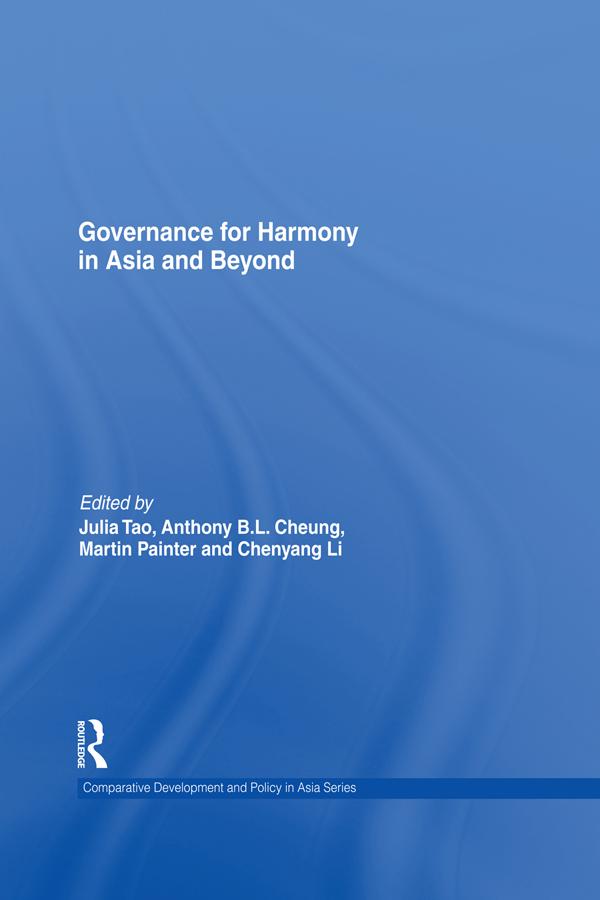
Harmony has become a major challenge for modern governance in the twenty-first century because of the multi-religious, multi-racial and multi-ethnic character of our increasingly globalized societies. Governments all over the world are facing growing pressure to integrate the many diverse elements and subcultures which make up modern pluralistic societies. This book examines the idea of harmony, and its place in politics and governance, both in theory and practice, in Asia, the West and elsewhere. It explores and analyses the meanings, mechanisms, dimensions and methodologies of harmony as a normative political ideal in both Western and Asian philosophical traditions.
The book argues that in Western political thought - which sees politics as primarily concerned with resolving social conflicts and protecting individual rights - the concept of harmony has often been neglected. In contrast, since earliest times harmony or ‘he’ has been a profound theme in Confucian thought, and current leaders of many East Asian governments, and the Chinese government, have explicitly declared that the realisation of a harmonious society is their aim. The book also assesses how harmony is pursued, jeopardized or deformed in the real world of politics, based upon empirical analysis of a variety of different cultural, social and political contexts, including: China, Hong Kong, Singapore, Malaysia, Singapore, Vietnam, Denmark, Latin America and the Scandinavian countries.
It shows how harmony as an organizing concept can help to promote new thinking in governance, and overcome problems of modern-day governance like distrust, adversarial conflicts, hyper-individualism, coercive state intervention, and free-market alienation. It also discusses the potential problems posed by the pursuit of harmony, in particular in the grave threat of totalitarianism, and considers how these risks could best be mitigated.
Before Memmo my notes were scattered across PDFs. Now a workspace pulls everything into one place — I see exactly what's still left to study.
Memmo's summaries are gold before exams. I don't have to re-read 800 pages two weeks before — just the important parts.
The AI chat has saved me the night before an exam more than once. I just keep asking until I get it — no waiting on a study group to reply.
The quizzes hit exactly what I need to know. Memmo tracks what I get stuck on — so I only practice what's worth it.
Flashcards with spaced repetition are magic. Memmo knows when I'm about to forget something and brings it back.
The AI podcasts are my favorite. I listen on my way to school and get a recap without sitting at a computer.

Handbok i kvalitativa metoder
281 kr

Hållbar utveckling: en introduktion för ingenjörer och andra problemlösare
334 kr

Brymans Samhällsvetenskapliga metoder
390 kr

Projektledning
491 kr

Den orättvisa hälsan: om socioekonomiska skillnader i hälsa och livslängd
326 kr

Organizational Leadership
429 kr

Vetenskapsteori för nybörjare
196 kr

På väg mot läraryrket
172 kr

Det sociala livet i skolan: Socialpsykologiska perspektiv
253 kr

Betygsättningens didaktik
151 kr

Personality
402 kr

Studying Leadership
404 kr

Managing Innovation
477 kr

Introduktion till samhällsvetenskaplig metod
347 kr

The Psychology of Sex and Gender
698 kr

Evidens och kunskap för socialt arbete
207 kr

Introduction to Leadership
605 kr