
Before Memmo my notes were scattered across PDFs. Now a workspace pulls everything into one place — I see exactly what's still left to study.
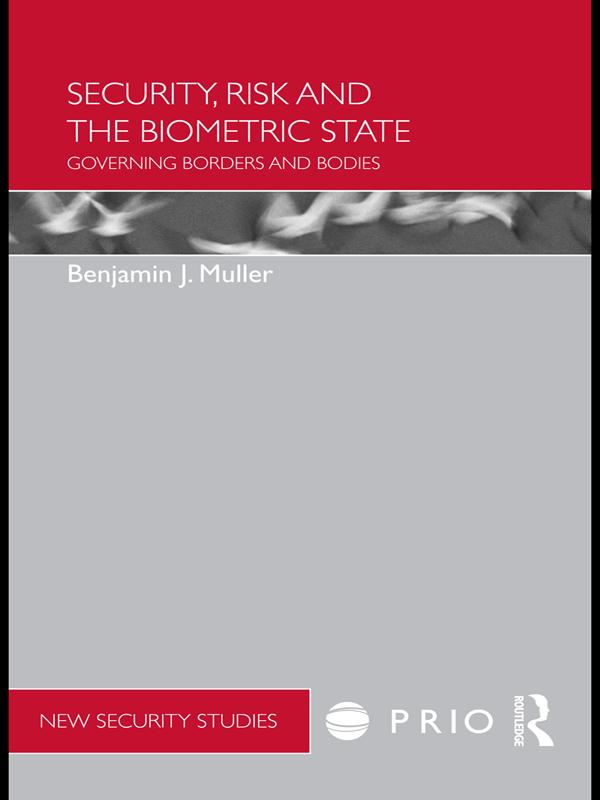
This book examines a series of questions associated with the increasing application and implications of biometrics in contemporary everyday life.
In the wake of the events of 9/11, the reliance on increasingly sophisticated and invasive technologies across a burgeoning field of applications has accelerated, giving rise to the term 'biometric state'. This book explores how these ‘virtual borders’ are created and the effect they have upon the politics of citizenship and immigration, especially how they contribute to the treatment of citizens as suspects. Finally and most importantly, this text argues that the rationale of 'governing through risk' facilitates pre-emptory logics, a negligent attitude towards 'false positives', and an overall proliferation of borders and ubiquitous risk, which becomes integral to contemporary everyday life, far beyond the confined politics of national borders and frontiers.
By focusing on specific sites, such as virtual borders in airports, trusted traveller programs like the NEXUS program and those delivered by airlines and supported by governmental authorities (TSA and CATSA respectively), this book raises critical questions about the emerging biometric state and its commitment and constitution vis-à-vis technology of ‘governing through risk’.
This book will be of interest to students of biopolitics, critical security, surveillance studies and International Relations in general.
Benjamin J. Muller is assistant professor in International Relations at Simon Fraser University, Burnaby, Canada. He completed his PhD in the School of Politics and International Studies at Queen’s University Belfast, Northern Ireland, in 2005.
Before Memmo my notes were scattered across PDFs. Now a workspace pulls everything into one place — I see exactly what's still left to study.
Memmo's summaries are gold before exams. I don't have to re-read 800 pages two weeks before — just the important parts.
The AI chat has saved me the night before an exam more than once. I just keep asking until I get it — no waiting on a study group to reply.
The quizzes hit exactly what I need to know. Memmo tracks what I get stuck on — so I only practice what's worth it.
Flashcards with spaced repetition are magic. Memmo knows when I'm about to forget something and brings it back.
The AI podcasts are my favorite. I listen on my way to school and get a recap without sitting at a computer.

Handbok i kvalitativa metoder
281 kr

Hållbar utveckling: en introduktion för ingenjörer och andra problemlösare
334 kr

Brymans Samhällsvetenskapliga metoder
390 kr

Projektledning
491 kr

Den orättvisa hälsan: om socioekonomiska skillnader i hälsa och livslängd
326 kr

Organizational Leadership
429 kr

Vetenskapsteori för nybörjare
196 kr

På väg mot läraryrket
172 kr

Det sociala livet i skolan: Socialpsykologiska perspektiv
253 kr

Betygsättningens didaktik
151 kr

Personality
402 kr

Studying Leadership
404 kr

Managing Innovation
477 kr

Introduktion till samhällsvetenskaplig metod
347 kr

The Psychology of Sex and Gender
698 kr

Evidens och kunskap för socialt arbete
207 kr

Introduction to Leadership
605 kr