
Before Memmo my notes were scattered across PDFs. Now a workspace pulls everything into one place — I see exactly what's still left to study.
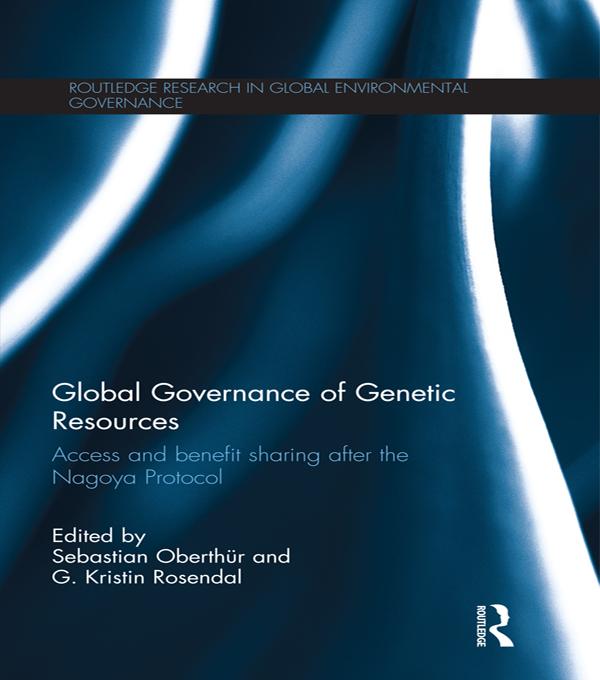
This book analyses the status and prospects of the global governance of Access Benefit Sharing (ABS) in the aftermath of 2010’s Nagoya Protocol to the Convention on Biological Diversity (CBD). The CBD’s initial 1992 framework of global ABS governance established the objective of sharing the benefits arising from the use of genetic resources fairly between countries and communities. Since then, ABS has been a contested issue in international politics – not least due to the failure of effective implementation of the original CBD framework. The Nagoya Protocol therefore aims to improve and enhance this framework. Compared to the slow rate of progress on climate change, it has been considered a major achievement of global environmental governance, but it has also been coined a ‘masterpiece of ambiguity’. This book analyses the role of a variety of actors in the emergence of the Nagoya Protocol and provides an up-to-date assessment of the core features of the architecture of global ABS governance.
This book offers a central resource regarding ABS governance for those working on and interested in global environmental governance. This is achieved by focusing on two broad themes of the wider research agenda on global environmental governance, namely architecture and agency. Furthermore, individual chapter contributions relate and link ABS governance to other prominent debates in the field, such as institutional complexes, compliance, market-based approaches, EU leadership, the role of small states, the role of non-state actors and more.
Partly due to its seeming technical complexity, ABS governance has so far not been at the centre of attention of scholars and practitioners of global environmental governance. In this book, care is taken to provide an accessible account of key functional features of the governance system which enables non-specialists to gain a grasp on the main issues involved, allowing the issue of ABS governance to move centre-stage and be more fully recognised in discussions on global environmental governance.
Before Memmo my notes were scattered across PDFs. Now a workspace pulls everything into one place — I see exactly what's still left to study.
Memmo's summaries are gold before exams. I don't have to re-read 800 pages two weeks before — just the important parts.
The AI chat has saved me the night before an exam more than once. I just keep asking until I get it — no waiting on a study group to reply.
The quizzes hit exactly what I need to know. Memmo tracks what I get stuck on — so I only practice what's worth it.
Flashcards with spaced repetition are magic. Memmo knows when I'm about to forget something and brings it back.
The AI podcasts are my favorite. I listen on my way to school and get a recap without sitting at a computer.

Handbok i kvalitativa metoder
281 kr

Hållbar utveckling: en introduktion för ingenjörer och andra problemlösare
334 kr

Brymans Samhällsvetenskapliga metoder
390 kr

Projektledning
491 kr

Den orättvisa hälsan: om socioekonomiska skillnader i hälsa och livslängd
326 kr

Vetenskapsteori för nybörjare
196 kr

Organizational Leadership
429 kr

På väg mot läraryrket
172 kr

Det sociala livet i skolan: Socialpsykologiska perspektiv
253 kr

Betygsättningens didaktik
151 kr

Personality
402 kr

Studying Leadership
404 kr

Managing Innovation
477 kr

Introduktion till samhällsvetenskaplig metod
347 kr

The Psychology of Sex and Gender
698 kr

Evidens och kunskap för socialt arbete
207 kr

Introduction to Leadership
605 kr