
Before Memmo my notes were scattered across PDFs. Now a workspace pulls everything into one place — I see exactly what's still left to study.
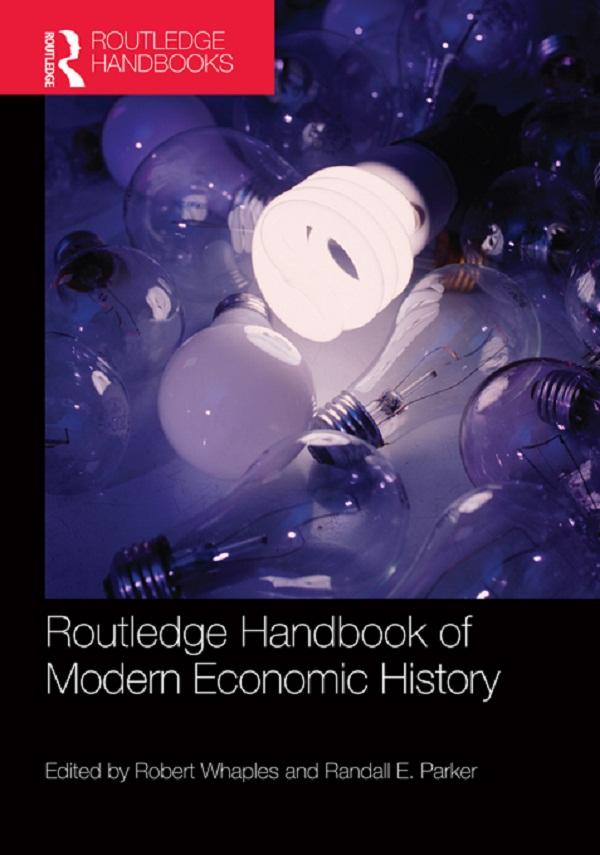
The Routledge Handbook of Modern Economic History aims to introduce readers to important approaches and findings of economic historians who study the modern world. Its short chapters reflect the most up-to-date research and are written by well-known economic historians who are authorities on their subjects.
Modern economic history blends two approaches – Cliometrics (which focuses on measuring economic variables and explicitly testing theories about the historical performance and development of the economy) and the New Institutional Economics (which focuses on how social, cultural, legal and organizational norms and rules shape economic outcomes and their evolution). Part 1 of the Handbook introduces these approaches and other important methodological issues for economic history.
The most fundamental shift in the economic history of the world began about two and a half centuries ago when eons of slow economic change and faltering economic growth gave way to sustained, rapid economic expansion. Part 2 examines this theme and the primary forces economic historians have linked to economic growth, stagnation and fluctuations – including technological change, entrepreneurship, competition, the biological environment, war, financial panics and business cycles.
Part 3 examines the evolution of broad sectors that typify a modern economy including agriculture, banking, transportation, health care, housing, and entertainment. It begins by examining an equally important "sector" of the economy which scholars have increasingly analyzed using economic tools – religion. Part 4 focuses on the work force and human outcomes including inequality, labor markets, unions, education, immigration, slavery, urbanization, and the evolving economic roles of women and African-Americans.
The text will be of great value to those taking economic history courses as well as a reference book useful to professional practitioners, policy makers and the public.
Before Memmo my notes were scattered across PDFs. Now a workspace pulls everything into one place — I see exactly what's still left to study.
Memmo's summaries are gold before exams. I don't have to re-read 800 pages two weeks before — just the important parts.
The AI chat has saved me the night before an exam more than once. I just keep asking until I get it — no waiting on a study group to reply.
The quizzes hit exactly what I need to know. Memmo tracks what I get stuck on — so I only practice what's worth it.
Flashcards with spaced repetition are magic. Memmo knows when I'm about to forget something and brings it back.
The AI podcasts are my favorite. I listen on my way to school and get a recap without sitting at a computer.

Handbok i kvalitativa metoder
281 kr

Hållbar utveckling: en introduktion för ingenjörer och andra problemlösare
334 kr

Brymans Samhällsvetenskapliga metoder
390 kr

Projektledning
491 kr

Den orättvisa hälsan: om socioekonomiska skillnader i hälsa och livslängd
326 kr

Vetenskapsteori för nybörjare
196 kr

Organizational Leadership
429 kr

På väg mot läraryrket
172 kr

Det sociala livet i skolan: Socialpsykologiska perspektiv
253 kr

Betygsättningens didaktik
151 kr

Personality
402 kr

Studying Leadership
404 kr

Managing Innovation
477 kr

Introduktion till samhällsvetenskaplig metod
347 kr

The Psychology of Sex and Gender
698 kr

Evidens och kunskap för socialt arbete
207 kr

Introduction to Leadership
605 kr