
Before Memmo my notes were scattered across PDFs. Now a workspace pulls everything into one place — I see exactly what's still left to study.
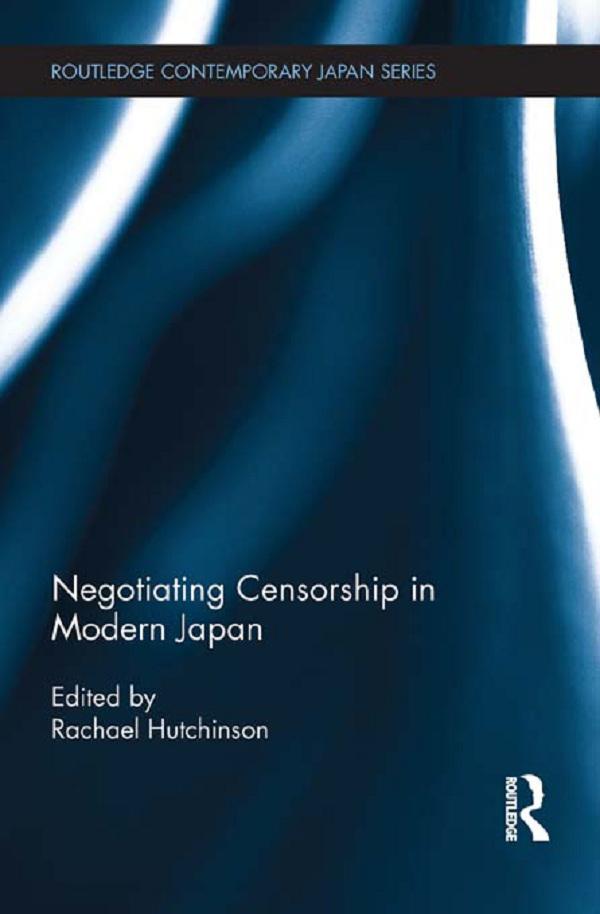
Censorship in Japan has seen many changes over the last 150 years and each successive system of rule has possessed its own censorship laws, regulations, and methods of enforcement. Yet what has remained constant through these many upheavals has been the process of negotiation between censor and artist that can be seen across the cultural media of modern society.
By exploring censorship in a number of different Japanese art forms – from popular music and kabuki performance through to fiction, poetry and film – across a range of historical periods, this book provides a striking picture of the pervasiveness and strength of Japanese censorship across a range of media; the similar tactics used by artists of different media to negotiate censorship boundaries; and how censors from different systems and time periods face many of the same problems and questions in their work. The essays in this collection highlight the complexities of the censorship process by investigating the responsibilities and choices of all four groups – artists, censors, audience and ideologues – in a wide range of case studies. The contributors shift the focus away from top-down suppression, towards the more complex negotiations involved in the many stages of an artistic work, all of which involve movement within boundaries, as well as testing of those boundaries, on the part of both artist and censor. Taken together, the essays in this book demonstrate that censorship at every stage involves an act of human judgment, in a context determined by political, economic and ideological factors.
This book and its case studies provide a fascinating insight into the dynamics of censorship and how these operate on both people and texts. As such, it will be of great interest to students and scholars interested in Japanese studies, Japanese culture, society and history, and media studies more generally.
Before Memmo my notes were scattered across PDFs. Now a workspace pulls everything into one place — I see exactly what's still left to study.
Memmo's summaries are gold before exams. I don't have to re-read 800 pages two weeks before — just the important parts.
The AI chat has saved me the night before an exam more than once. I just keep asking until I get it — no waiting on a study group to reply.
The quizzes hit exactly what I need to know. Memmo tracks what I get stuck on — so I only practice what's worth it.
Flashcards with spaced repetition are magic. Memmo knows when I'm about to forget something and brings it back.
The AI podcasts are my favorite. I listen on my way to school and get a recap without sitting at a computer.

Handbok i kvalitativa metoder
281 kr

Hållbar utveckling: en introduktion för ingenjörer och andra problemlösare
334 kr

Brymans Samhällsvetenskapliga metoder
390 kr

Projektledning
491 kr

Den orättvisa hälsan: om socioekonomiska skillnader i hälsa och livslängd
326 kr

Vetenskapsteori för nybörjare
196 kr

Organizational Leadership
429 kr

På väg mot läraryrket
172 kr

Det sociala livet i skolan: Socialpsykologiska perspektiv
253 kr

Betygsättningens didaktik
151 kr

Personality
402 kr

Studying Leadership
404 kr

Managing Innovation
477 kr

Introduktion till samhällsvetenskaplig metod
347 kr

The Psychology of Sex and Gender
698 kr

Evidens och kunskap för socialt arbete
207 kr

Introduction to Leadership
605 kr