
Before Memmo my notes were scattered across PDFs. Now a workspace pulls everything into one place — I see exactly what's still left to study.
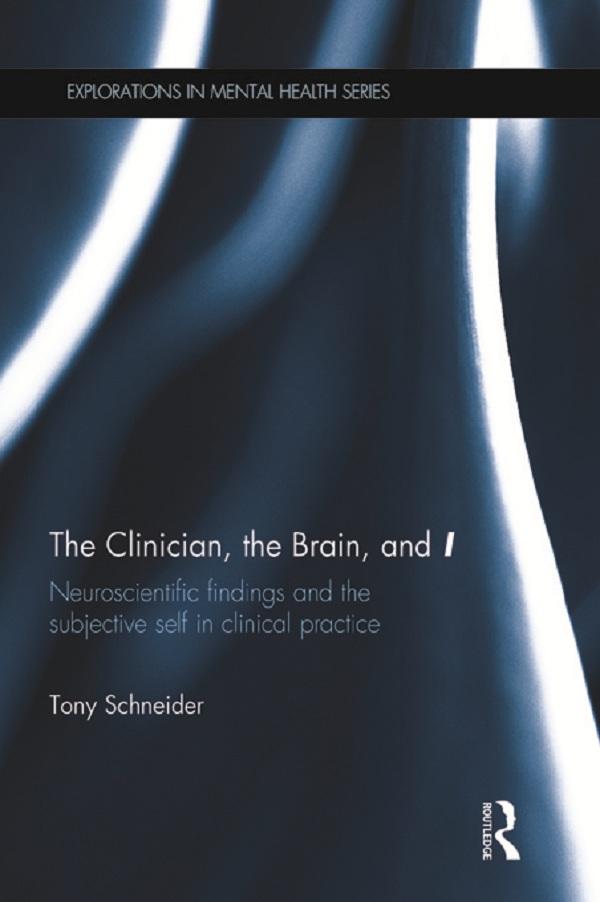
The clinician needs to make sense of many client experiences in the course of daily practice: do these experiences reflect the simple product of complex neurochemical activity, or do they represent another dynamic involving the subjective self? When research findings from the neurosciences are applied to clinical psychology, reductionist thinking is typically followed, but this creates problems for the clinical practitioner.
In this book Tony Schneider draws together the three strands of philosophy, neuroscience, and psychology to explore the mind/body question as it affects the clinician. Taking a position more closely aligned with dualism, he argues for the utility in making distinctions between brain activity and ‘I’ – the subjective self – both in general psychological functioning and in psychopathology. Schneider considers traditional psychological topics contextualized by neuroscience research and the mind/body issue, as well as applying the ideas to various areas of clinical practice. Topics include:
-the mind and body from the clinician’s perspective
-fundamental aspects of the role and mechanics of the brain
-the developing self and the relationship of ‘I’ with the self and with others
-psychological functioning such as focus and memory, sleep and dreaming, and emotions and pain.
The idea that ‘I am not my brain’ will resonate with many clinicians, and is systematically argued for in clinical literature and neuropsychology research here for the first time. The book will be of particular interest to psychologists, psychiatrists, counsellors and clinicians who wish to incorporate advances in neuroscience research in the conceptualization of their clinical work, and are looking for a working model that allows them to do so.
Before Memmo my notes were scattered across PDFs. Now a workspace pulls everything into one place — I see exactly what's still left to study.
Memmo's summaries are gold before exams. I don't have to re-read 800 pages two weeks before — just the important parts.
The AI chat has saved me the night before an exam more than once. I just keep asking until I get it — no waiting on a study group to reply.
The quizzes hit exactly what I need to know. Memmo tracks what I get stuck on — so I only practice what's worth it.
Flashcards with spaced repetition are magic. Memmo knows when I'm about to forget something and brings it back.
The AI podcasts are my favorite. I listen on my way to school and get a recap without sitting at a computer.

Handbok i kvalitativa metoder
281 kr

Hållbar utveckling: en introduktion för ingenjörer och andra problemlösare
334 kr

Brymans Samhällsvetenskapliga metoder
390 kr

Projektledning
491 kr

Den orättvisa hälsan: om socioekonomiska skillnader i hälsa och livslängd
326 kr

Vetenskapsteori för nybörjare
196 kr

Organizational Leadership
429 kr

På väg mot läraryrket
172 kr

Det sociala livet i skolan: Socialpsykologiska perspektiv
253 kr

Betygsättningens didaktik
151 kr

Personality
402 kr

Studying Leadership
404 kr

Managing Innovation
477 kr

Introduktion till samhällsvetenskaplig metod
347 kr

The Psychology of Sex and Gender
698 kr

Evidens och kunskap för socialt arbete
207 kr

Introduction to Leadership
605 kr