
Before Memmo my notes were scattered across PDFs. Now a workspace pulls everything into one place — I see exactly what's still left to study.
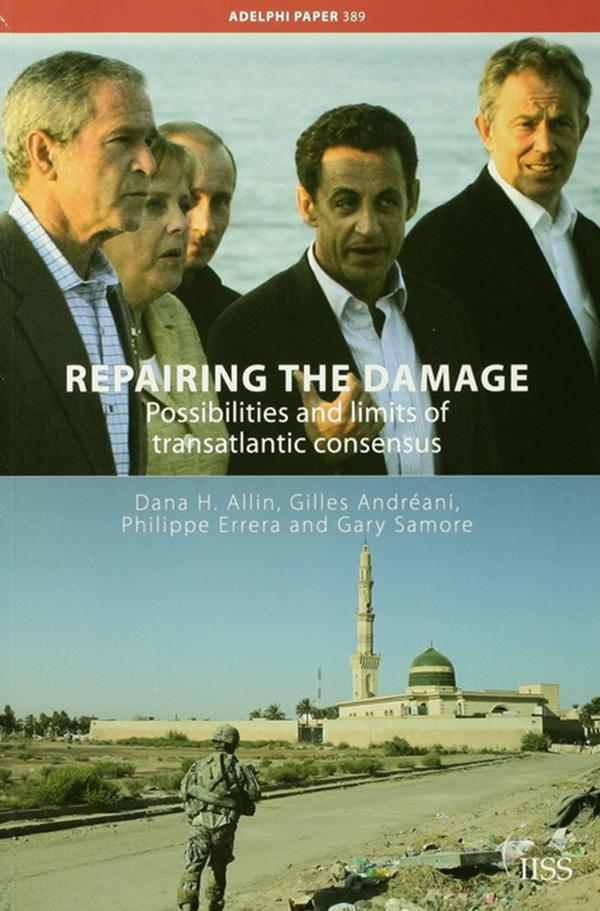
The damage that has been done to the transatlantic alliance will not be repaired through grand architectural redesigns or radical new agendas. Instead, the transatlantic partners need to restore their consensus and cooperation on key security challenges with a limited agenda that reflects the essential conservatism of the transatlantic partnership during the Cold War and the 1990s. There will inevitably be big challenges, such as the rise of China, where transatlantic disparities in strategic means and commitments preclude any common alliance undertaking. Yet such limits are nothing new. The absence of a common transatlantic commitment to counter-insurgency in Iraq may cause resentments, but so too did the lack of a common commitment to counter-insurgency in Vietnam.
This Adelphi Paper suggests ten propositions for future transatlantic consensus – that is to say, ten security challenges for which the allies should be able to agree on common strategies. These run the gamut from an effective strategy to prevent Iran from developing a nuclear weapons capability to transatlantic leadership for international cooperation against global warming. If pursued with seriousness and a reasonable degree of transatlantic unity, these propositions could constitute the foundations of an effective partnership. They are, in the authors’ view, the basis for a consensus on the most pressing security challenges of the twenty-first century.
The time is right for this kind of serious rededication to alliance purposes. There has already been some effort to repair the damage; moreover, new leaders are in place or coming to the countries that were major protagonists of the transatlantic crisis: Germany, France, Britain and, in 2009, the United States. It is possible that these four new leaders will be better able to put the disputes of the recent past behind them. This extended essay is a guide to the possibilities, and also the limits, of a new start.
Before Memmo my notes were scattered across PDFs. Now a workspace pulls everything into one place — I see exactly what's still left to study.
Memmo's summaries are gold before exams. I don't have to re-read 800 pages two weeks before — just the important parts.
The AI chat has saved me the night before an exam more than once. I just keep asking until I get it — no waiting on a study group to reply.
The quizzes hit exactly what I need to know. Memmo tracks what I get stuck on — so I only practice what's worth it.
Flashcards with spaced repetition are magic. Memmo knows when I'm about to forget something and brings it back.
The AI podcasts are my favorite. I listen on my way to school and get a recap without sitting at a computer.

Handbok i kvalitativa metoder
281 kr

Hållbar utveckling: en introduktion för ingenjörer och andra problemlösare
334 kr

Brymans Samhällsvetenskapliga metoder
390 kr

Projektledning
491 kr

Den orättvisa hälsan: om socioekonomiska skillnader i hälsa och livslängd
326 kr

Organizational Leadership
429 kr

Vetenskapsteori för nybörjare
196 kr

På väg mot läraryrket
172 kr

Det sociala livet i skolan: Socialpsykologiska perspektiv
253 kr

Betygsättningens didaktik
151 kr

Personality
402 kr

Studying Leadership
404 kr

Managing Innovation
477 kr

Introduktion till samhällsvetenskaplig metod
347 kr

The Psychology of Sex and Gender
698 kr

Evidens och kunskap för socialt arbete
207 kr

Introduction to Leadership
605 kr